Happy Fire Friday, New Mexico!
Have you heard of Southwest Wildfire Awareness Week? This public awareness campaign, which has been running for over a decade, takes place the last week of March and highlights information and resources to help communities in the Southwest be aware of and prepare for the fire season ahead. Federal and State fire agencies in New Mexico and Arizona take part in the campaign by sharing information at public events and online or through social media. This year’s SW Wildfire Awareness campaign, which took place last week, followed the theme “Inside Out: Wildfire Preparedness Starts at Home” and focused on tools and suggestions for proactive community-based prevention. Today’s newsletter will review and recap some of the lessons and suggestions from SW Wildfire Awareness Week 2026.
This Fire Friday features:
Wildfire Awareness Week takeaways for building and maintaining fire adapted communities
Smoke and public health
Upcoming webinars
Recent research
Current fire restrictions in NM
Disaster mitigation funding
Wildfire Awareness Week
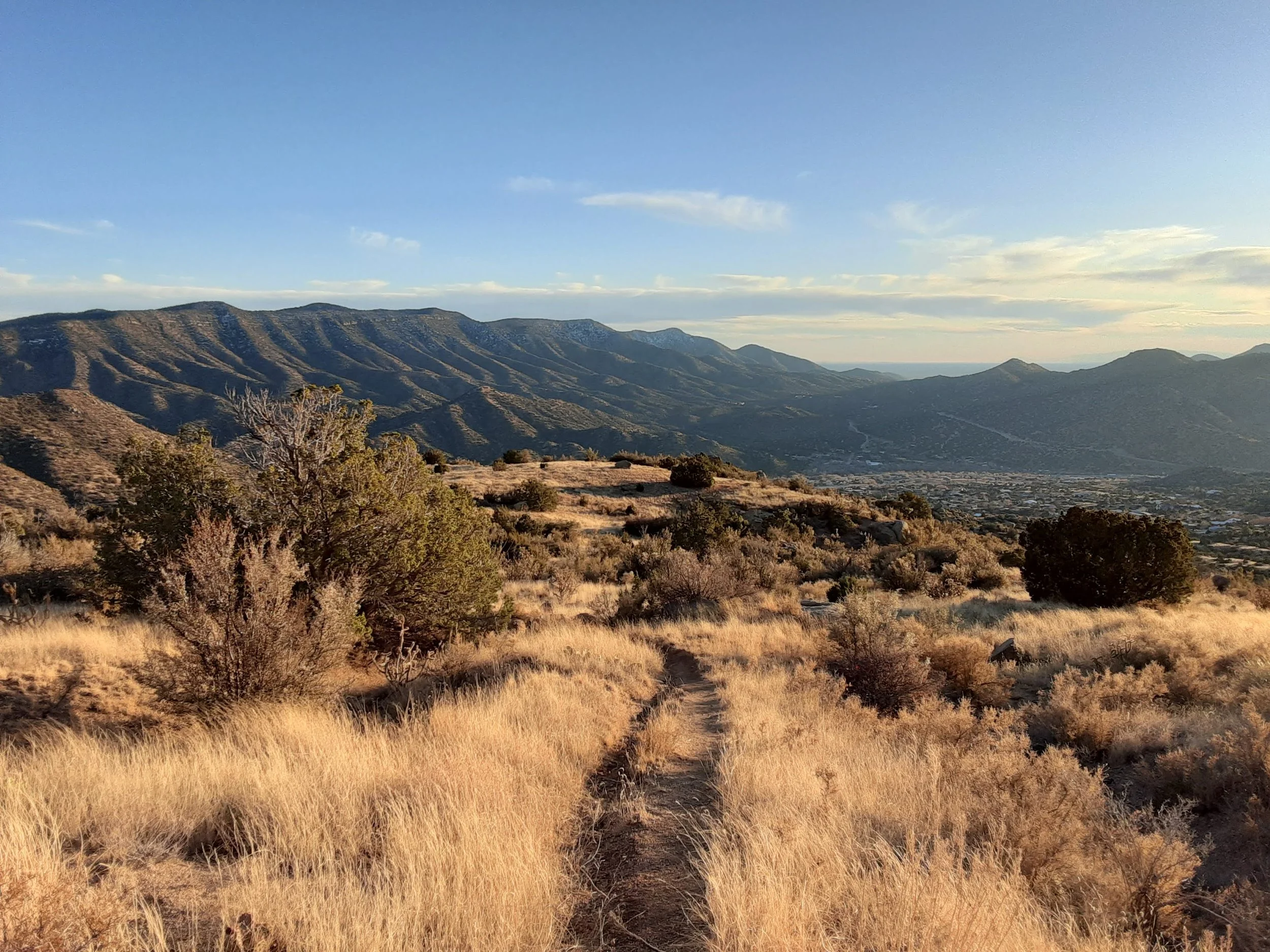
Following a warm and dry winter across the West, wildfire season forecasts suggest that we are in for a long and active fire season with higher-than-normal potential for large wildfires in May and June due to dry vegetation and high fire danger conditions. “We’re heading into an exceptionally warm and dry wildfire season,” said EMNRD Acting Secretary Erin Taylor. “These extreme conditions call for extra precautions. We need everyone to take action to prevent wildfires from impacting their communities.” Facing this reality, the NM Forestry Division used Wildfire Awareness Week 2026 to urge homeowners to take steps to protect their properties and their insurance coverage before fire season peaks this summer (KRTN, 2026).
What is the aim of Wildfire Awareness Week?
“New Mexico gets warm and dry, and our fire season can often start before some other states. We want to remind people we are stepping into the warmer months and we have the windy season in April coming up. It’s a way to remind people of the things they can do to prepare their homes and properties to defend against wildfire. But also to remind people that humans are the cause of most wildfires. In New Mexico, four out of five wildfires are started by humans and the other one out of five are lightning-caused fires, which we mostly get during the monsoon season” (George Ducker, NM Forestry Division via the Santa Fe Reporter).
Key themes and focal areas for 2026:
Inside Out: Wildfire Preparedness Starts at Home: this year’s theme emphasized that fire prevention begins with actions taken in and around the home, working from the inside out to build individual resilience against fires.
Defensible space and home hardening: from simple tasks like cleaning gutters and removing dry leaves to larger projects like creating fuel breaks and home retrofitting with fire-resistant building materials, the campaign emphasized actions to be taken on private property.
Proactive community planning: expanding from the individual home (inside) to the wider communities in which we live (out), the campaign also provided tips and encouragement for neighbors to work together to identify risks and create evacuation plans before the highest-risk May and June fire season.
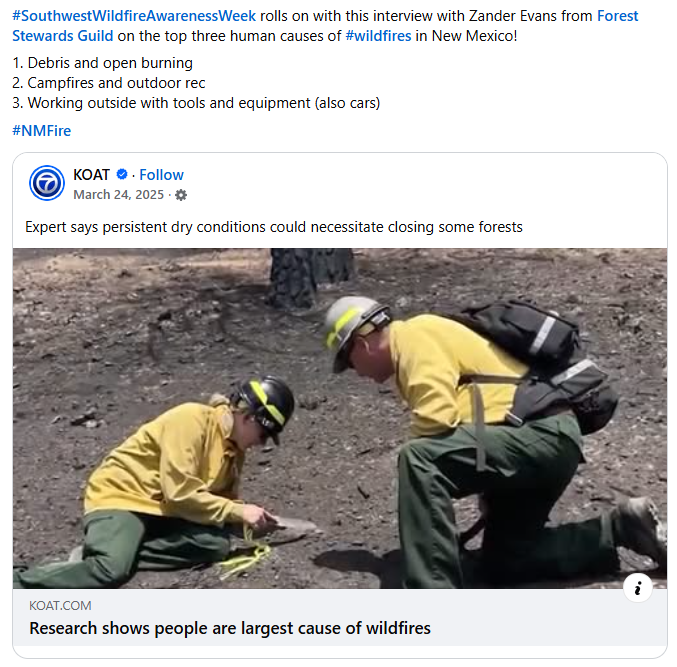
Prevention first - managing human-caused ignitions: fires that start by human-caused ignitions will, on average, be responsible for burning over half of the acres burned in a given year. A key component of wildfire preparedness is wildfire prevention - doing our part to make sure that they don’t start. This year’s campaign included targeted messaging on the three top causes of wildfires:
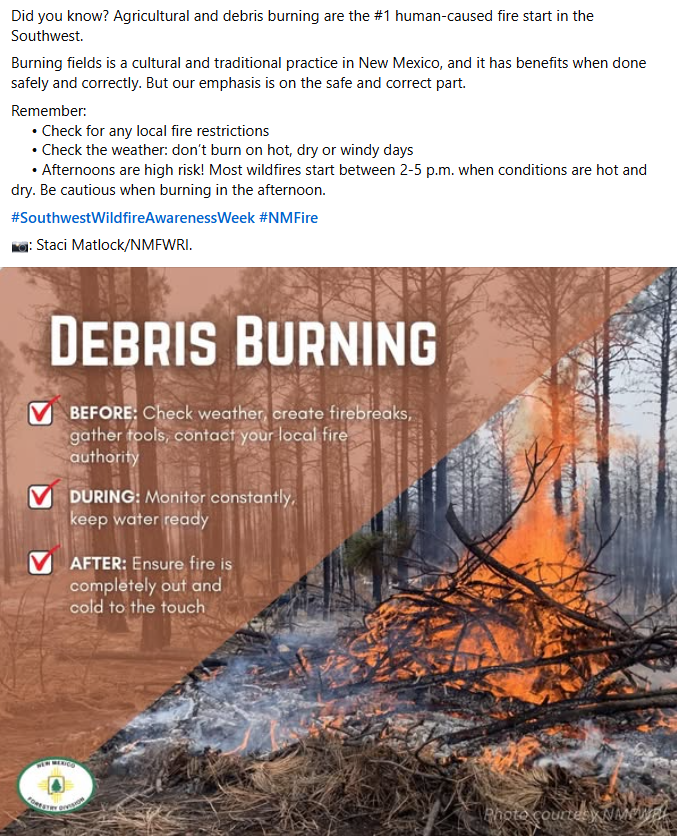
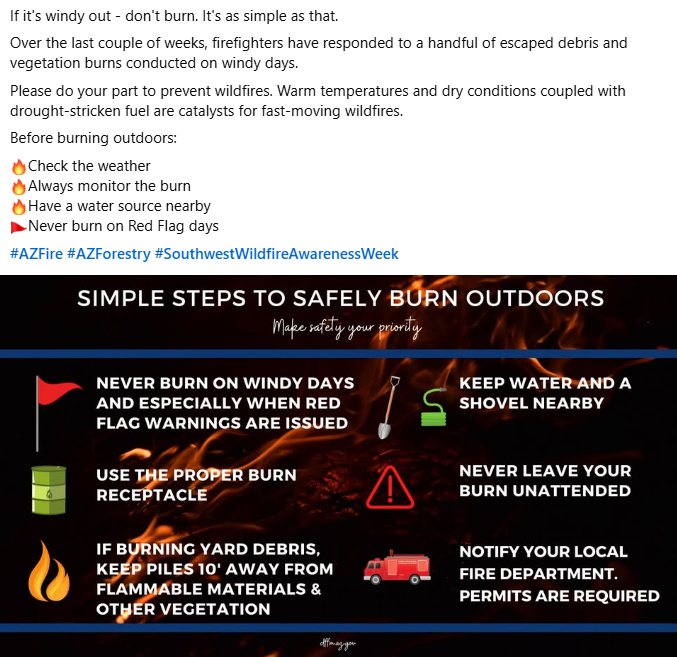
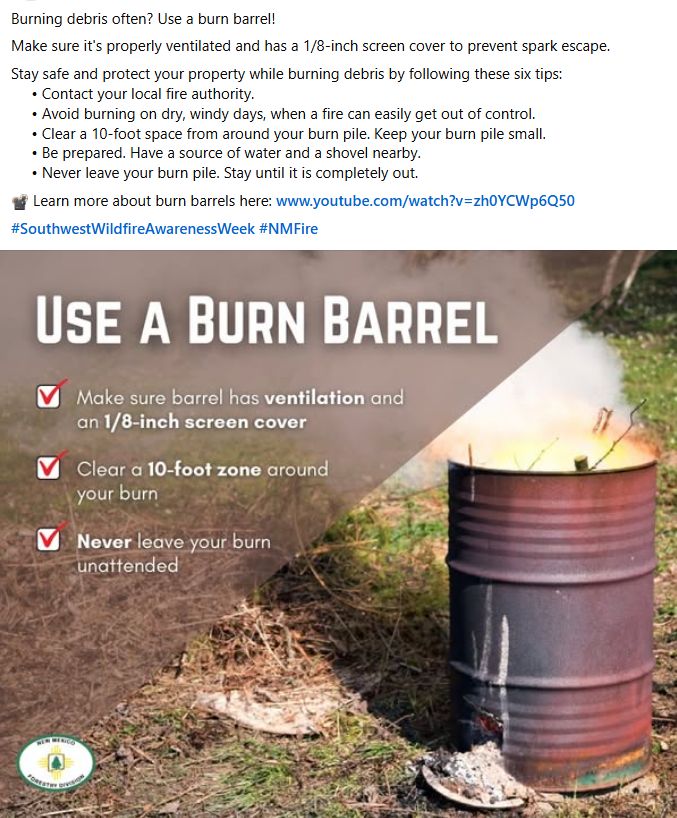
Debris burning: as New Mexico’s #1 cause of unintentional wildfire ignitions, avoid open flames during high-risk, windy, and dry days. Always check your county and municipality’s websites before burning to see if your area is under a burn ban or fire weather advisory.
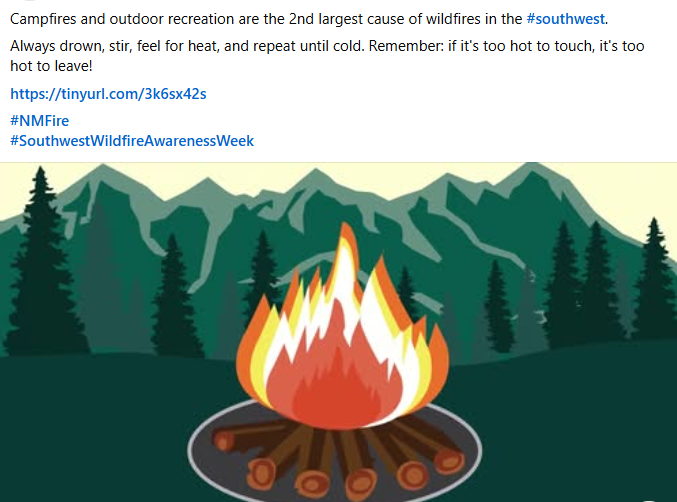
Recreation: “fire is strongly linked to outdoor recreation in the United States. Recreational uses of fires, whether in designated campgrounds or the backcountry, include warmth, cooking, and fostering a comfortable atmosphere. However, through inattention, negligence, or bad luck, recreational fires sometimes ignite wildfires” (NWFSC, 2025). Target shooting, not properly extinguishing campfires (remember "Drown, Stir, Repeat"), fireworks, inappropriate ATV or dirt bike use, and smoking are all drivers of recreation-related human-caused ignitions. Fire awareness and safety are paramount while recreating during high fire risk times of the year; of 3,644 human caused ignitions (on NFS lands) from 1980 to 2015, 36% were within one mile of a recreation site and 91% were within a half mile of a road (Forest Stewards Guild, 2018).
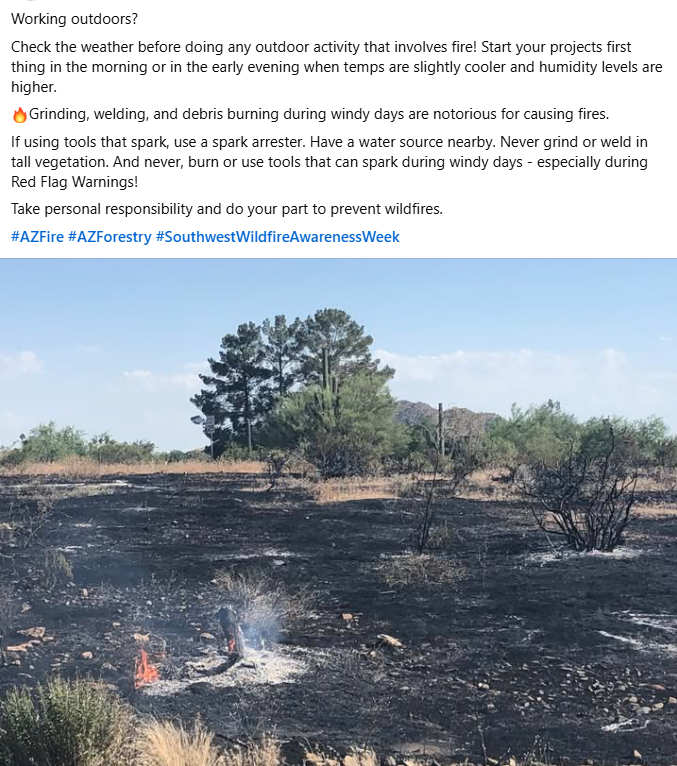
Sparks from equipment/vehicles: sparks from tools, such as chainsaws and metal grinders, and sparks from vehicles or transportation, such as hot tailpipes and chains dragging on the road, start fires. Avoid using spark-causing tools on high-risk days, always use a spark arrester, secure your tow chains, and avoiding driving over or parking on dry grass or brush.
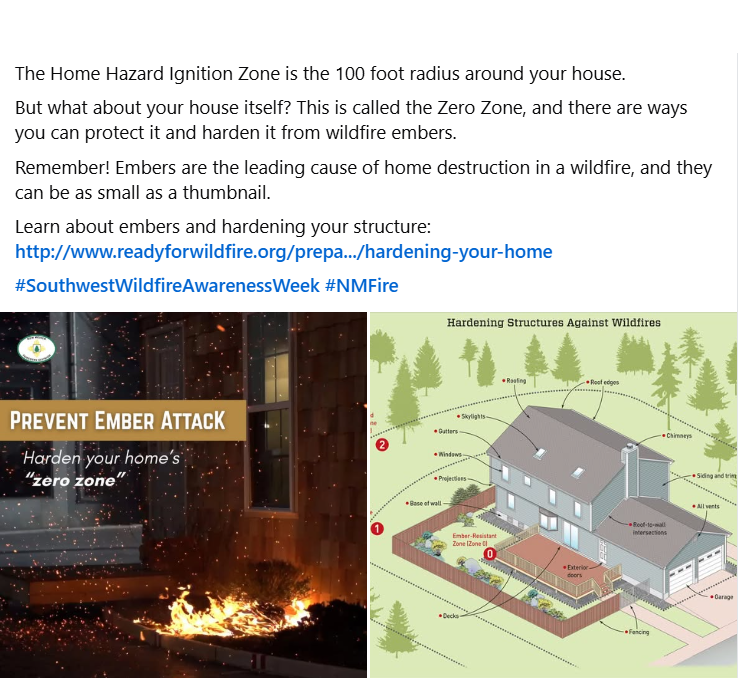
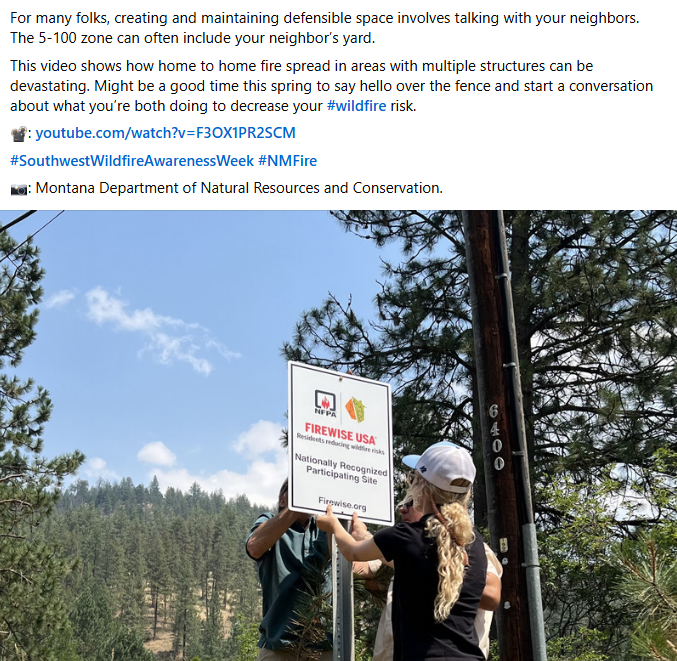
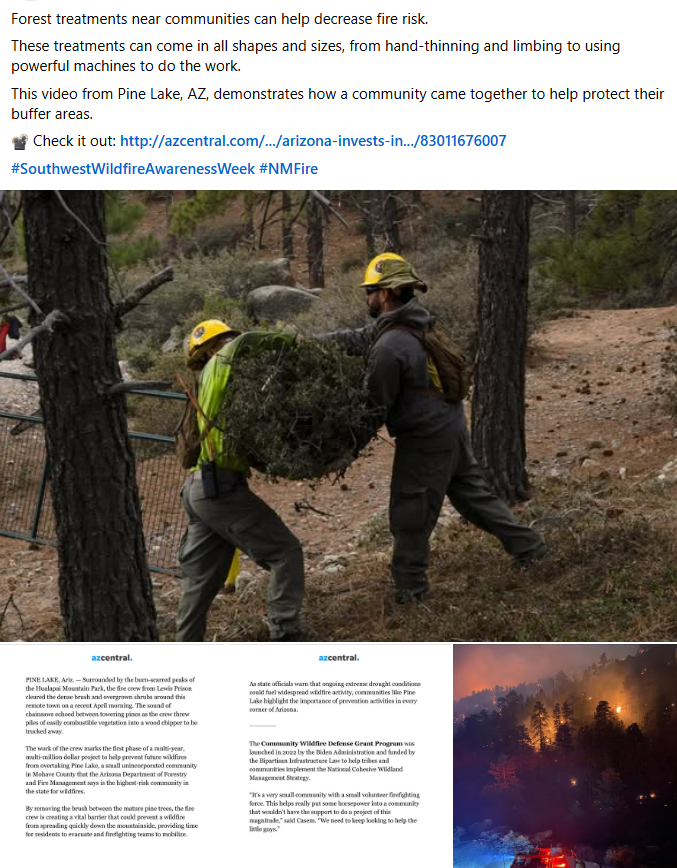
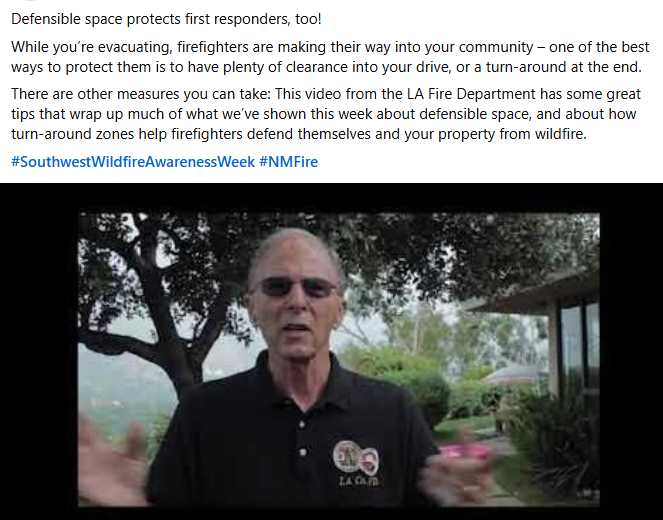
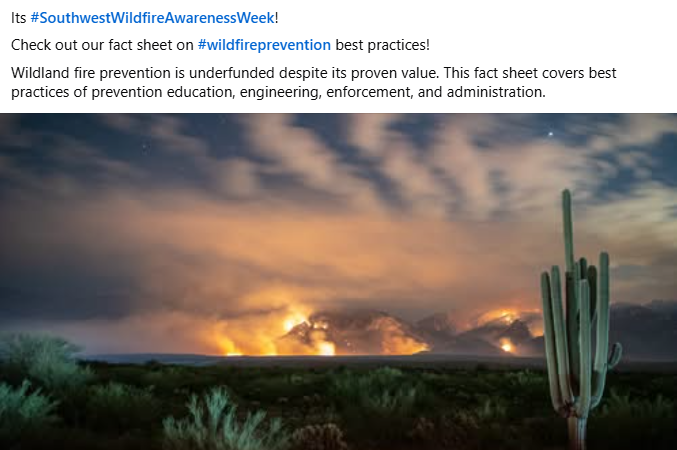
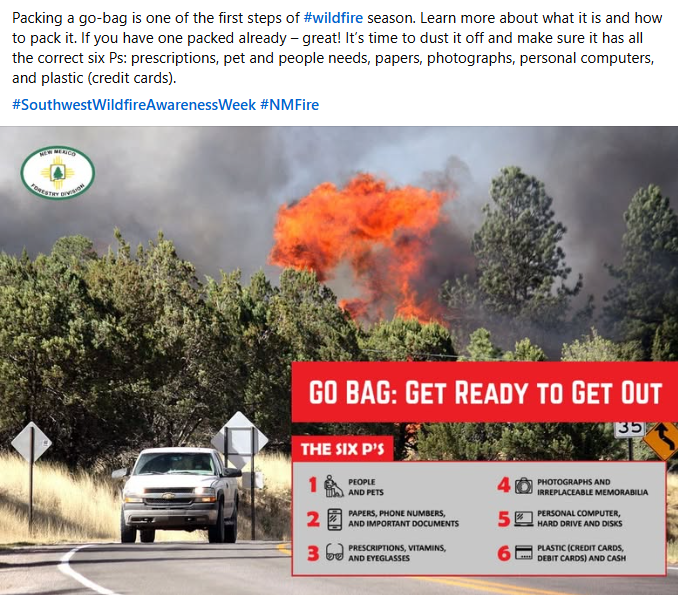
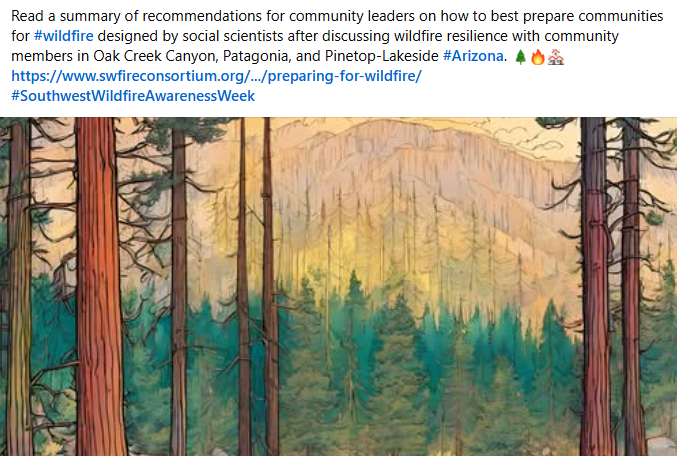
Click through the photo gallery and watch the video below to see some of the lessons, tips, and tricks which came out of this year’s Wildfire Awareness campaign! Contributors include the New Mexico Forestry Division, Arizona Department of Forestry and Fire Management, Southwest Fire Science Consortium, and more.
Additional Resources
Smoke and public health
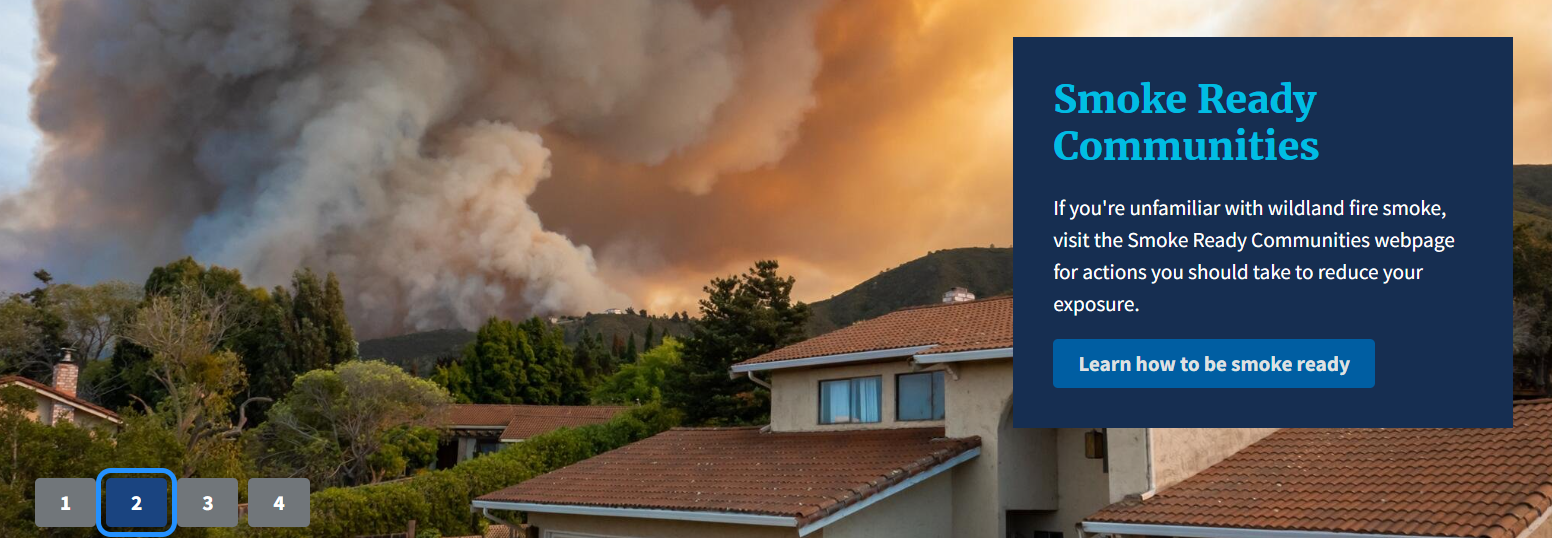
EPA: The Environmental Protection Agency has a new webpage with information about wildland fire smoke and public health impacts, along with answers to frequently asked questions, to help communities across the country prepare for, respond to and recover from wildland fire smoke events.
NMED: The New Mexico Environment Department also hosts a website with links to find information on air quality data and how to protect you and your family’s health when it is smoky. Visit their Wildfire and Prescribed Fire Smoke Resources webpage to browse topics such as Monitoring Data and Air Quality Information, Health Information, Smoke Forecasts, Fire Information, and Drought and Climate Information.
Funding opportunity: The Wildfire Smoke Preparedness in Community Building grants are intended to support activities that will reduce indoor exposure to pollutants in wildfire smoke and, in turn, reduce the public health burden of wildfire smoke exposure. Applications are due 4/15/26. Learn more: https://www.epa.gov/grants/wildfire-smoke-preparedness-community-buildings&sa=D&source=editors&ust=1775084697369665&usg=AOvVaw3QeJuCcxuphXeM4tz74Ifp.
This funding opportunity and many others may be found through FACNM’s funding library.
……………………….
Upcoming webinars
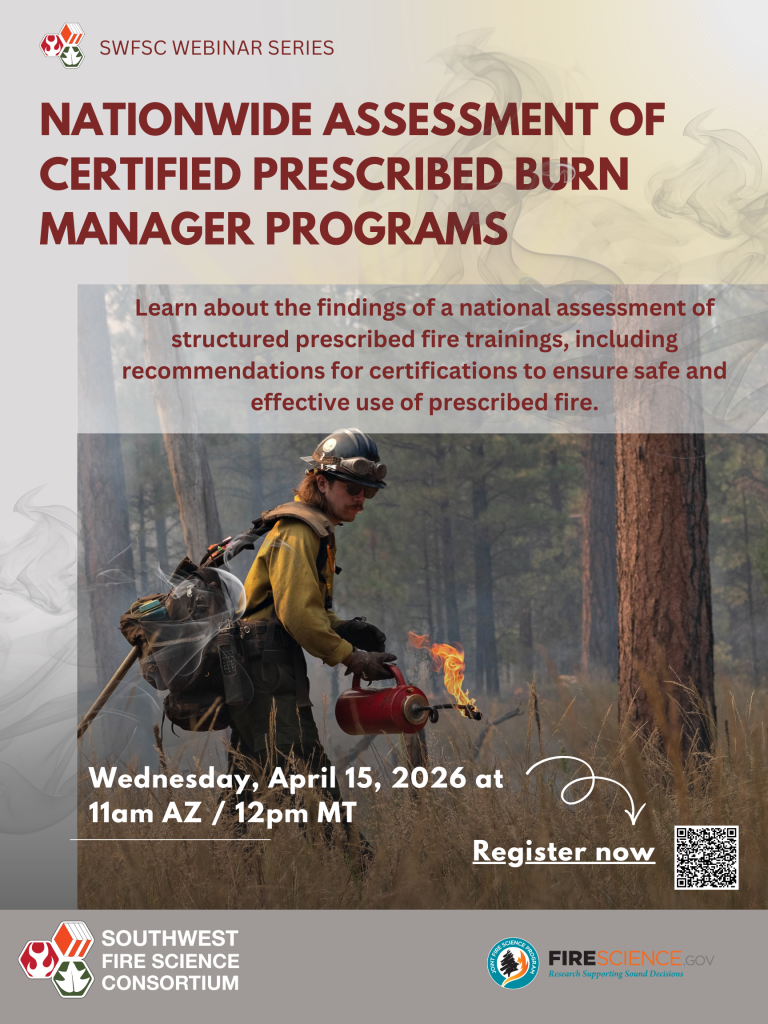
April 15 at 12pm: Nationwide Assessment of Certified Prescribed Burn Manager Programs
Certified Prescribed Burn Manager (CPBM) programs provide accessible and structured prescribed fire training in 24 states. This webinar from the Southwest Fire Science Consortium will provide an assessment of CPBM programs across the country based on interviews with representatives from 43 states. Those 43 states include states with existing CPBM programs, developing programs, and no programs. Register below to examine national trends, highlight shared challenges and innovative approaches, and offer recommendations for supporting the safe and effective use of prescribed fire through certification.
……………………….
Recent research
Integrating Wildlife Goals and Wildland Fire Management in Southwestern Forests
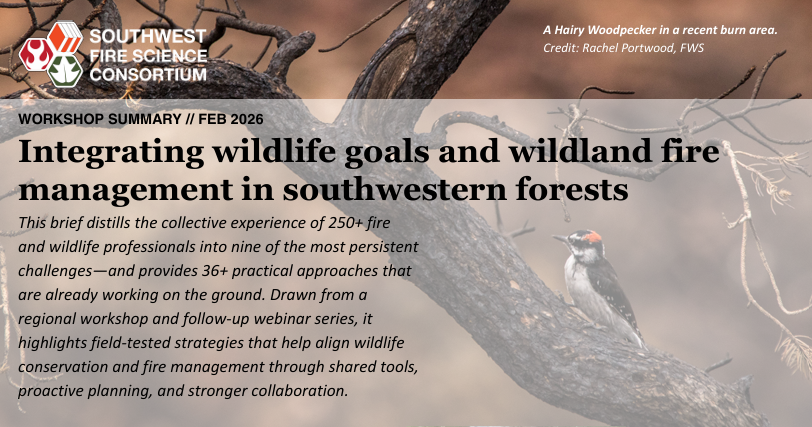
This fact sheet from the Southwest Fire Science Consortium presents the collective experience of more than 250 wildlife and fire professionals, highlighting nine challenges—and some practical approaches for meeting them.
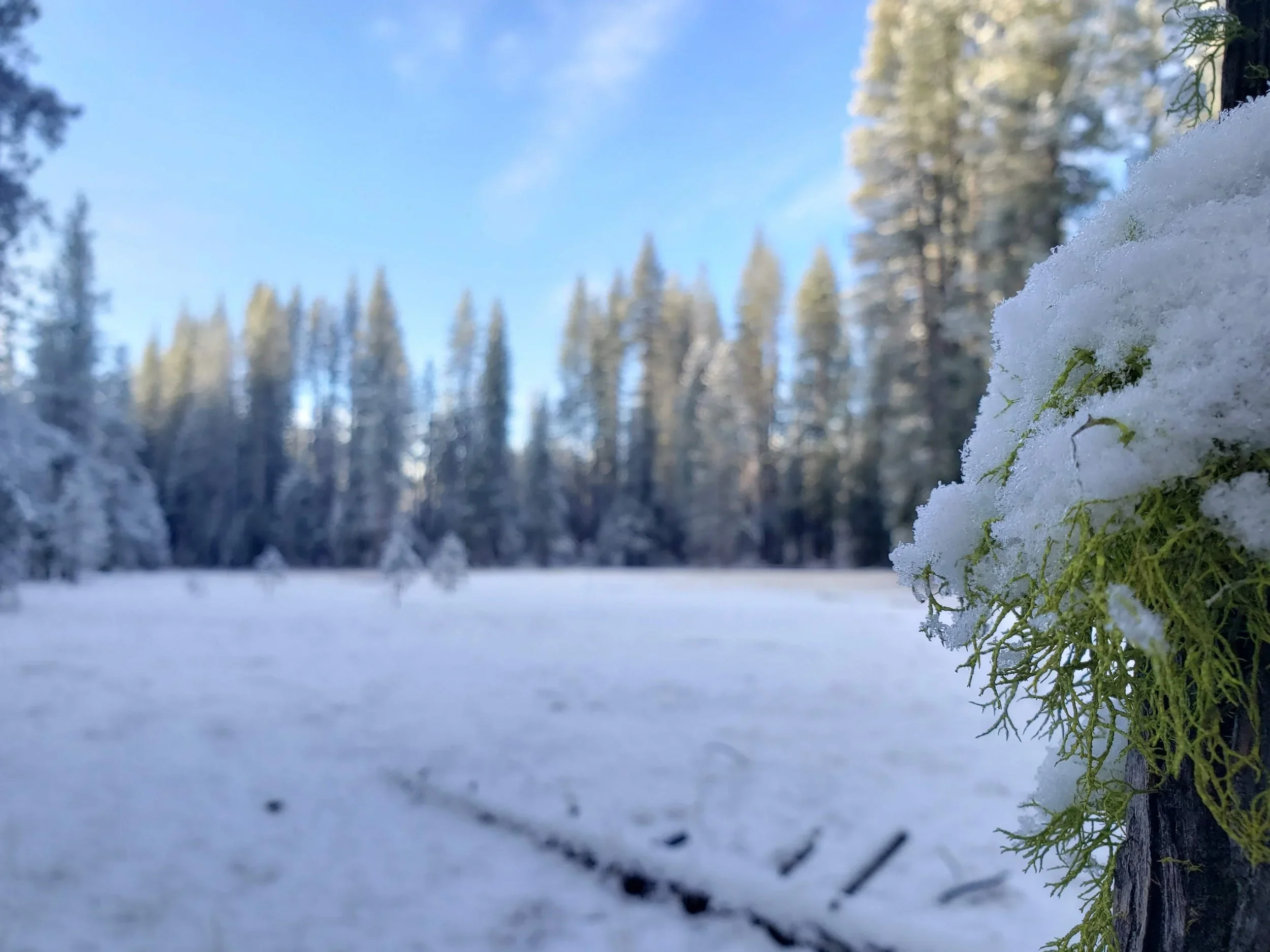
Climate change is reducing winter snowpack and advancing spring snowmelt across the western United States. Early snowmelt extends the fire season, enhancing opportunities for ignition and increasing fuel dryness, both of which contribute to greater burned areas. Early snowmelt is associated with earlier occurrences of large fires and greater annual area burned, and low snowpack is associated with more severe burn outcomes, including larger proportions of high severity fire. Overall, researchers found that low-snow winters with early snowmelt may prime forested watersheds to dry, burn, and experience high severity fire. Projected current and future warming, potentially accompanied by greater ENSO variability and extremes, points toward a future of reduced snowpack, earlier snowmelt, and increased area burned at high severity in forests where snowpack historically buffered fire risk, with attendant losses in forest carbon storage and disrupted hydrological function of forested watersheds.
……………………….
Fire restrictions in New Mexico
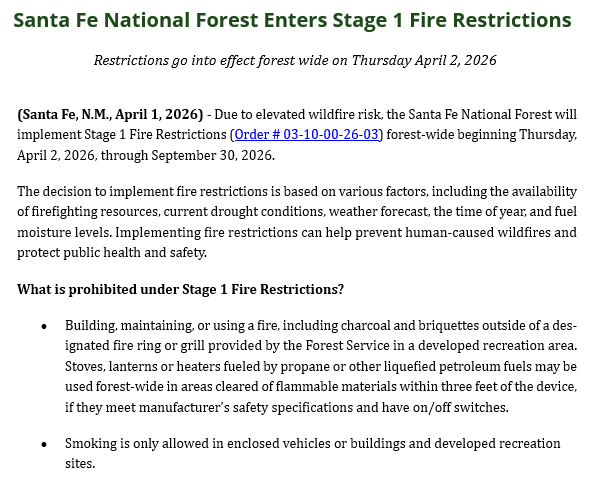
Due to elevated wildfire risk, the Santa Fe National Forest will implement Stage 1 Fire Restrictions forest-wide beginning Thursday, April 2, 2026, through September 30, 2026. The decision to implement fire restrictions is based on various factors, including the availability of firefighting resources, current drought conditions, weather forecast, the time of year, and fuel moisture levels. Implementing fire restrictions can help prevent human-caused wildfires and protect public health and safety.
Parts of the Cibola National Forest and Grasslands and other public lands across the state are also under Stage 1 or Stage 2 fire restrictions. Visit this interactive map to see the current restrictions in your area and learn about what they mean.
……………………….
Disaster mitigation funding opportunity
The Federal Emergency Management Agency (FEMA) has announced $1 billion to support critical infrastructure projects and help states mitigate impact of disasters. Eligible applicants include states, the District of Columbia, U.S. territories and federally recognized Tribal Nations. Eligible sub-applicants include local governments, communities, special districts and Tribal Nations applying through a state or territory. This Building Resilient Infrastructure and Communities (BRIC) funding opportunity is designed to prioritize infrastructure resilience by funding construction projects that are ready to implement and incentivizing the adoption of the latest hazard-resistant building codes. Applicants with adequate capacity are most encouraged to apply; this funding opportunity is competitive and can be challenging to implement.
For this funding cycle, the available categories include:
$112 million for states and territories (up to $2 million federal cost share for each applicant).
$50 million Tribal Set-Aside (up to $2 million federal cost share for each applicant).
$56 million for State or Territory Building Code Plus-Up (up to $1 million federal cost share per applicant) and $25 million for Tribal Nation Building Code Plus-Up to carry out eligible building code adoption and enforcement activities.
$757 million for National Competition (up to $20 million federal cost share per sub-application).
The deadline to submit applications is July 23, 2026. Interested applicants and sub-applicants may review the Notice of Funding Opportunity on Grants.gov. For more information on the BRIC program, applicants should contact their FEMA Regional Office or visit www.fema.gov/grants/mitigation/learn/building-resilient-infrastructure-communities.