Santa Fe Mountains bird monitoring: A community Science project
What is the Santa Fe Mountains Landscape Resiliency Project?

Surrounded by tribal, state, and local partners, Santa Fe National Forest Supervisor Shaun Sanchez signs the Santa Fe Mountains Landscape Resiliency Project Environmental Assessment (EA) after a finding of no significant impact (FONSI). Learn more about the NEPA process here. Fireshed Coalition partners pictured include members of the Santa Fe Fire Department, Forest Stewards Guild, Pueblo of Tesuque, Santa Fe Water Division, New Mexico Forest and Watershed Restoration Institute, and others.
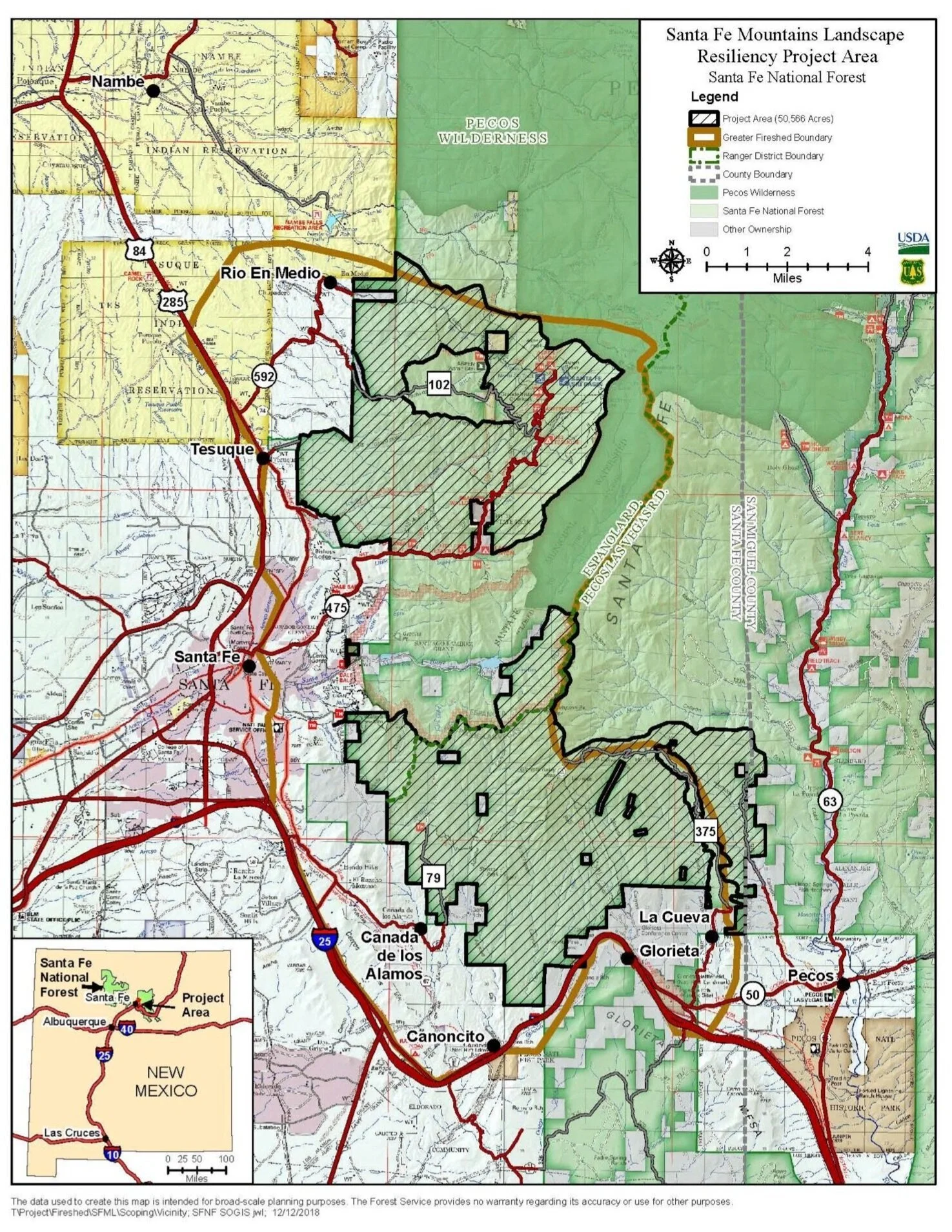
In 2023, after five years of planning, the Forest Service approved and began the Santa Fe Mountains Landscape Resiliency Project (SFMRLP) with the support of diverse partners in the Greater Santa Fe Fireshed Coalition.
The SFMLRP is a 10-year restoration project intended to increase the resilience of the Santa Fe National Forest to future disturbances such as high-severity wildfire, drought, and insect and disease outbreaks. The project includes forest thinning and/or prescribed fire treatments on about 50,000 acres to reintroduce fire as an ecological process within frequent fire forest types such as ponderosa pine and dry mixed conifer as well as reduce hazardous fuels in wildland-urban interface.
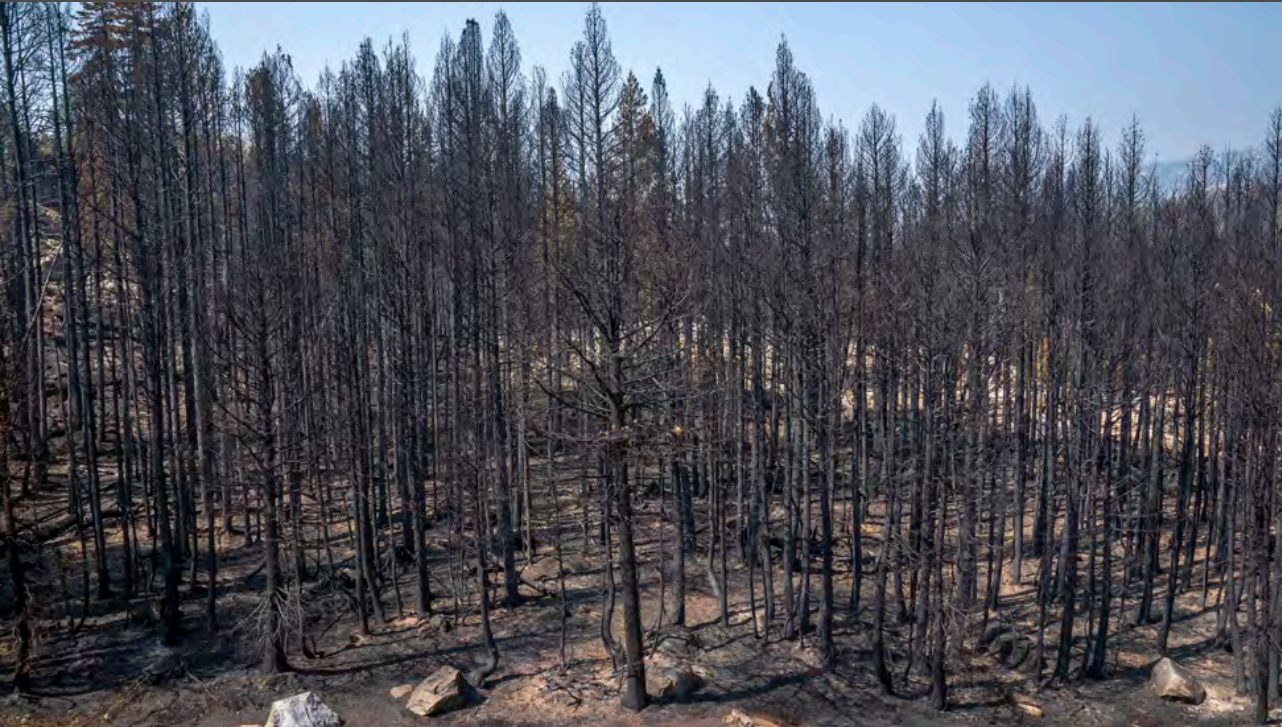
The 2021 Caldor Fire near South Lake Tahoe, California burned both sites pictured above. In this photo (left), note the high tree density in a forest stand that had not been recently thinned or burned. This likely contributed to intense fire behavior and severe wildfire effects resulting in high tree mortality.
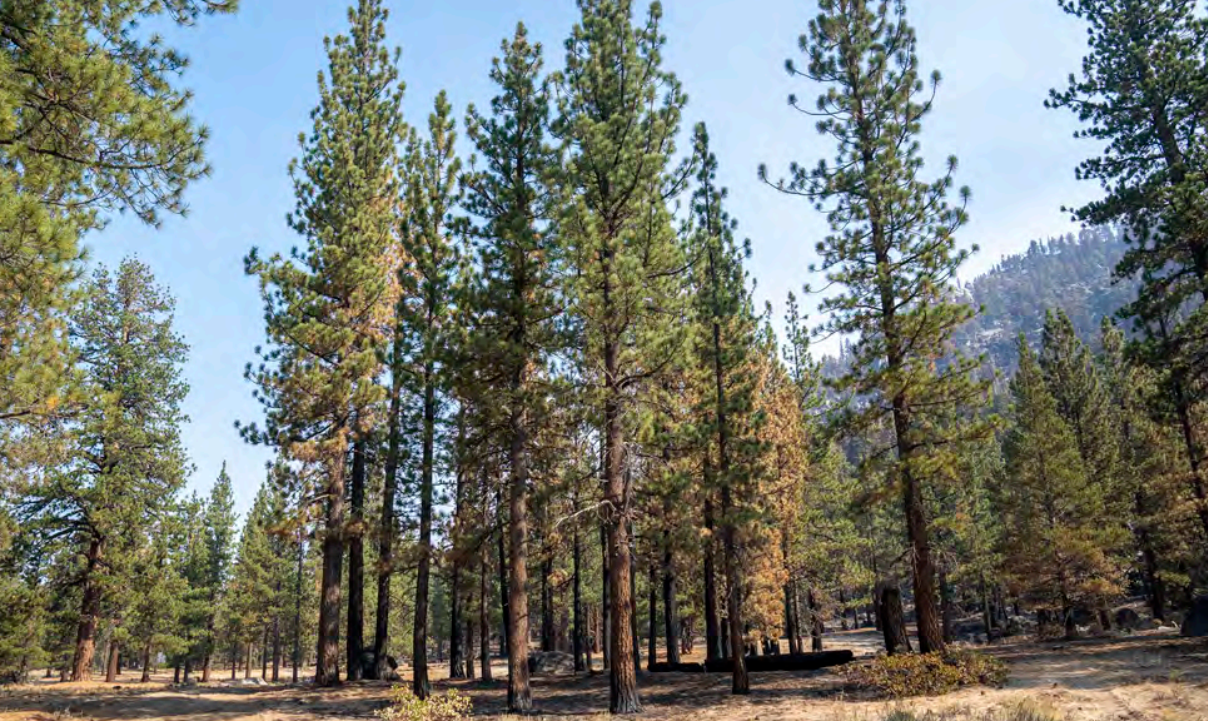
In this photo (right), note how previous fuel treatments reduced overall tree density and increased space between crowns. As a result, the severity of the wildfire was reduced, leading to lower tree mortality and more desirable fire effects. Credit: Rocky Mountain Research Station. Learn more about the effectiveness of forest treatments here.
Monitoring for Adaptive Management
In 2023, the Greater Santa Fe Fireshed Coalition drafted a Multiparty Monitoring Plan outlining monitoring efforts that could complement and support Forest Service monitoring of the SFMLRP. The proposed monitoring would be used to:
Inform management decisions;
Provide transparency regarding project planning and implementation; and
Provide opportunities for community engagement in project learning.
As of 2025, the Fireshed Coalition continues to explore options for funding monitoring efforts while spearheading grassroots monitoring efforts such as spring bird monitoring.
Bird Monitoring in the Santa Fe Mountains
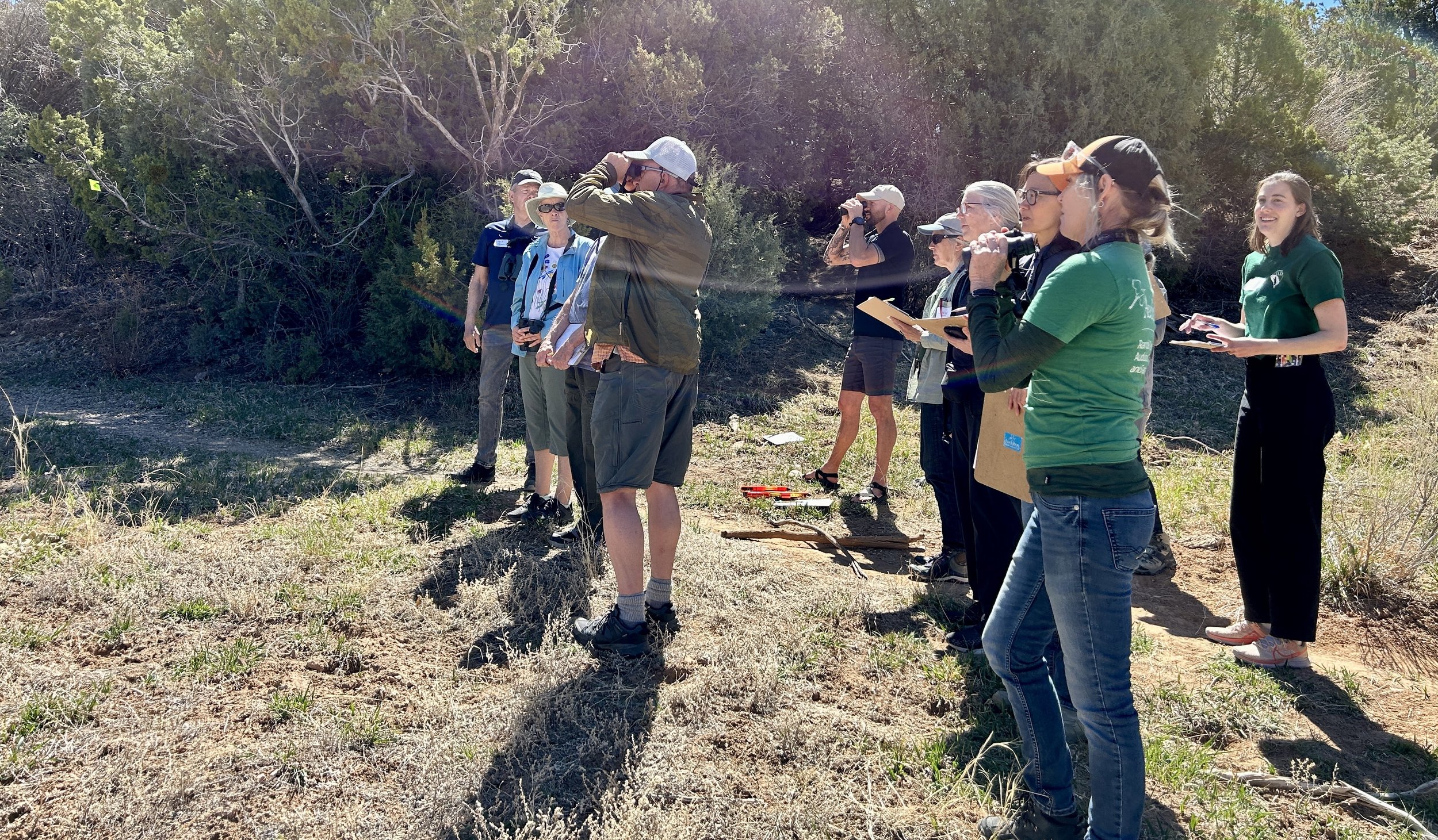
Birders practice estimating distances during our 2025 volunteer training.
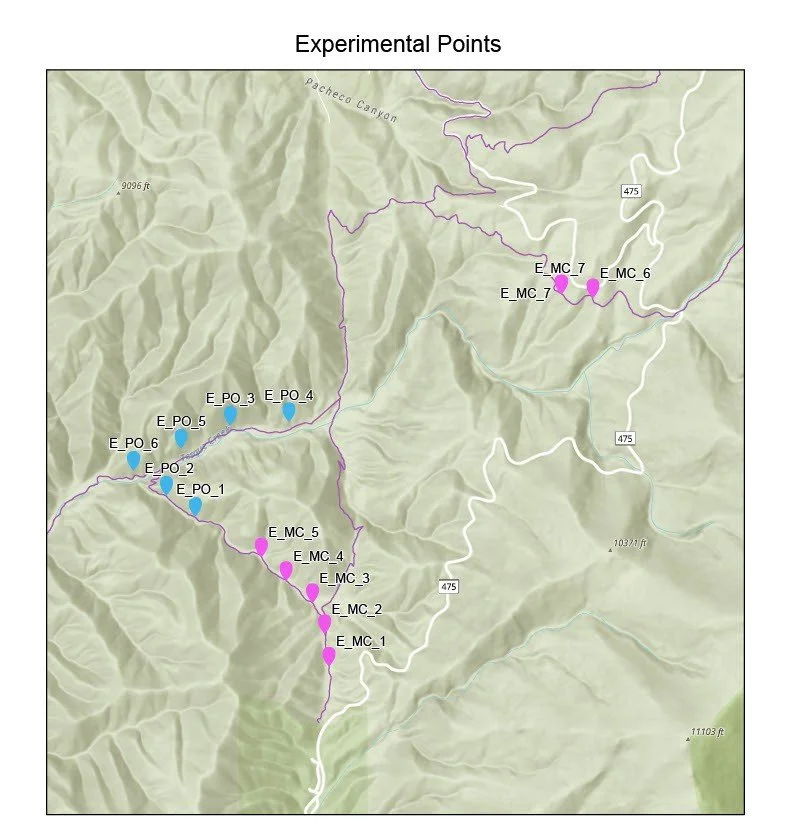
In 2023, the Randall Davey Audubon Center and the Forest Stewards Guild piloted a community science bird monitoring project in which volunteers surveyed 23 sites in mixed conifer and ponderosa pine forest in the Santa Fe Mountains, including 13 “experimental” sites where SFMLRP treatments were planned and 10 nearby “control” sites outside of planned project treatments.
In 2025, the Randall Davey Audubon Center and Forest Stewards Guild, with support from the Santa Fe National Forest, recruited volunteers to resurvey those sites.
The Forest Stewards Guild (with the help of private funding, a graduate student and Guild research ecologist) has analyzed preliminary data from the first two years of monitoring. Access the full report here.
Key takeaways include:
Early effects of forest treatments were subtle. Bird species richness and abundance did not significantly differ between treated points and untreated points in 2025. Continued monitoring is necessary to observe long-term effects of forest treatments on bird diversity.
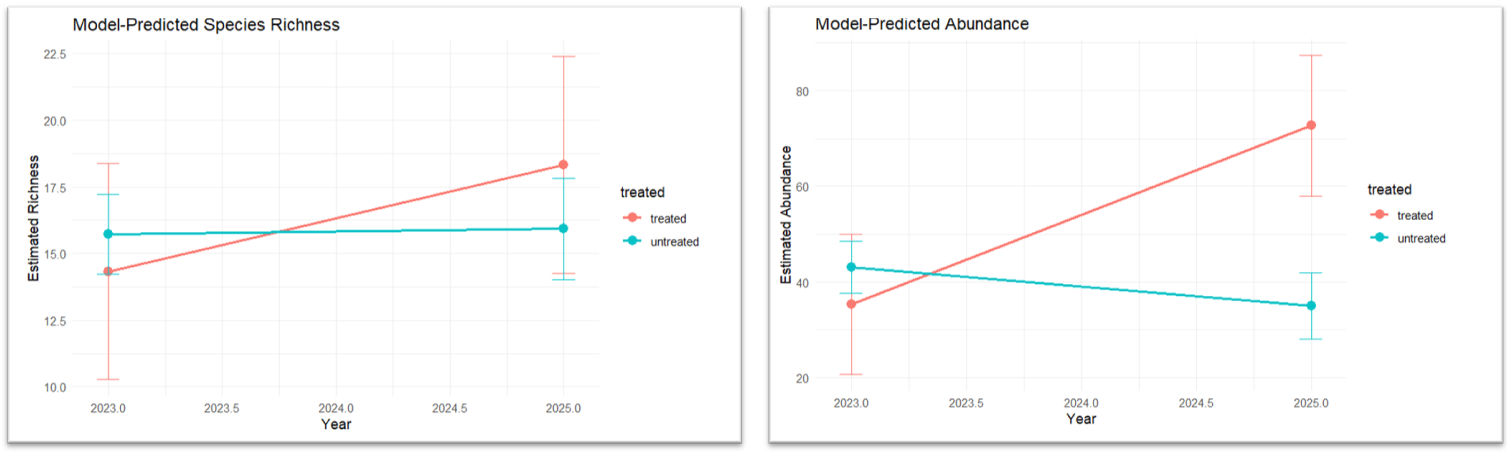
Model-predicted species richness and abundance for treated vs. untreated survey points. Bird species richness and abundance did not significantly differ between treated points and untreated points. That makes sense, because only a few points were treated by the time of this analysis, and the treatments were very recent, so forest structure is still shifting.
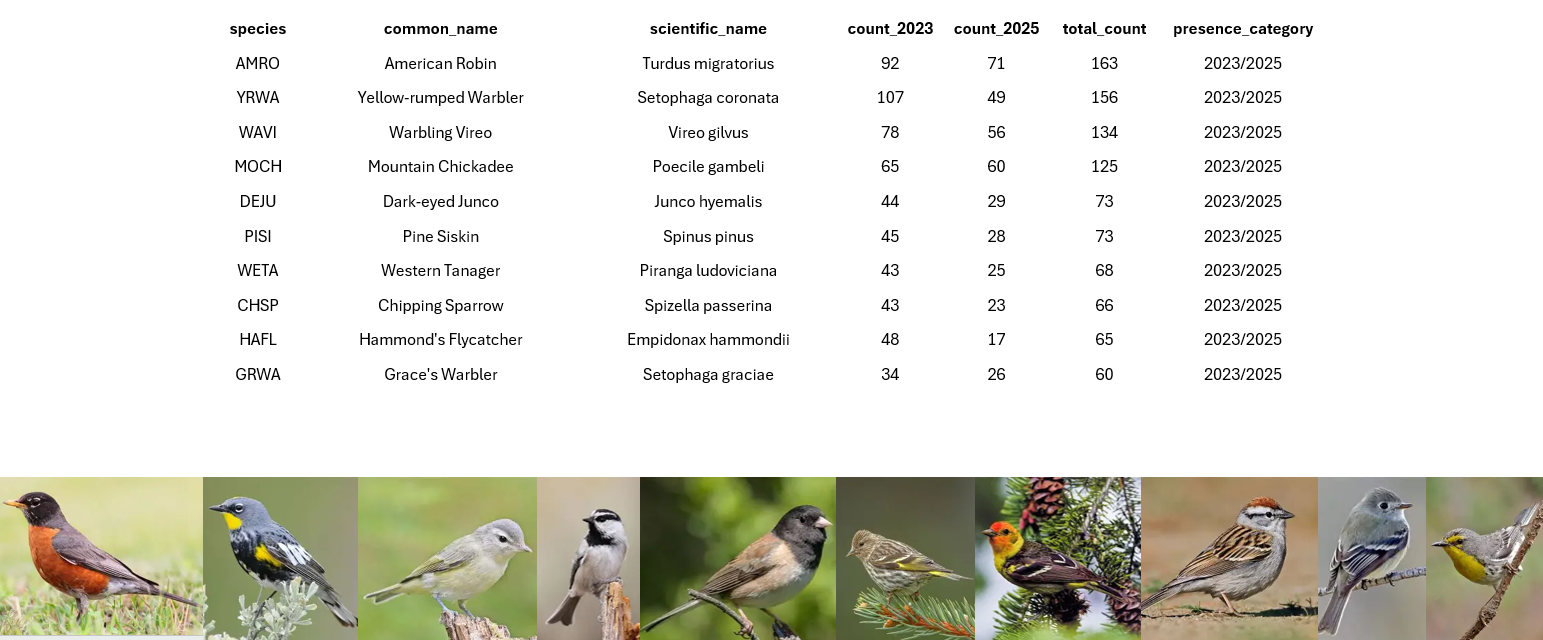
The 10 bird species most frequently detected by our volunteers were the following:
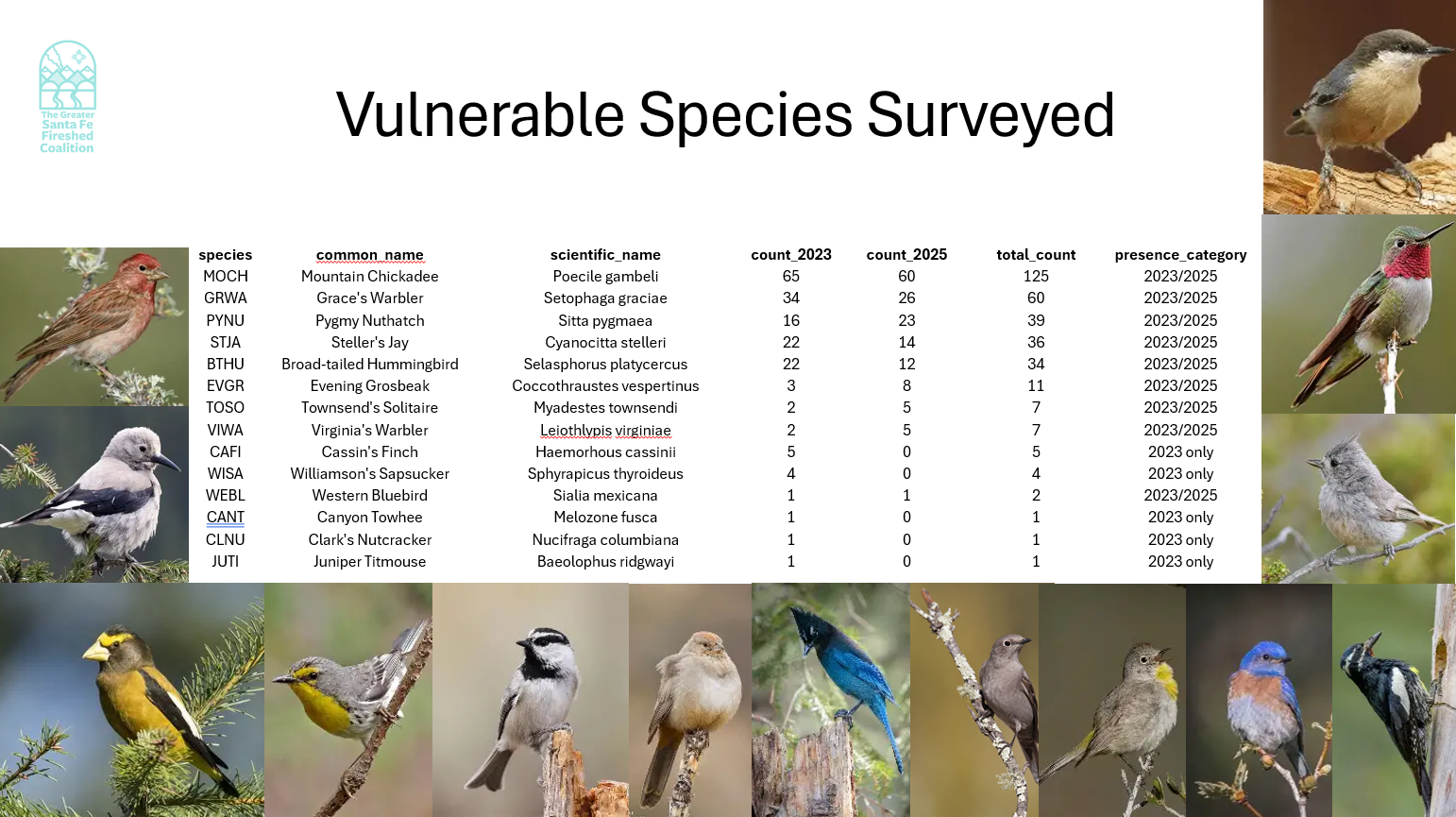
Our volunteers also recorded detections of the following vulnerable species:
Resources for Bird Monitoring Volunteers
Thank you to our amazing volunteers! Here are additional copies of your resources.