Happy Friday, greater Santa Fe community!
On September 15, 2026, 27 participants came together for a field tour of forest management and wildfire mitigation projects at Glorieta Adventure Camps and Hagan Creek in northern New Mexico. Glorieta Adventure Camps encompasses approximately 2,400 acres of forested land and developed areas near the Santa Fe National Forest, where private property and public lands meet. This landscape highlights the importance of coordinating forest management across ownership boundaries, as wildfire risk extends beyond individual properties and can affect neighboring communities, infrastructure, and watersheds.
The day was an opportunity to get out in the field, learn from local practitioners, and share ideas about how we can work together to build healthier forests and more fire-resilient communities. Participants explored a variety of fuels treatments, discussed the challenges of implementing prescribed fire, and learned about ongoing research into soil health and forest conditions. A common theme throughout the tour was the importance of collaboration across property boundaries and finding practical ways to balance community protection with long-term forest health.
Building Wildfire Resilience at Glorieta Camps: Lessons from the Field
Glorieta Adventure Camps Background
Glorieta Adventure Camps is a privately managed property encompassing approximately 2,400 acres of forested land, campsites, and developed areas in northern New Mexico. The camp and conference venue hosts summer camps, church and school groups, retreats, and other gatherings, with approximately 100 full-time residents living on the property.
Located along the Santa Fe National Forest, Glorieta’s landscape highlights the importance of coordinating forest management across public and private ownership boundaries. Wildfire does not stop at property lines, and the condition of surrounding forests can influence risks to nearby communities, infrastructure, and watersheds.
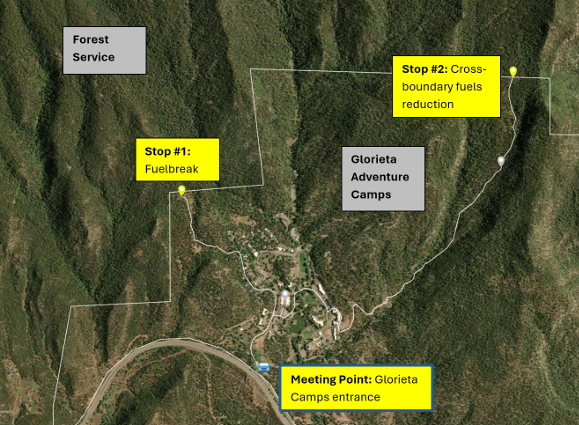
Glorieta Camps tour stops at a fuel break and a Cross-boundary fuels reduction project1
Glorieta has invested in forest management through thinning, mastication, and pile burning, supported by partnerships and grant funding. These efforts provide an opportunity to explore how site-specific treatments, collaboration, and long-term planning can contribute to wildfire resilience across the broader landscape.
The field tour visited two locations to examine these approaches: a fuel break at Glorieta Adventure Camps and a mechanical mastication treatment at Hagan Creek on adjacent U.S. Forest Service land.
Field Tour Stop #1: Fuel Break at Glorieta Adventure Camps
Balancing Community Protection and Forest Health
At the first stop, participants learned about Glorieta’s ongoing forest management efforts and the role of fuel breaks in protecting developed areas. Since 2016, approximately 1,300 acres of forest management work has been implemented on the property, including thinning, mastication, and pile burning.
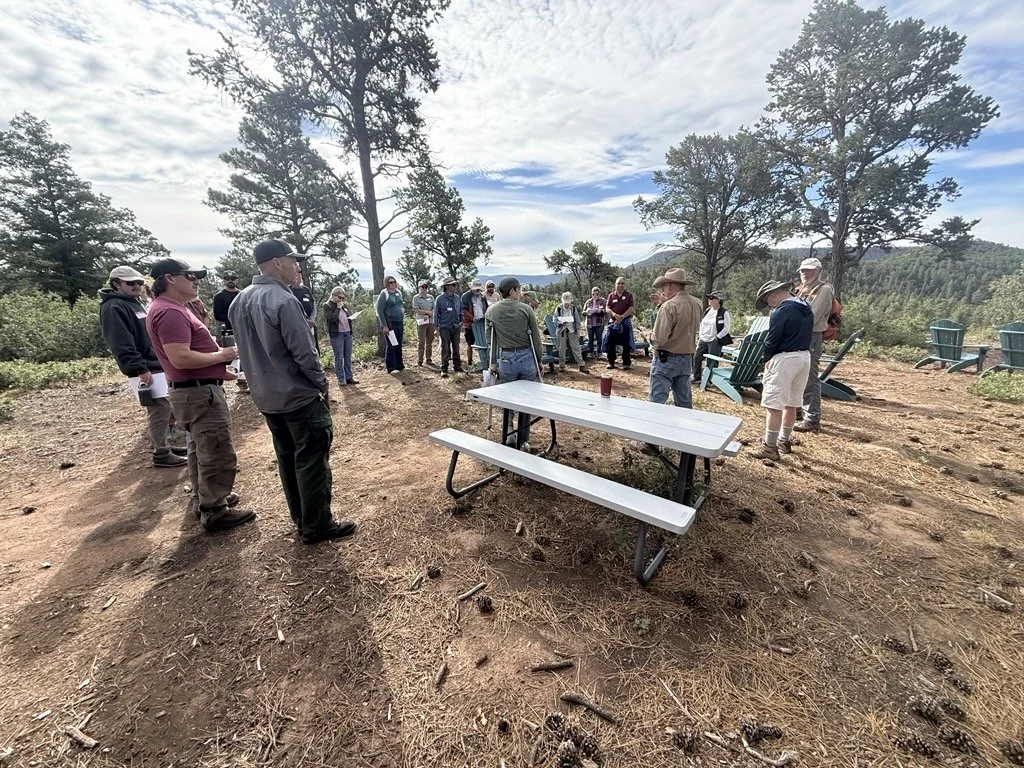
Participants at Stop #1 of the field tour discussing the importance of fuel breaks and how the Camps had effectively completed its implementation
Phil Howes, Forestry and Landscape Manager at Glorieta Adventure Camps and a former New Mexico Department of Game and Fish officer, discussed the property’s management approach and the importance of reducing hazardous fuels around developed areas.
One example is the fuel break along the northwestern side of the property. The fuel break was constructed to help slow a potential fire on Forest Service land as it approaches the interstate and the approximately 400 developed acres of the campus.
Fuel breaks are not designed to stop every wildfire on their own. Research summarized by the Joint Fire Science Program emphasizes that their benefits often include reducing fuel continuity, improving firefighter access, and creating opportunities for suppression efforts. Their effectiveness depends on conditions such as weather, surrounding vegetation, maintenance, and how firefighters use the area during an incident.
At Glorieta, the fuel break is one component of a broader approach to wildfire resilience. Its role complements forest thinning, mastication, prescribed fire, and vegetation management around buildings and other developed areas.
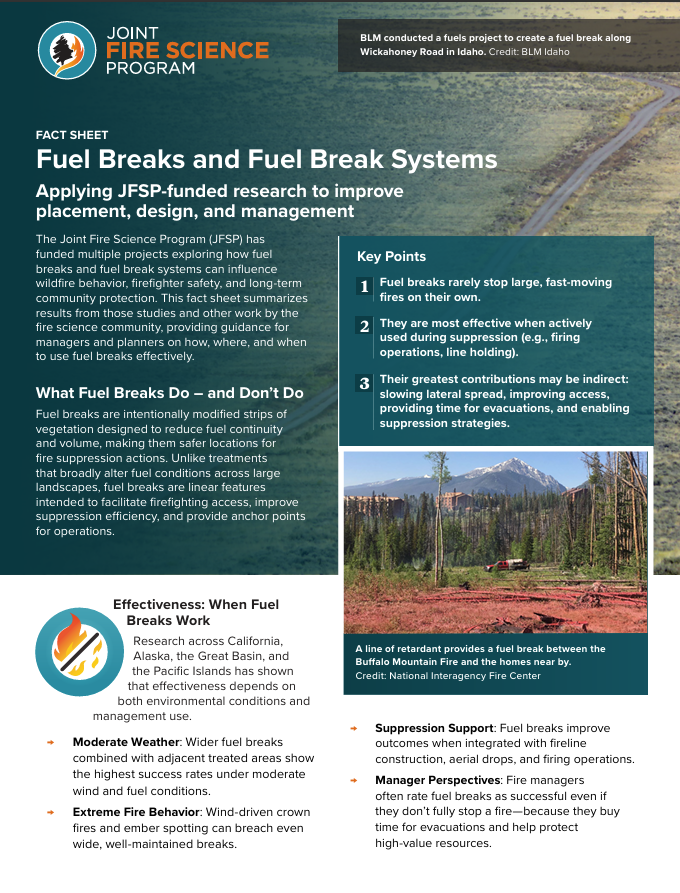
Excerpt from the Joint Fire Science Program’s Fuel Breaks and Fuel Break Systems fact sheet, explaining how strategically placed and maintained fuel breaks can reduce fuel continuity, improve firefighter access, and support wildfire suppression efforts. Fuel breaks are most effective as part of a broader forest management and wildfire response strategy, rather than as stand-alone barriers to fire.
The Opportunities and Challenges of Prescribed Fire
Rian Ream, Fire Management Officer with the Santa Fe National Forest, discussed some of the opportunities and challenges of using prescribed fire in steep terrain surrounded by homes and forested watersheds. Prescribed fire can reduce understory vegetation and ladder fuels, but implementation requires extensive planning, suitable weather conditions, coordination among agencies, and careful consideration of potential risks.
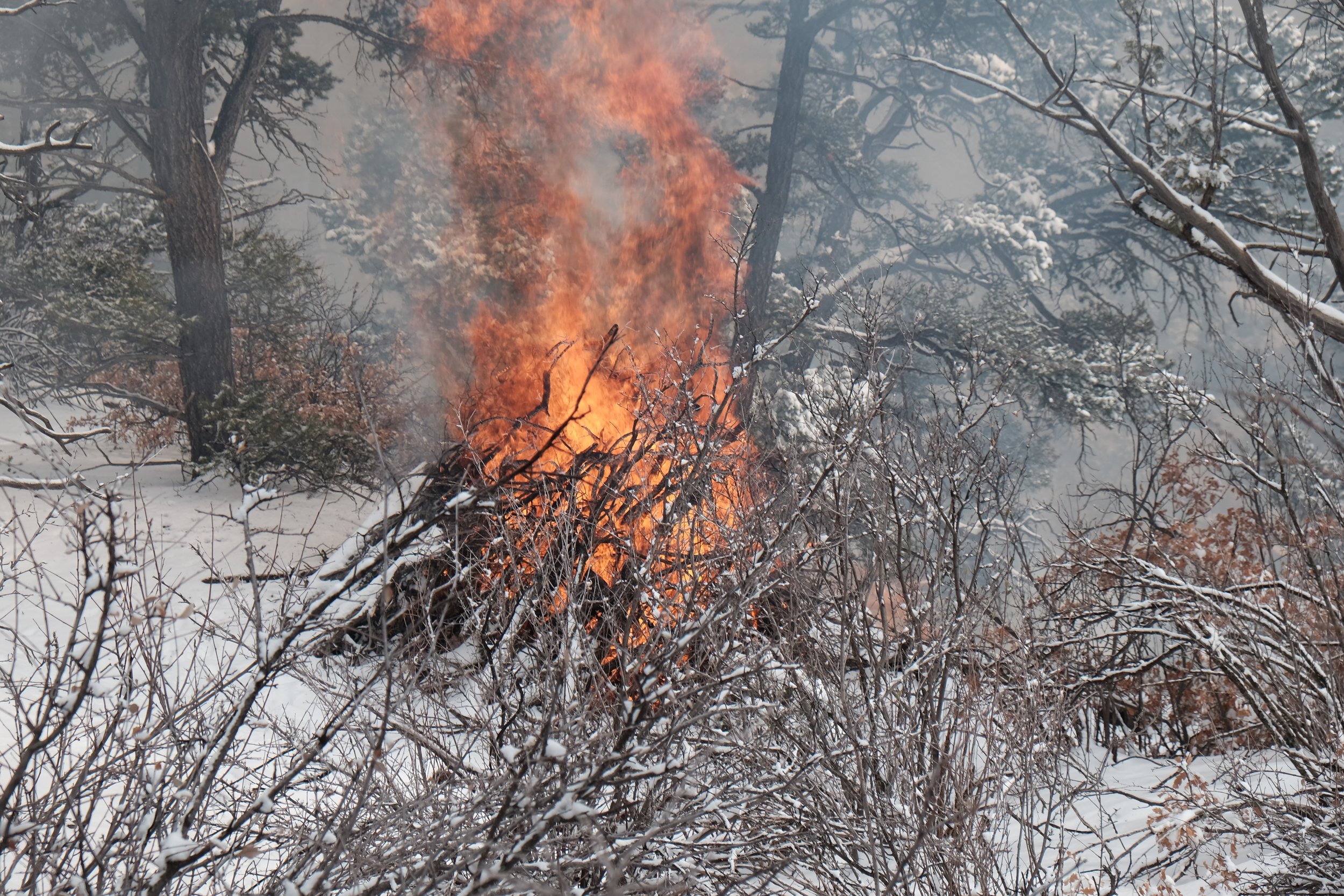
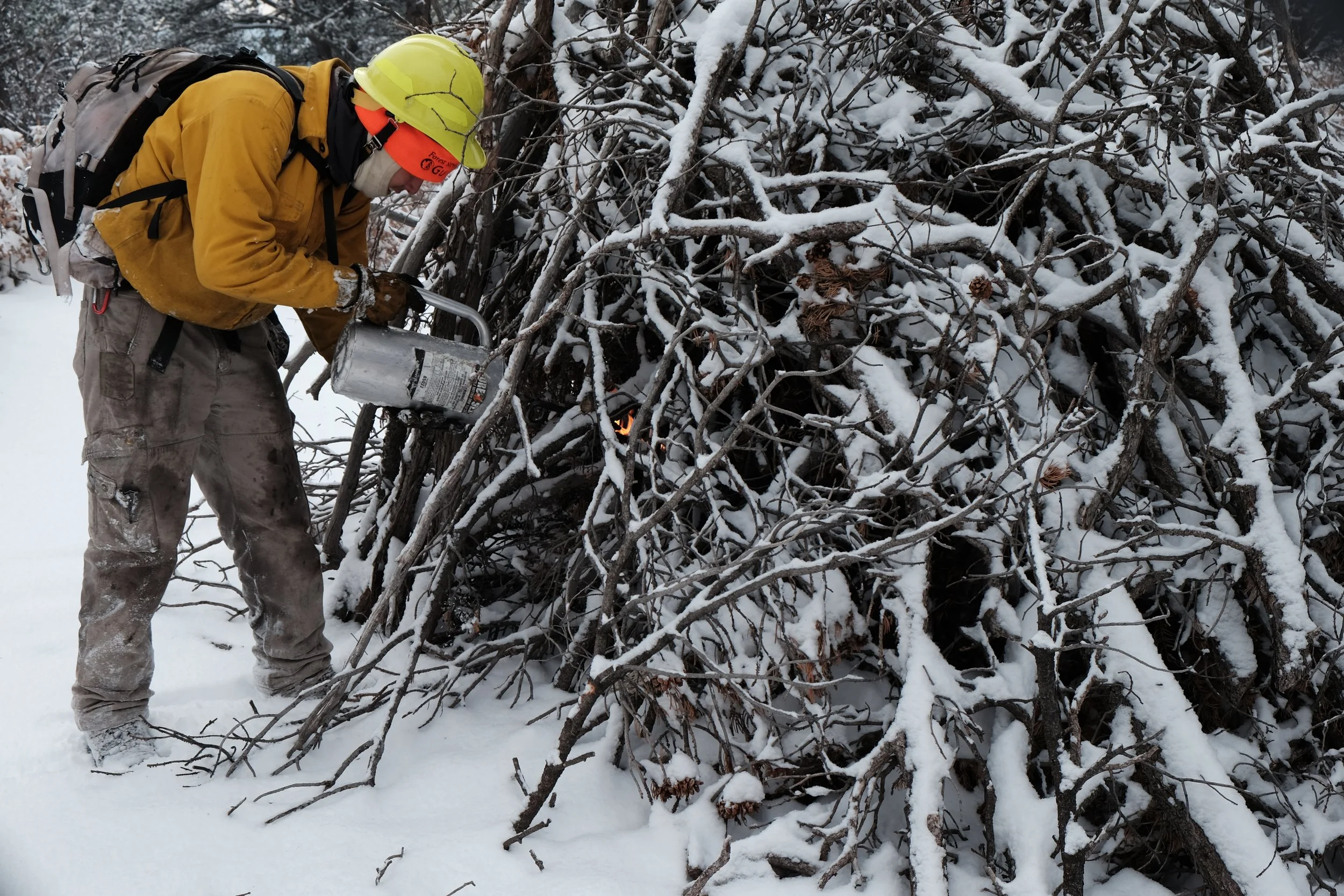
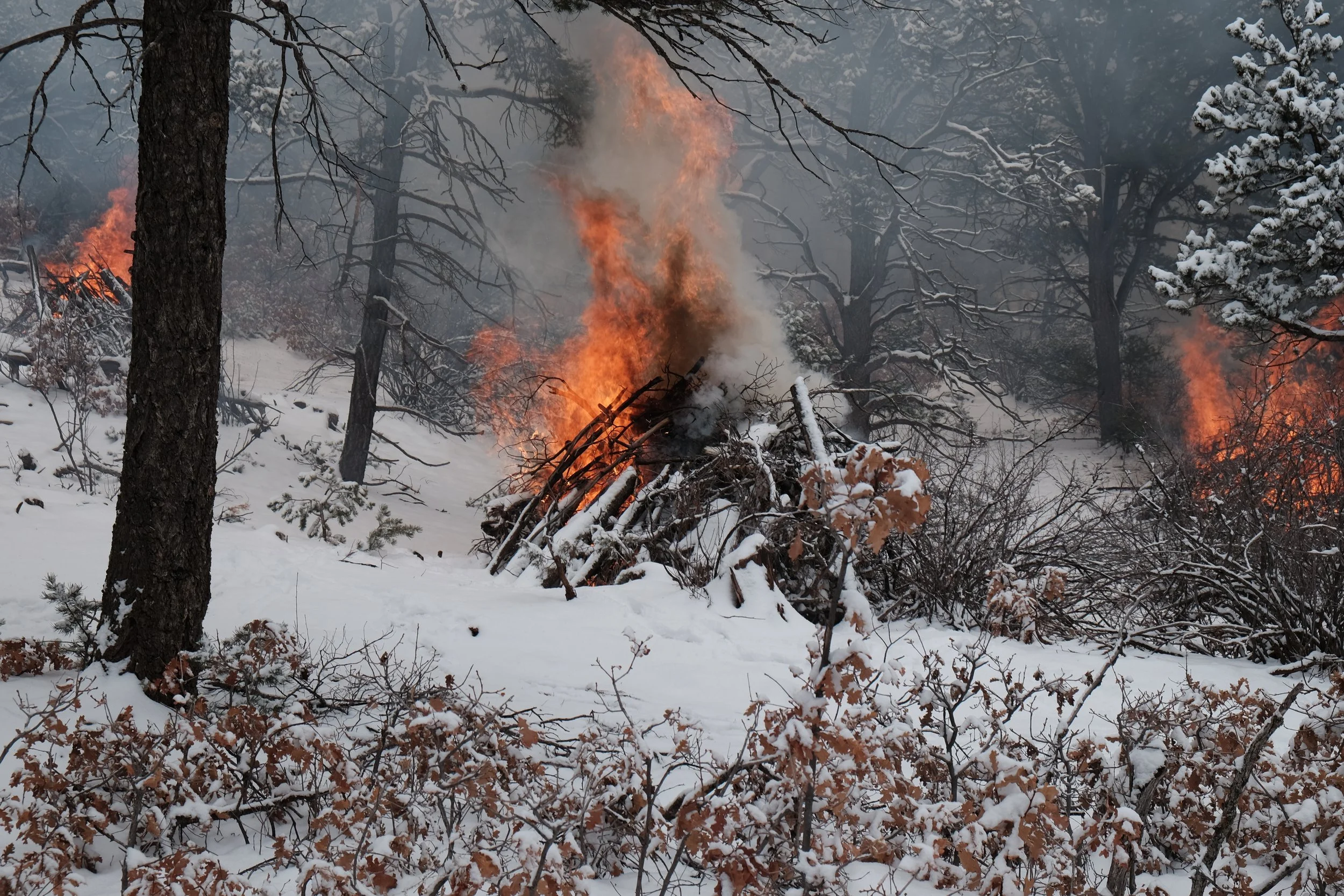
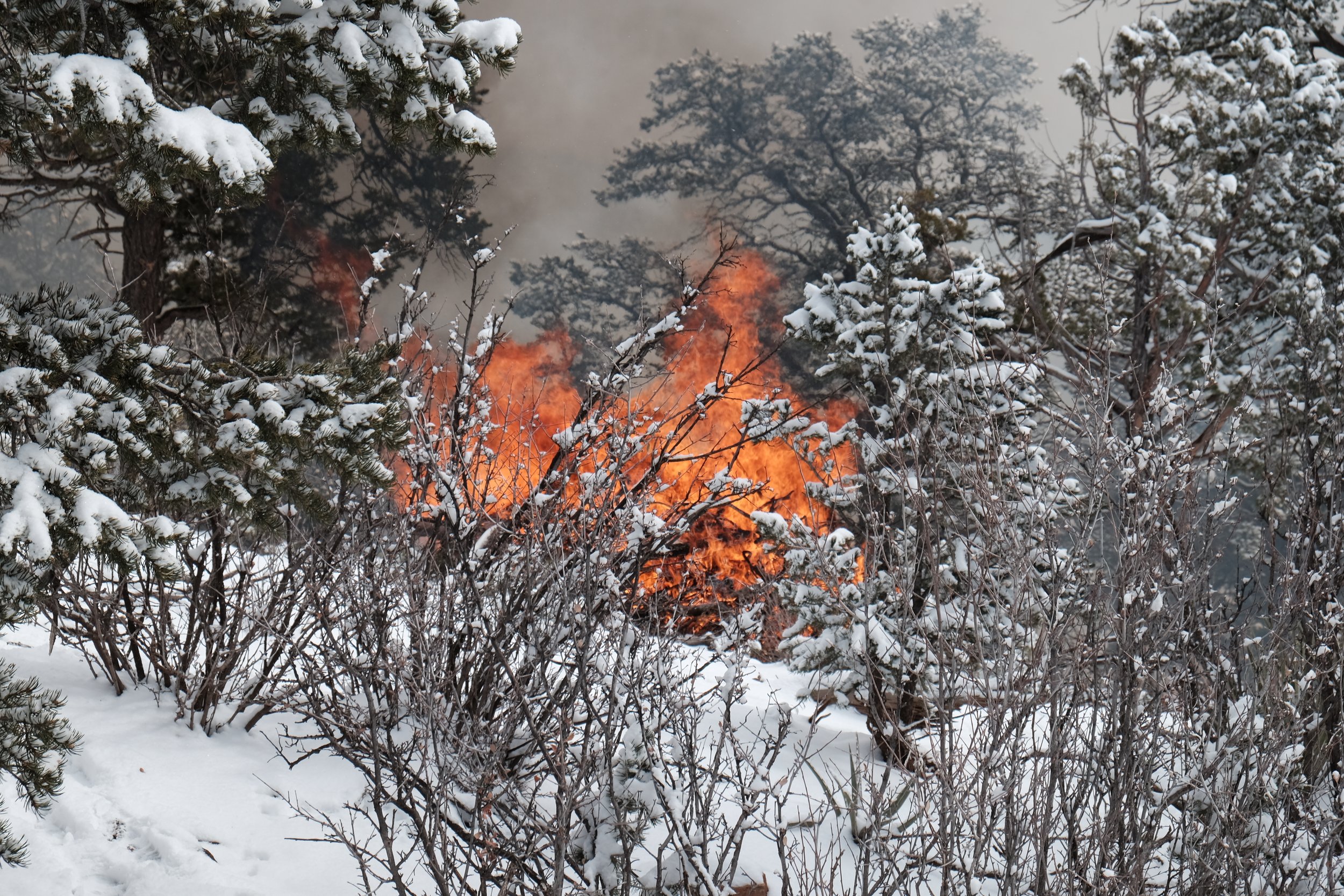
Glorieta has a history of working with prescribed fire partners to reduce hazardous fuels and improve forest conditions. In January 2021, the All Hands All Lands Burn Network supported pile burning across 30 acres at the Camps. The network returned in January 2022 to lead a 70-acre pile burn and provide training and education for Glorieta staff. Collaborative pile-burning efforts continued into early 2023.
These projects demonstrate how sustained partnerships can help private landowners implement treatments while building local capacity and experience with prescribed fire.
In 2024, Glorieta partnered with the Santa Fe National Forest, New Mexico Forestry Division, and the Forest Stewards Guild to plan a 130-acre prescribed broadcast burn. The burn was not implemented because weather conditions were unfavorable.
Although a planned burn may be postponed, that decision is an important part of responsible fire management. Prescribed fire depends on suitable weather, fuel moisture, operational readiness, and other conditions that allow managers to meet treatment objectives while managing risk. The ability to wait for the right conditions is essential to using fire safely and effectively.
The most recent pile burn at Glorieta took place in February 2026, continuing the property’s work to manage accumulated fuels. Together, these examples illustrate that prescribed fire is not a one-time project, but an ongoing process that depends on planning, partnerships, and the right conditions.
Different Treatments for Different Locations
The group also discussed mastication as another tool for managing vegetation. Mastication uses machinery to break down standing vegetation into smaller pieces that remain on the forest floor. It can be useful in locations where mechanical treatment is practical but removing slash or safely burning it may be difficult because of terrain, access, or nearby infrastructure. It may also be considered where maintaining the appearance and function of recreational areas is a priority.
However, mastication involves trade-offs. Unlike pile burning, which consumes much of the treated woody material, mastication leaves that material on site. A continuous layer of masticated material can affect surface fuel conditions and potentially influence fire behavior in the short term. It can also temporarily limit understory plant growth as the material decomposes. These effects depend on the amount and distribution of material, site conditions, and how the area is managed over time.
Choosing the right treatment means weighing these benefits and limitations against the goals for each location. Thinning can reduce stand density and improve forest structure, mastication can break down vegetation where mechanical treatment is appropriate, and pile burning or prescribed fire can consume woody material and other fuels.
In practice, these methods can complement one another as part of a broader forest management plan. The goal is to select treatments that address immediate fuel management needs while supporting long-term forest health and wildfire resilience.
Field Tour Stop #2: Hagan Creek
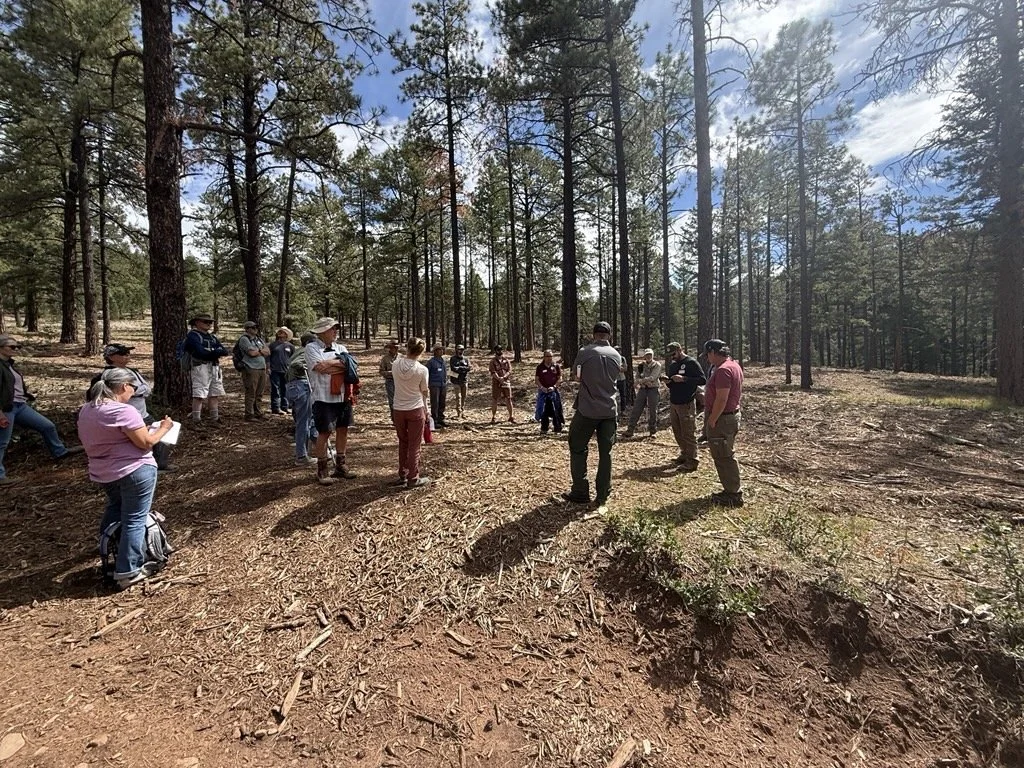
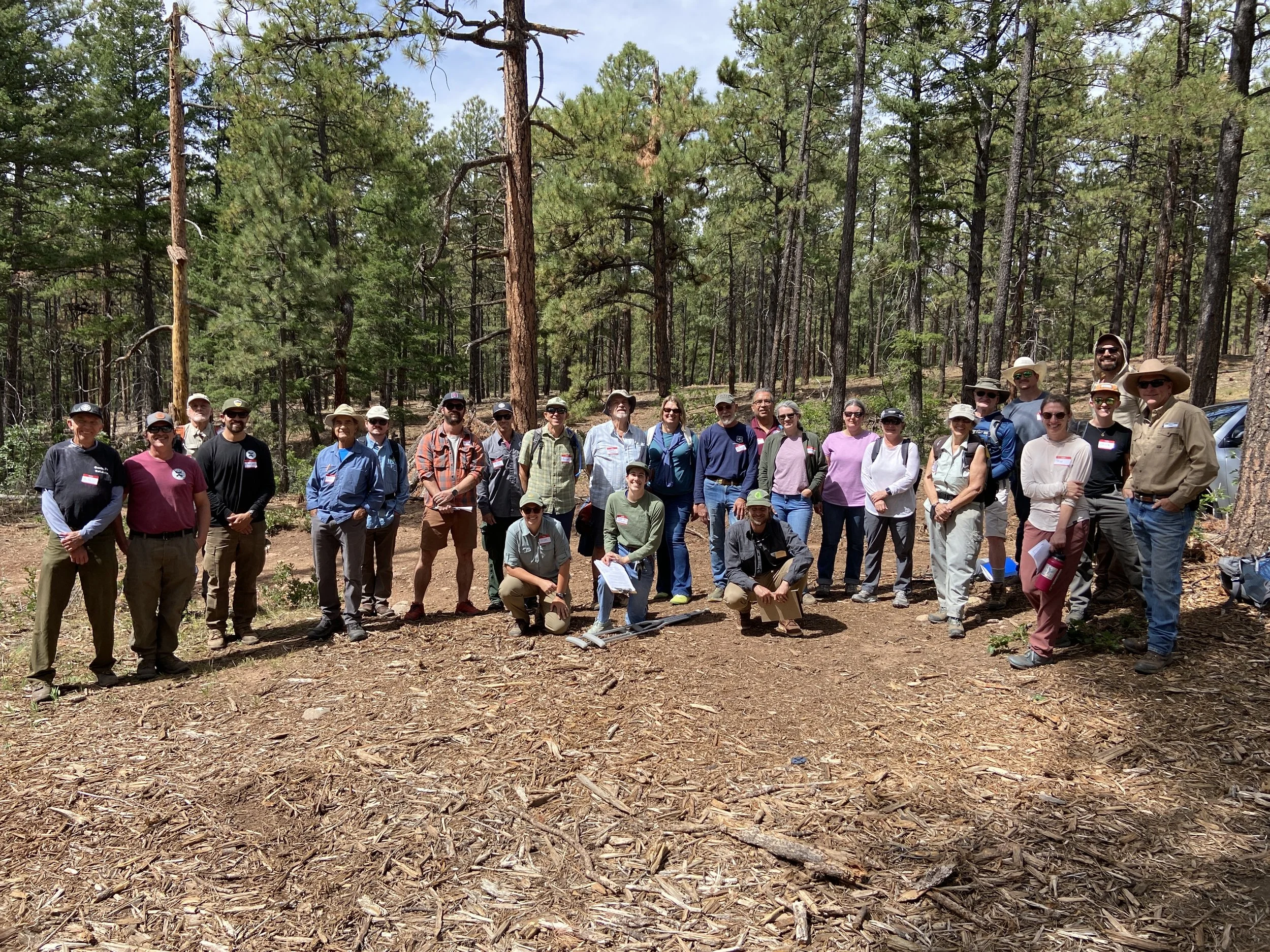
Participants gather in a ponderosa pine treatment area where forest thinning has reduced tree density and masticated woody material remains on the forest floor. Mastication can help manage vegetation where other slash disposal methods are impractical, but the resulting surface fuels require consideration of short-term fire behavior, soil conditions, and longer-term forest recovery.
Working Across Boundaries
At Hagan Creek, participants explored forest management on U.S. Forest Service land just north of the Glorieta Adventure Camps boundary. The stop highlighted how treatments on neighboring properties can complement one another as part of a broader landscape approach to wildfire resilience.
Decades of fire suppression have contributed to overstocked forest conditions in many areas of the Southwest. When trees grow at higher densities, competition for water and other resources can increase, while accumulated vegetation and woody material can contribute to hazardous fuel conditions.
Thinning helps address these challenges by reducing stand density and fuel loads while creating a healthier mosaic of trees across the landscape. Rather than removing trees uniformly, managers develop prescriptions that retain groups of ponderosa pine and consider factors such as tree spacing, disease, mistletoe, pine beetle infestation, and the desired arrangement of retained tree groups. This approach allows managers to reduce density while maintaining forest structure and diversity. The objective is not simply to remove trees, but to shape conditions that support a healthier and more resilient forest over time.
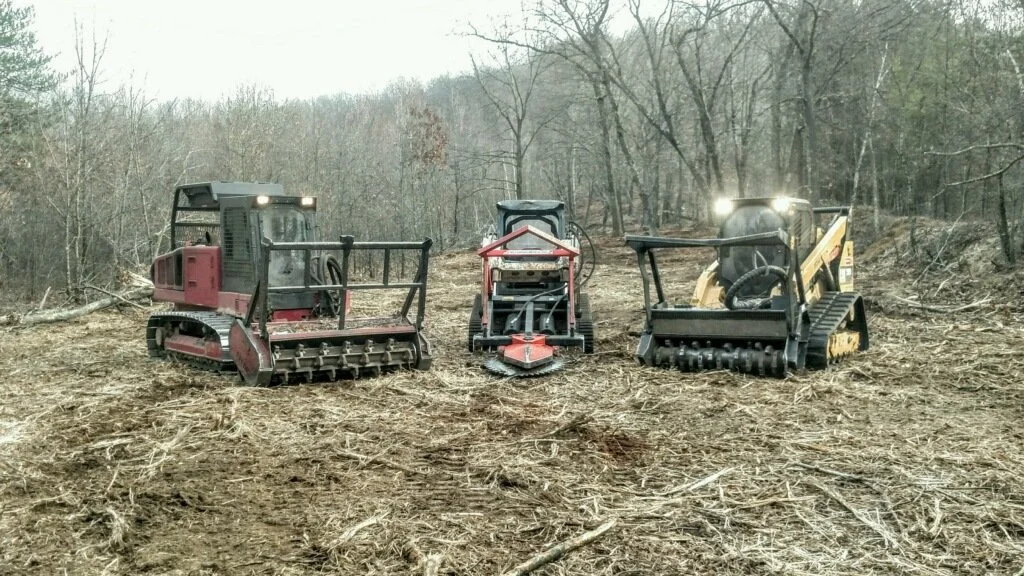
Example of heavy equipment with masticator attachment
The U.S. Forest Service completed a 145-acre mechanical mastication treatment at Hagan Creek in April 2026. The project used specialized equipment to crush and rearrange vegetation and woody fuels. Alongside thinning and other forest management practices, mastication can help modify fuel conditions where mechanical treatment is appropriate.
Forest management at Hagan Creek also supports watershed goals. Improving forest structure and reducing excessive competition for water can contribute to healthier forest conditions, while treatment outcomes depend on site characteristics and how the work is designed and maintained.
The Hagan Creek stop illustrated why forest restoration requires a combination of treatments tailored to conditions on the ground. Coordinating management across public and private lands can help address forest conditions at a broader scale, recognizing that the benefits and challenges of wildfire management extend beyond individual property boundaries.
Looking Beyond Acres Treated: Soil Health and Research
In addition to examining forest treatments, participants learned about research designed to monitor how management affects soil health over time. Researchers are using observational plots and soil cores to measure indicators such as soil carbon, nitrogen, and moisture across areas with different treatments and areas without treatment. The research also includes sites where pile burning has occurred.
These measurements establish a baseline for evaluating how soil conditions change following forest management and over time as environmental conditions change. Tracking soil health alongside vegetation and fuel conditions can help managers better understand the broader effects of treatments and inform future decisions.
Monitoring is an important complement to on-the-ground work. Acres treated provide one measure of progress, but they do not tell the entire story. Understanding how treatments affect forest structure, soils, and other ecosystem characteristics helps build a more complete picture of whether management is meeting its long-term goals.
Key Takeaways
Collaboration Makes Landscape-Scale Work Possible
Wildfire risk crosses ownership boundaries, making partnerships between private landowners, federal agencies, state forestry programs, and local organizations important to effective forest management. Glorieta’s partnerships and investments demonstrate how private landowners can advance work on their properties, while complementary treatments on neighboring public lands can contribute to broader landscape goals.
Treatments Must Match Conditions on the Ground
Thinning, mastication, pile burning, and prescribed fire each have different benefits and limitations. The appropriate approach depends on forest conditions, terrain, access, nearby infrastructure, treatment objectives, and the ability to implement the work safely. Combining methods can help managers address immediate fuel concerns while supporting long-term forest health.
Protecting Developed Areas Is Part of a Broader Strategy
Fuel breaks and forest treatments can help reduce wildfire risk around infrastructure, but they work best as components of a broader strategy rather than stand-alone solutions. Participants also discussed the importance of managing vegetation around staff buildings and campsites and maintaining defensible space around developed areas.
Monitoring Helps Measure Long-Term Outcomes
Research at Hagan Creek highlights the importance of looking beyond the number of acres treated. Monitoring soil conditions, vegetation, and other ecological indicators can help managers understand treatment effects, evaluate progress, and adapt future management as conditions change.
Community Engagement and Capacity Matter
Prescribed fire and other forest management practices require planning, coordination, and public understanding. Training opportunities and partnerships, such as those supported by the All Hands All Lands Burn Network, can help build the knowledge and capacity needed to carry out treatments over time.
Bringing It All Together
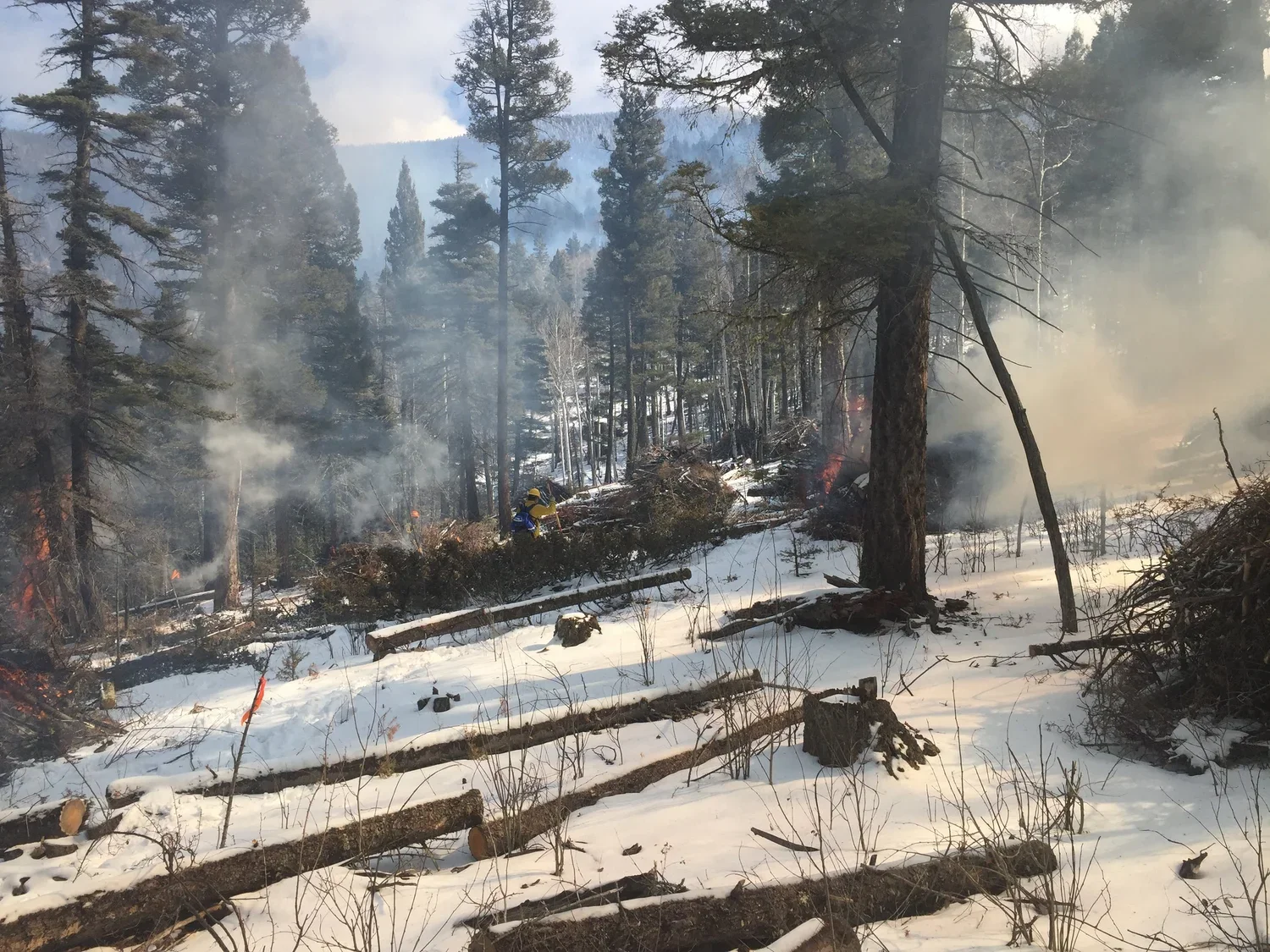
Pile burning at the Glorieta Adventure Camps
The Glorieta Adventure Camps field tour offered a practical look at how forest management, community protection, and ecological research can work together to build wildfire resilience. The property’s ongoing investments in forest management, professional planning, and partnerships provide an example of how private landowners can take an active role in reducing hazardous fuels and improving forest conditions.
The tour also demonstrated that no single treatment can address every wildfire challenge. Fuel breaks can create opportunities for suppression, thinning and mastication can modify vegetation and fuel conditions, and prescribed fire can help reduce accumulated fuels when conditions allow. Monitoring adds another layer by helping managers understand how these treatments affect the forest over time.
Hagan Creek reinforced the importance of looking beyond property boundaries. Forest management on public and private lands can complement neighboring efforts, contributing to a more coordinated approach to wildfire risk, forest health, and watershed resilience.
These lessons are especially relevant to the Santa Fe Fireshed, where wildfire preparedness depends on coordinated action across a landscape of communities, public lands, and private properties. Continued collaboration, site-specific management, community engagement, and long-term monitoring can help build the capacity needed to reduce wildfire risk while supporting healthier forests.
The work at Glorieta and Hagan Creek illustrates that wildfire resilience is not achieved through a single project or treatment. It is built over time through sustained investment, partnerships, and management decisions that account for both the needs of people and the health of the surrounding landscape.