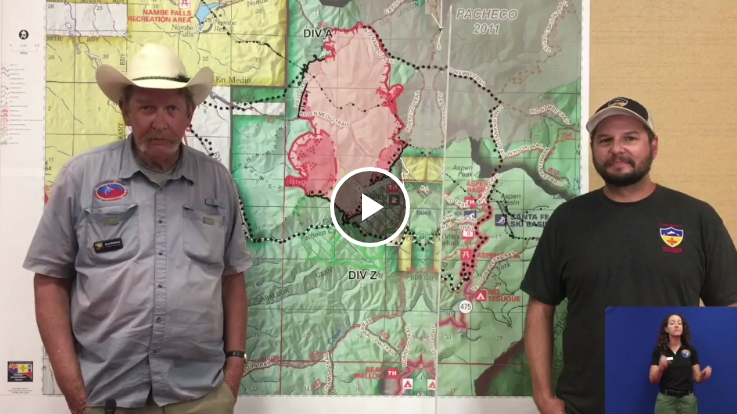
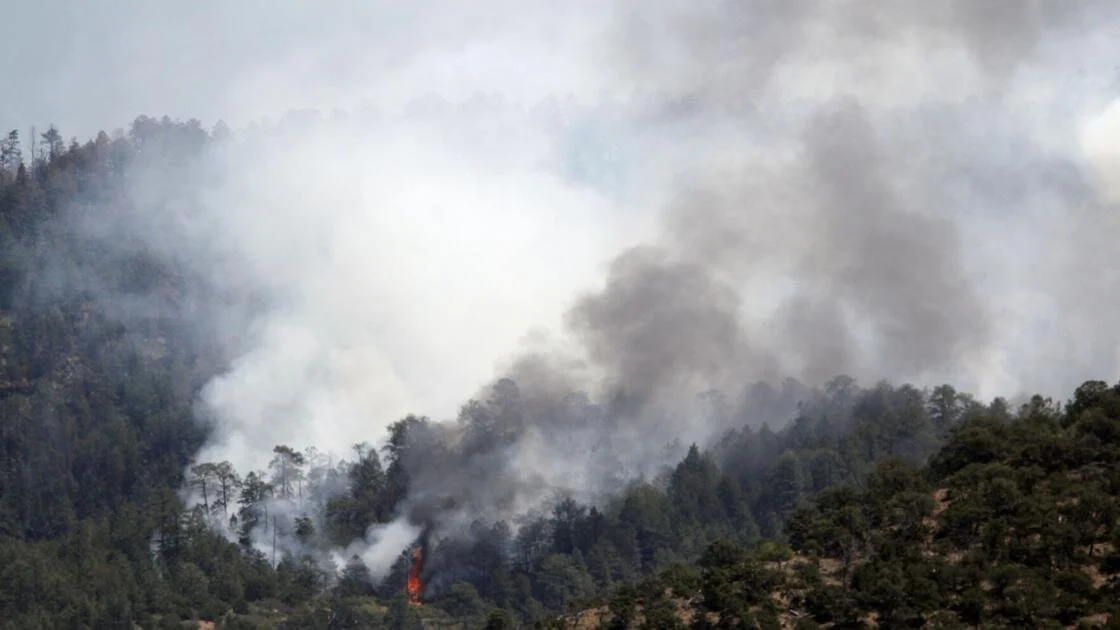
Buck Wickham, Operations Section Chief for the Southwest Area Incident Management Team 4 and U.S. Forest Service-Santa Fe National Forest Fuels Program Manager Dennis Carril discuss how forest restoration treatments and prescribed fire work aided in suppression efforts on the Medio fire in a new video produced by The Nature Conservancy and Forest Stewards Guild. The full length video can be found on the Medio Fire page on the Coalition’s website. The shortened highlights version is available below.
Wildfire Wednesdays #24: Wildfire Hazard Explorer - Living with Wildland Fire: Virtual Learning Opportunity
Hello Fireshed Members,
The devastating wildfires burning in California, Oregon, and Washington serve as a grim reminder of the risk of wildfire across the west. Thank you all for continuing to stay engaged in making incremental progress toward wildfire adaptation and helping us bring new people and perspectives into this effort. As we head into the fall, it is a great time to open up conversations about our community’s wildfire risk with those that live nearby.
This week’s Wildfire Wednesday features:
A New Interactive Wildfire Hazard Explorer by The National Association of State Foresters
A virtual shared learning series: Living with Wildland Fire
Stay Safe,
Gabe
Online Wildfire Hazard Explorer
The National Association of State Foresters (NASF) has gone live with their Wildfire Hazard Explorer portal at https://hazexplorer.com/home. The NASF developed this portal so that a user could easily locate links to available risk assessments, hazard maps, burn probability maps and similar data. This tool is a great way to gain a deeper understanding of your community’s wildfire risk and to communicate that risk to those that live nearby.
This hazard explorer tool was made possible through funding from the U.S. Forest Service provided. NASF will continue to host the portal and keep it updated as new information becomes available. This effort complements the recent work to develop the https://wildfirerisk.org/ tool.
The western region of the Fire Leadership Council presents: A Living with Wildland Fire Shared Learning Experience
Assessing Firesheds for Prioritization, Planning and Investment
Tuesday, September 29, 2020 - 3pm MT
Dr. Alan Ager will be updating us on the advancements in the development of this national “fireshed” dataset and how it can be used to assist decision-makers in prioritizing, planning and investing in cross-boundary, large landscape-level treatments in alignment with the Cohesive Strategy concept of sharing risk and responsibility to achieve landscape resiliency, fire adapted communities and a safe, effective wildfire response.
Wildfire Wednesdays #23: After the Wildfire New Mexico - Stories from The Medio Wildfire
Hi Fireshed Members,
Although firefighters are continuing to wrap up wildfires from the 2020 season, the majority are contained. At this point, Burned Area Emergency Response (BAER) teams are beginning to assess post-fire conditions with goal of analyzing how wildfires impacted the landscape, determining if there are values at immediate risk, and recommending emergency treatments. This is part of the recovery process from wildfire, and is an important part of being fire adapted.
This week’s Wildfire Wednesday features:
The After the Wildfire New Mexico website for post-fire resources
Some perspectives on The Medio wildfire that burned close to Santa Fe
Best,
Gabe
After the Wildfire
Experiencing a destructive wildfire can be devastating. This guide was written to help New Mexico communities recover after wildfire. It includes information on how to mobilize your community, a list of resources available to communities and individuals for assistance, and a technical guide with information about post-fire treatments to address the catastrophic effects of a wildfire on the land and to prepare for potential flooding. If you are reading this guide before a wildfire occurs, use it to help you plan ahead.
This guide is intended to provide useful information during this difficult time, and to start you on the road to recovery.
To visit After the Wildfire New Mexico, click here.
For more post-fire resources, check our New Mexico Fire Information, click here.
Stories from the Medio Wildfire
The Medio Wildfire, which burned around 5 square miles just north of Santa Fe, has been a visible reminder of the risk that New Mexico communities face from wildfire. Many hope that this wildfire will raise consciousness around wildfire risk and encourage homeowners, agency representatives, firefighters, and others to work together for wildfire preparedness.
There have been many news articles about the Medio fire. We would like to share some articles that have done a good job telling the story of the Medio fire from different perspectives.
An article by Ceder Attanasio, with the Associated Press, puts the story of the Medio wildfire within the context of increasing wildfire nationwide and highlights the importance of community mitigation. To read the Attanasio’s article about the Medio fire, click here.
Another article, “A Closer Look at the Medio Fire,” by Leah Cantor, provides an in depth description of the fire management tactics that were used to fight the Medio fire and the role that fuel reduction treatments, prescribed fire, and community mitigation played in shaping the decision making space of the incident command team. To read “A Closer Look at the Medio Fire,” click here.
Finally, an article by the NM Political Report, describes how indigenous activists from The Three Sisters Collective created a citizen led solution to help people suffering from the effects of wildfire smoke. To read the article about The Three Sisters Collective’s response to the Medio wildfire, click here.
Wildfire Wednesdays #22: DIY Smoke Filter - Accurate Wildfire Information Websites
Hi Fireshed Members,
Smoke is in the air and wildfire season is still underway. With drought across northern New Mexico, fuel moistures are abnormally low, and wildfires continue to burn within the dry fuels.
Although northern New Mexico received a close to normal amount of snow during the 2019-2020 water year, the timing of that snow was early in the season, creating the dry, late summer conditions that firefighters are working within.
To help you stay informed and provide some relief from smoke, this Wildfire Wednesday includes:
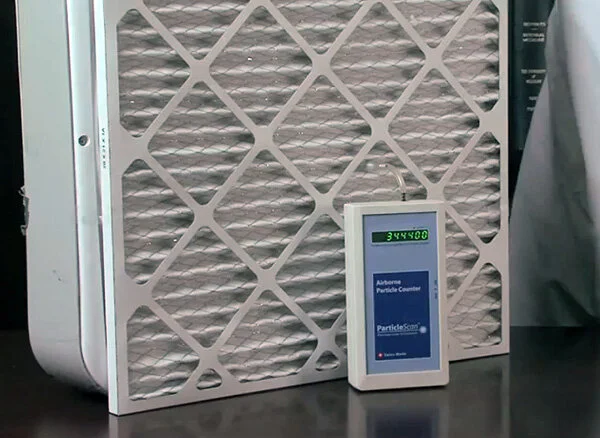
Instructional video for creating a DIY HEPA air filter for around $25
Webpages for finding accurate, up-to-date wildfire information
Best,
Gabe
Find Relief from Wildfire Smoke: Create a DIY Smoke Filter for $25
With wildfire smoke from The Medio Fire and the Caja Fire, you may be looking for some relief. Although The Fireshed Coalition coordinates a HEPA filter loan program, we are currently out of filters for loaning out. Below are some alternative options for managing the health effects from wildfire smoke in your home.
Make your own HEPA filter with parts from a local hardware store for about $25. To view a video produced by a University of Michigan Health experts, click here.
Follow precautions to stay safe from smoke without a HEPA filter. To read some ways that you can limit your exposure to smoke, click here.
Purchase a HEPA air cleaner. To view some useful information about purchasing a HEPA filter for your home on our website, click here.
Wildfire Information across New Mexico
For the most accurate and up-to-date information on wildfires and fire restrictions across New Mexico subscribe to the New Mexico Fire Information mailing list by visiting nmfireinfo.com. New Mexico Fire information is an interagency effort by federal and state agencies in New Mexico to provide timely, accurate fire and restriction information for the entire state. The website is updated as new information is available.
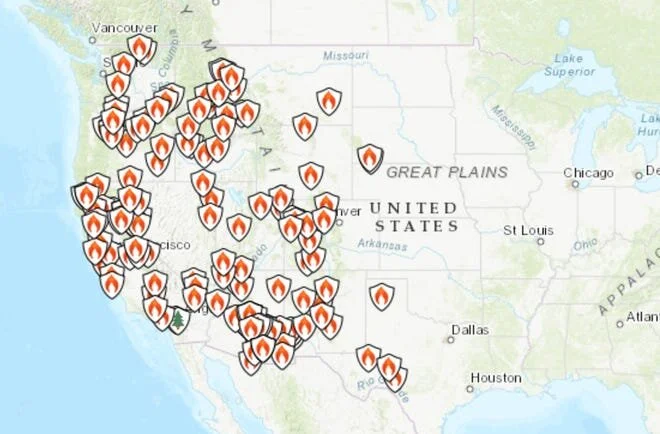
To follow a wildfire incident longer-term, after it has been described on New Mexico Fire Information, you can visit The Incident Information System at inciweb.nwcg.gov. The Incident Information System, commonly referred to as inciweb, is an interagency all-risk incident information management system that was designed to: 1. Provide the public a single source of incident related information, and 2. Provide a standardized reporting tool for the Public Affairs community. This tool has an interactive map viewer that allows you to see all the wildfires that are active across the state and across the entire country.
Wildfire Wednesdays #21: Aspen Regeneration - Fall Fire and Fuels Youth Corps
Hi Fireshed Members,
Part of living within the Fireshed is understanding the forests that surround our homes and communities, including the role of wildfire within these forests. This understanding can help us learn what to expect during fire season, and make us better prepared to respond and recover from wildfire in our area. Aside from protecting lives and property, we may also gain a more nuanced understanding of the effects of wildfire and other ecosystem disturbances within these forested systems.
This week’s Wildfire Wednesday features a new resource about Aspen regeneration in forests across the Rocky Mountains of Northern New Mexico.
Best,
Gabe
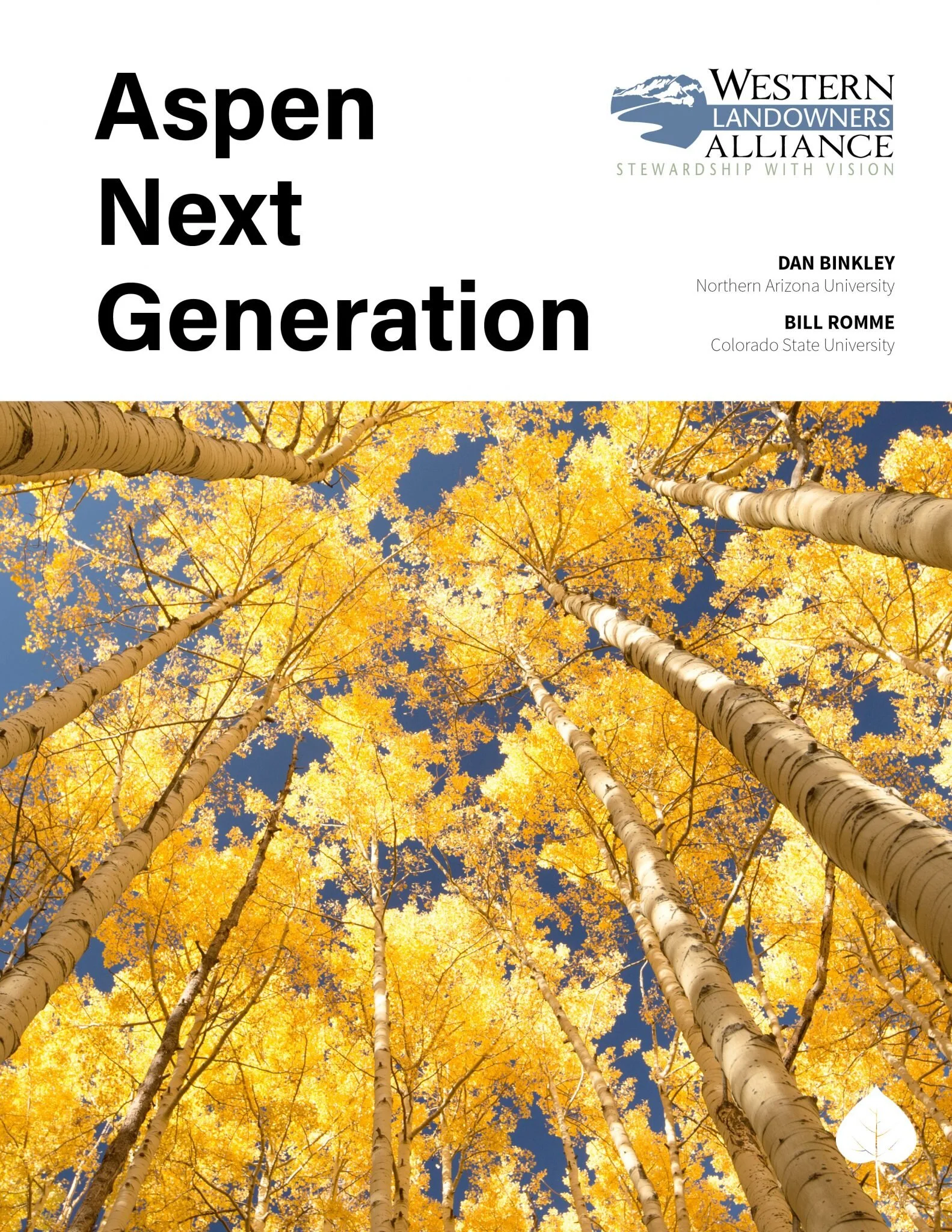
Aspen Next Generation
In the Rocky Mountains of Northern New Mexico, Aspen trees are especially important, and have an interesting relationship with wildfire. Aspen trees are a favorite to many New Mexicans because they add beauty to landscapes, foster high diversity and productivity of understory plants, provide habitat to many species, and burn with moderate fire behavior.
Some are concerned that Aspen trees and stands are not regenerating well in New Mexico; young cohorts are scarce in many areas. The Aspen Next Generation (ANG) Project aims to foster the future of aspen by pulling together insights from landowners, agency personnel and scientists across southern Colorado and northern New Mexico. The report features place-based conversation summaries that include Chama and the Jemez Mountains of northwestern New Mexico, Vermejo Park in north central New Mexico, and the Culebra Range of the Sangre de Cristo Mountains in south central Colorado.
To read the insights gathered in their report: click here.
The Forest Stewards Fall Fire and Fuels Crew
As wildfire activity in the Southwest winds down with the arrival of the monsoon season, other parts of the country are just getting going. As a result, many firefighting resources in the Southwest are deployed to other parts of the country, limiting local capacity to implement prescribed burns during prime burn windows. Prescribed fire is a necessary tool used by land managers to reduce wildfire risk and restore resilience to forests. The fall FSYC fire and fuels program helps fill this gap in capacity. This Monday, August 17th, the Forest Stewards Youth Corps began their training for the Fall 2020 season.
The fall FSYC program prepares participants for careers in natural resource management by providing them with training and certifications in:
National Wildfire Coordinating Group (NWCG) Basic Wildland Fire Fighting (S-130/190)
Wildland fire chainsaw use (S-212)
CPR and first-aid
Defensive driving
Forestry
Leadership development
Job skills such as resume and cover letter writing, and
New Mexico Forest Worker Safety.
The Forest Stewards Guild is currently hiring one more crew member to the Mountainair crew. If you know someone in this area between 18-25 that is a certified type II wildland firefighter, please contact Gabe at 509-844-3048.