Wildfire Wednesdays #104: Asset-Based Community Development

Hello Fireshed Community,

Each community or neighborhood across the Santa Fe Fireshed has a unique set of strengths and and challenges. These unique characteristics are what gives our communities identity. Many of us are proud of where we are from or where we live because of these local identities. As we work towards a more fire adapted future, it is important that we work with the strengths and challenges of our individual communities rather than taking a one-size-fits-all approach. This process takes time and local leadership, but it leads to better outcomes in the end. This week’s Wildfire Wednesday will focus on Asset-Based Community Development (ABCD) to support local leaders in working documenting their community’s strengths and challenges in hopes of working with them. This framework is brought to us from the national Fire Adapted Communities learning network (FAC Net) and the Fire Learning Network.

This Wildfire Wednesday includes:

Stay Safe,

Gabe

Asset-Based Community Development - Overview
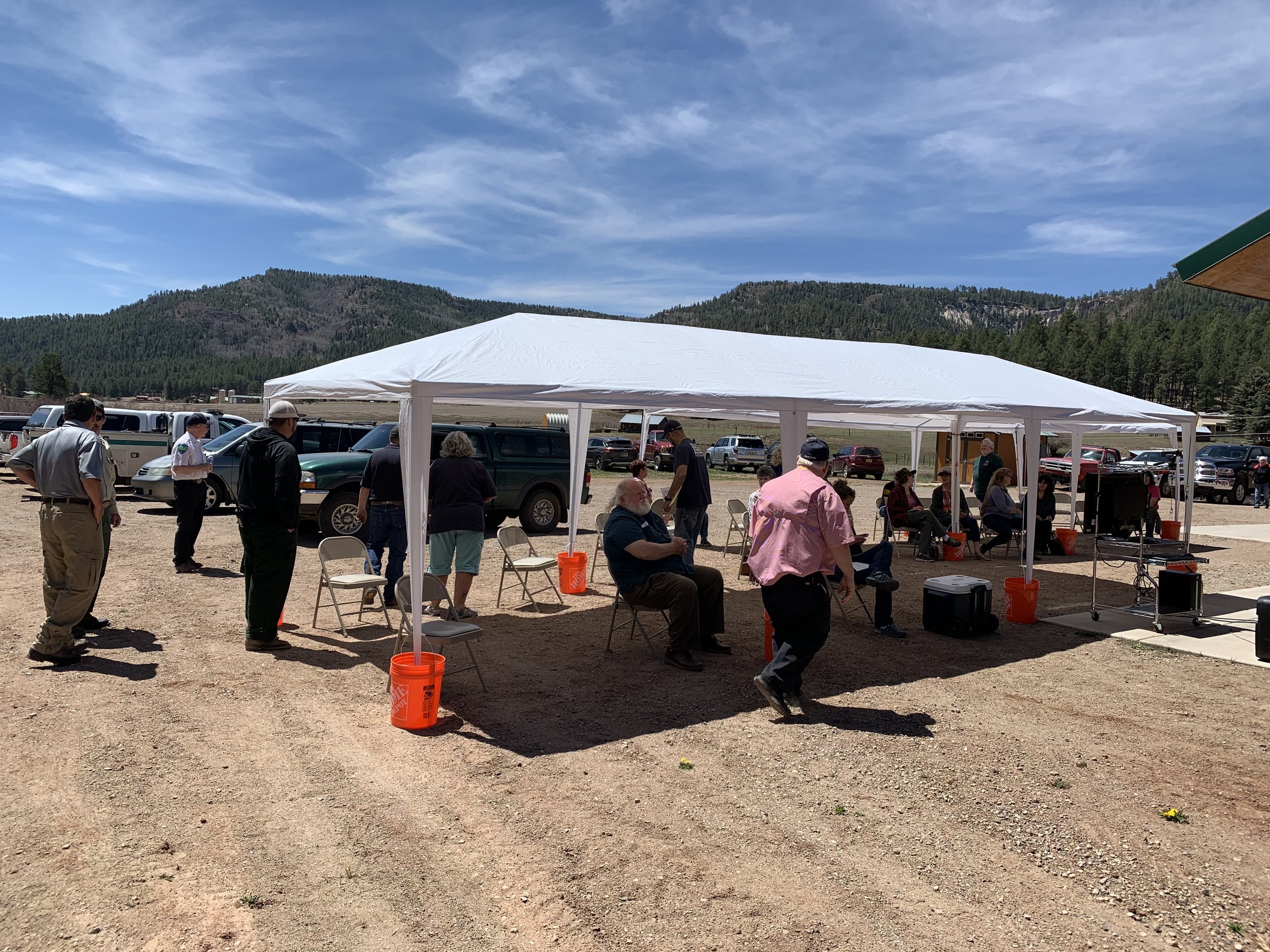
Asset-based Community Development (ABCD) is a specific path for identifying and connecting a community’s assets so that they use and grow their capacity to change on their own terms. “Community” can refer to a neighbor-hood, a village or district, a residential development or a town—an area that residents recognize as “theirs.” Asset mapping is used in ABCD in a facilitated, participatory and inclusive process through which a group of residents identify the individual, associational and institutional assets in their neighborhood or community, then use them in envisioning and taking practical steps toward community improvement. The group usually produces a map (that locates assets geographically) or an inventory (that lists assets in a document or database). Either of these should be a “living document”—periodically updated to include new people, associations and institutions and their assets.

In this blog post, we share an abbreviated set of steps for ABCD to serve as an introduction to the framework. For the full guide on Asset-Based Community Development, click here to explore FAC Net’s full page of community engagement resources, including the whole ABCD series.

What Do Community Assets Look Like?

Community assets are usually identified according to the following three categories because each type has different kinds of assets, all of which are important.

  • Individual assets are skills (machine repair, emergency response or bookkeeping), talents (music, baking, note-taking) and abilities (listening, physical strength, inclusivity).

  • Associations are any informal, voluntary group of residents. Their assets might include local knowledge and traditions, communication and networking, and event organization.

  • Institutions are formal organizations with employees and buildings. Their assets might include professional contacts, meeting space, employment opportunities and equipment.

How Do You Start?

Telling stories in a small group is a good place to begin. Ask questions like these—“What are good community experiences that we have had in the past? What do we already have that works well? Why does it work well?”—and notice the people, places and organizations that come up. The fun and meaningful work of identifying the assets you already know of, and engaging with others to discover their assets, leads to exploring potential interconnections. Connecting assets creates excitement and new possibilities, opening opportunities for new relationships and new action.

For a full overview, click here.

Asset-Based Community Development - Next Steps

Situation Assessment
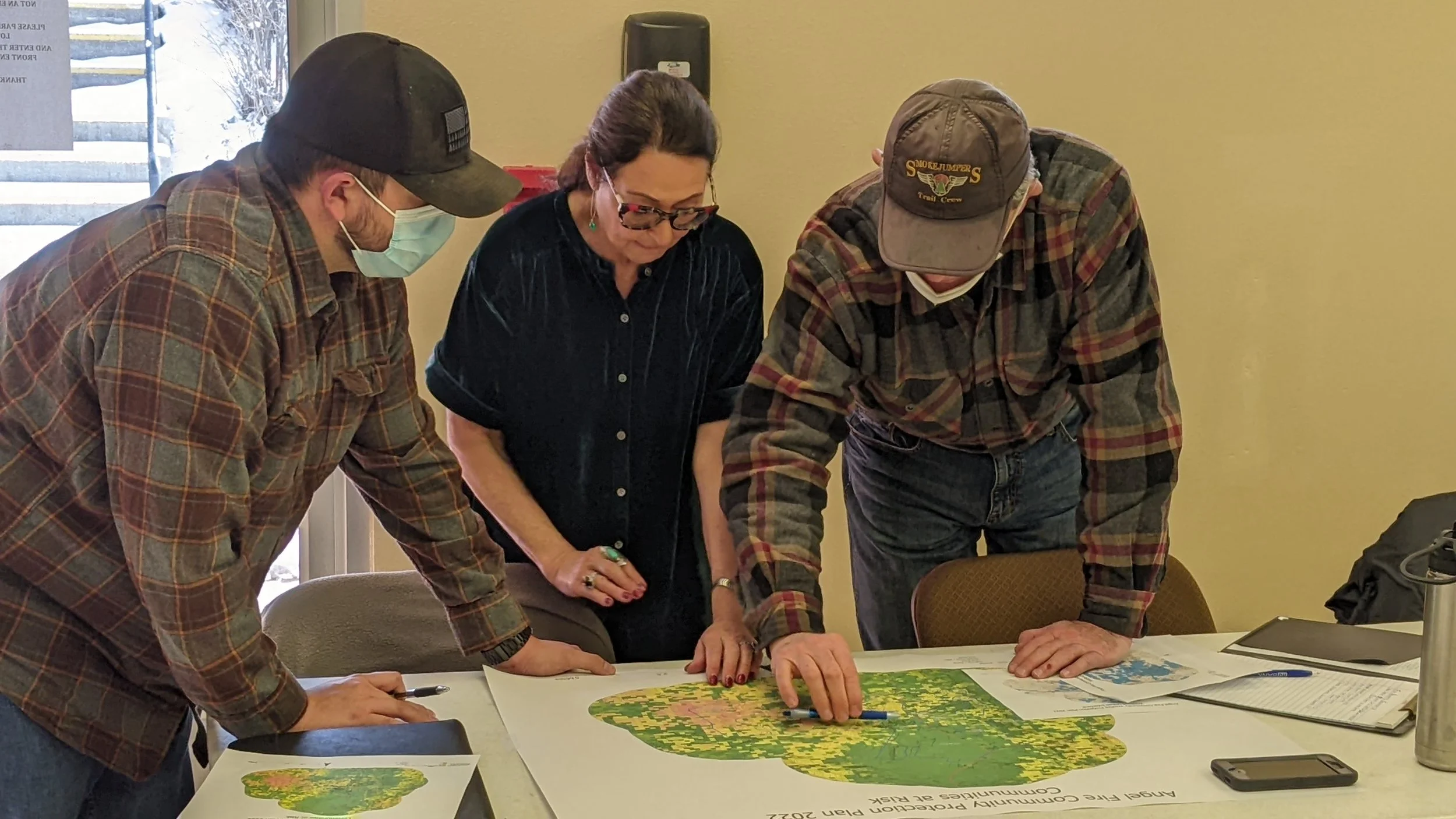
Situation assessment is Step 1 in an Asset-Based Community Development (ABCD) process that helps people connect their strengths to create new opportunities for living well where periodic wildland fires are expected. Situation assessment is a good place to start if you do not already have partners in the area where you will be working. It allows you to learn directly from community members about their strengths and challenges. It also gives you a way to identify people who enjoy meaningful community involvement and who are natural collaborators. Once you have people to work with, you will be ready for Step 2 in asset-based community engagement: asset mapping with community “connectors.”

Steps for a Sitiuation Assessment

  • Define the task but be flexible.
    Set a geographic boundary, a period of a few months, and a target number of interviews. Plan time before and after interviews to explore the area and chat with store owners, restaurant waitstaff, librarians, artists and others about their experience of fire.

  • Use the “snowball” method.
    Start with just a couple of key contacts instead of a complete list. End each interview by asking who else you should talk to.

  • Welcome different types of fire-related experience and interest.
    Look for and welcome diverse opinions and expertise. You may learn as much from a rancher, a school administrator and a bicycle race promoter as from a battalion commander and a forest health activist.

  • Consider where to meet, for how long.
    Expect to spend about an hour per interview, so meet someplace comfortable. Conference rooms are likely to emphasize professional position while restaurants offer a more social feel.

  • Ask questions, don’t discuss.
    Focus on understanding your interviewee without adding your own commentary. Ask clarifying questions, but do not correct any misconceptions about fire at this point. Instead, learn about why and how they came to their present understanding.

  • Take notes.
    Hand-written notes tend to seem less intrusive than a recording app. Just note down the story outlines and the assets mentioned—any individuals, groups or organizations that are described positively. Stop taking notes if a story becomes personal.

  • Start as you mean to continue.
    Focus on the positive (asking questions about assets and not getting bogged down by problems), send thank-you notes, and keep personal information confidential to set up good working relationships for the future.

For a full description of the situation assessment process, click here.

Asset-Mapping with Connectors

Identifying Connectors in Your Community
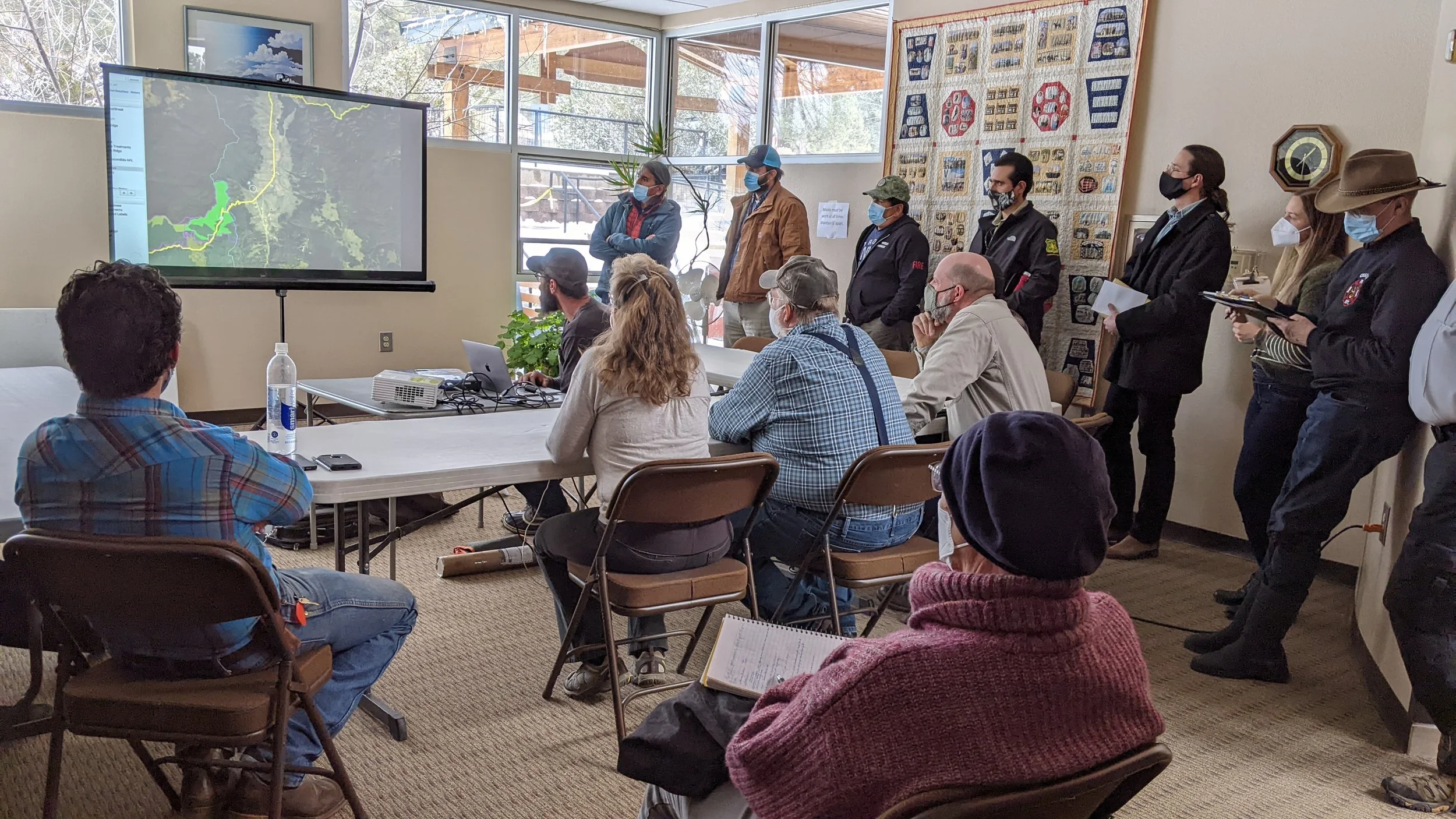
Connectors should be people who are interested, and perhaps experienced, in some aspect of wildland fire preparedness, response or recovery. But they need not be professional experts or recognized leaders. Connectors may be a retired Forest Service archeologist, someone from a small college, a mental health counselor, a chef, the owner of a small farm, and so on. Shared interest in fire may bring them together, but their social smarts make them successful at mobilizing the community’s fire-related assets

The Process

Invite the connectors together in a comfortable, informal environment—a restaurant or library, or at a kitchen table. Tell each other stories about what you care about related to fire, and why. The community’s problems and opportunities will naturally arise. Facilitate the conversation by writing down all assets, the individuals, groups and organizations that are mentioned positively.

Ask the connectors to collaborate with their acquaintances to identify more of the community’s fire-adaptive assets. Reconvene on a schedule that works for everyone to share what you are finding and the ideas that are emerging.

Capture the assets simply and easily on a community asset map or inventory; ensure that it is shared with everyone who participates and is updated frequently.

Enjoy! As people recognize their community’s strengths, project ideas will flow. Focus on enabling the creativity that occurs, rather than limiting the scope of imagination to existing programs or plans. The connectors will work within the community to devise opportunities for people and organizations to contribute what they do best. Down the road, the experienced fire practitioners located through asset-mapping will help ensure that more ambitious projects are safe and consistent with best practices.

For more information on asset-mapping with connectors, click here.

Wildfire Risk Reduction Grant Funding - New Mexico Counties
The New Mexico Association of Counties is pleased to announce the 2023-2024 Wildfire Risk Reduction Program for Rural Communities that assists at-risk communities throughout New Mexico in reducing their risk from wildland fire on non-federal lands.

Funding for this program is provided by the National Fire Plan through the Department of the Interior/Bureau of Land Management for communities in the wildland urban interface and is intended to directly benefit communities that may be impacted by wildland fire initiating from or spreading to BLM public land.

Grant funding categories include:

  • CWPP Updates up to $20,000/project

  • Education and Outreach Activities up to $15,000/project

  • Hazardous Fuels Reduction Projects up to $75,000/project

Project proposals require a minimum 10% in-kind cost share and must be completed within the 12-month award timeline of July 1, 2023 - June 30, 2024.

Applications are due to the local BLM field office for signature(s) by Friday, March 3, 2023, and the completed application(s) with all signatures are due to NMAC by 5:00 p.m. Friday, April 7, 2023. Please contact Aelysea Webb at (505) 395-3403 or awebb@nmcounties.org for more information.

Upcoming Events and Offerings

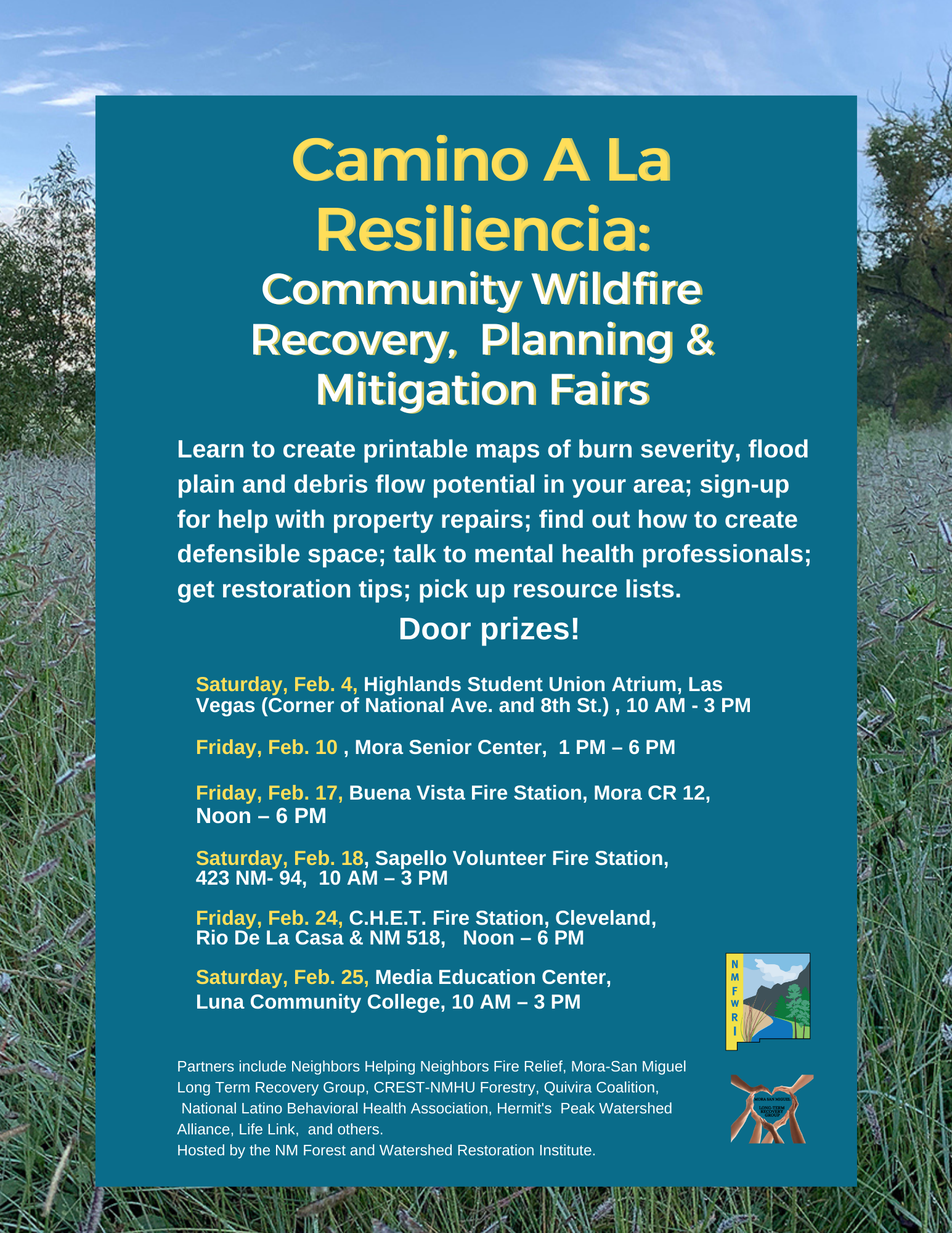
Community Resilience Fairs
SW Tribal Fire & Climate Virtual Workshop

February 10 -- February 24 -- March 10 (2023)

9-11am MST  |  Zoom 

Please REGISTER - click here

Goal:  Increase tribal capacity around wildland fire and climate change impacts across the Southwest.

Participants: Tribal fire and natural resource professionals and non-tribal professionals that support tribal fire and climate resilience. Please share with others who may have interest.

Topics (based on participant interest):

  • Indigenous perspectives and resources on fire, climate change & adaptation

  • Identifying capacity needs and partnership options for managing wildland fire in the face of climate change (including MOUs and other agreements

  • Opportunities and challenges with burning (permitting, burn plans, cultural burning, cross-jurisdictional coordination, etc.

  • Hazard response (FEMA, public safety, emergency operation plan/management) and risk reduction

  • Post-fire: restoration, flooding, and economic impacts 

  • Expanding an ongoing conversation & support network

  • Assessment and monitoring of actions and strategies

  • Other interests (please share when you register - see link above)

Format: Virtual (Zoom) will enable greater participation across the Southwest landscape.  Each tribal-led workshop session will include a mix of topical presentations and peer learning and exchange.

Cost: Free
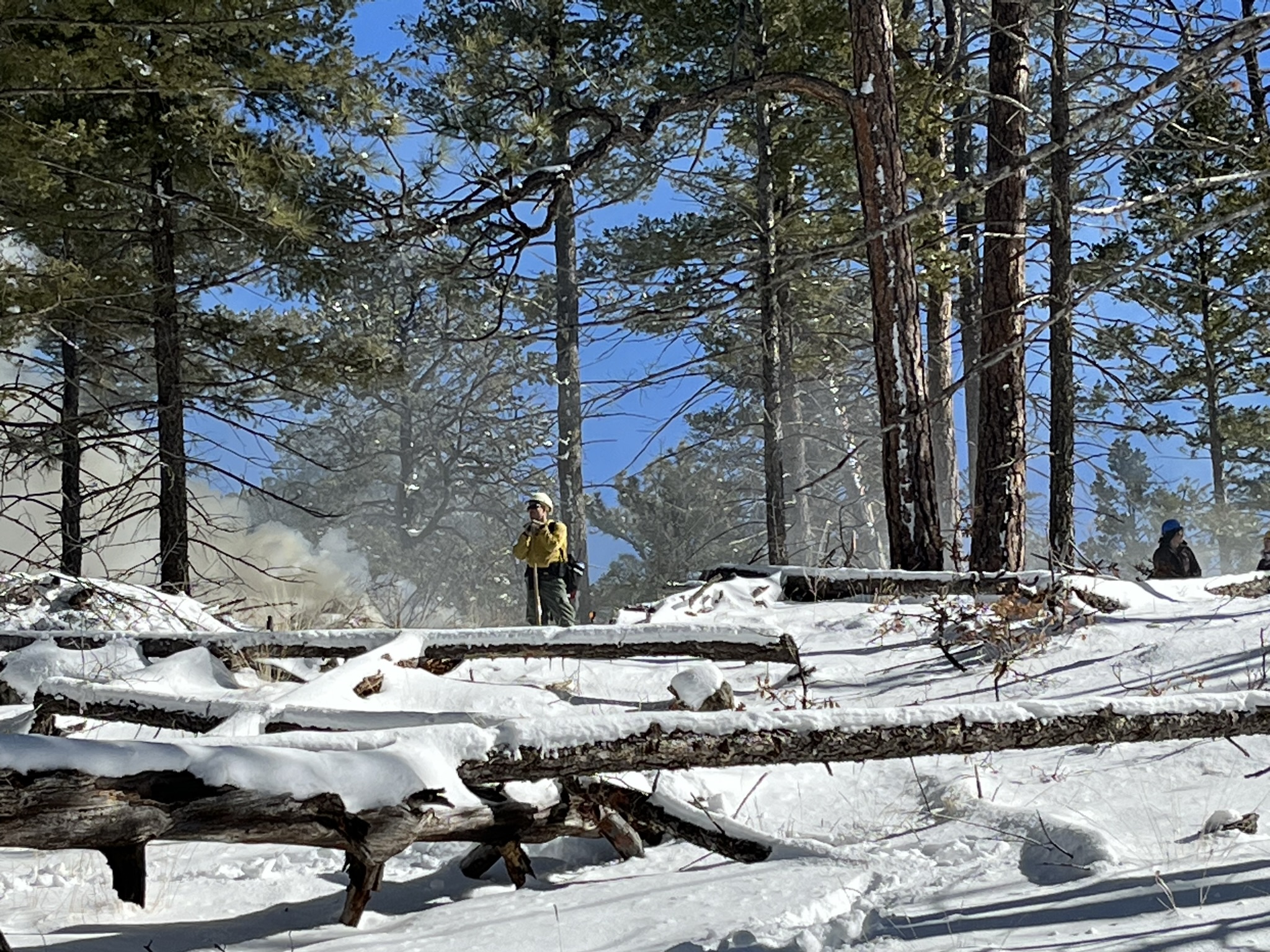
Glorieta Camps Prescribed Burning to Continue as Soon as January 24

Glorieta Adventure Camps, The Nature Conservancy’s Rio Grande Water Fund, and the Forest Stewards Guild will continue to take advantage of favorable weather conditions in the Santa Fe area for winter pile burning at Glorieta Adventure Camps. This prescribed burn is part of Glorieta’s long-term commitment to improve forest health and reduce the wildfire hazards. The objectives and collaborative commitment of this burn align with the mission and vision of the Greater Santa Fe Fireshed Coalition.

Individuals with respiratory health concerns or smoke sensitivity can borrow a HEPA filter for the duration of burn-related smoke impacts through a Filter Loan Program supported by the Coalition.

Read the Glorieta Burn press release

An Effort Highlighted: The Albuquerque Journal

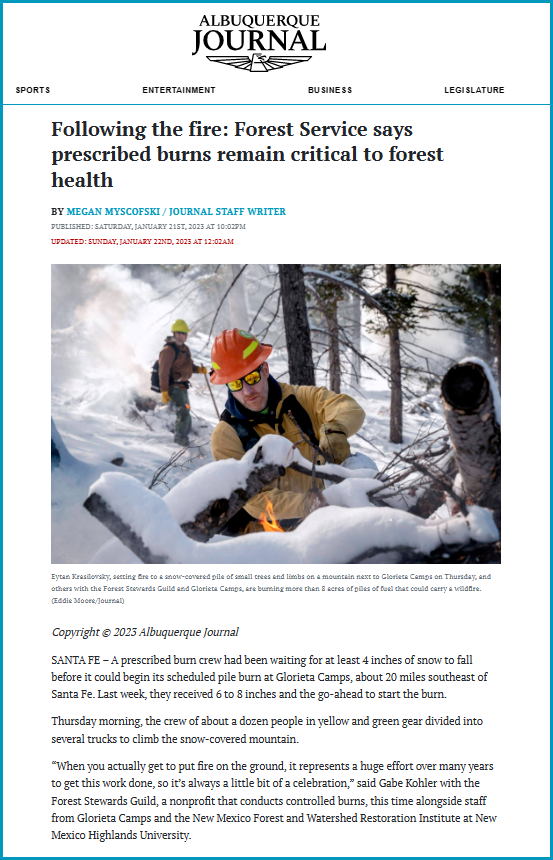
The Glorieta Pile Burn, which was initiated last Thursday, January 19, after the Camp received 6-8 inches of snow from a winter storm, was one of the State’s first prescribed fires since last year’s Calf Canyon/Hermits Peak Fire. The cooperative effort was featured in Sunday’s edition of The Albuquerque Journal. “This is the first burn of the season for the Forest Stewards Guild in a year where both public and private crews are approaching prescribed burns with extra caution”. Full coverage of crew precautions and what the organizations are trying to accomplish with this burn can be found on the Journal’s website or by clicking on the image.

Questions about the burn may be directed to Eytan Krasilovsky, Carlos Saiz, or Sam Berry with the Forest Stewards Guild.

Wildfire Wednesdays #103: Community Wildfire Protection Plans

Hello and happy Wednesday!

In autumn of 2022, the US Forest Service announced the creation of Community Wildfire Defense Grants (CWDG). This funding is intended to help at-risk local communities and Tribes plan and reduce wildfire risk by prioritizing at-risk, low-income, disaster-impacted communities. A key requirement for CWDG eligibility is the possession of a Community Wildfire Protection Plan (CWPP) for the intended geographic area. For communities just beginning the process of wildland fire hazard planning, creating a CWPP can act as both a roadmap for action and a huge first hurdle to getting started.

This week’s blog offers resources to learn about the history of CWPPs, the key elements for inclusion in a plan, suggestions for forming a collaborative and jumping into the CWPP writing process, and an invitation to attend a CWDG listening session to learn about and inform future CWPP implementation funding opportunities.

Today’s Wildfire Wednesday features information on:

  • CWPPs: the basics

  • A listening session series on CWDG funding

  • The FAC NM spring webinar series, beginning today (1/18) at 2pm MST!

  • Upcoming webinars from the SW Fire Science Consortium

Take care and stay warm,

Rachel


Community Wildfire Protection Plans

Where it began: the Healthy Forest Restoration Act

In 2001, the National Fire Plan legislation brought renewed focus on engaging communities in federal wildfire mitigation efforts. As a result, the Healthy Forests Restoration Act of 2003 (HFRA) directed the Secretary of Agriculture (National Forest System lands) and the Secretary of the Interior (Bureau of Land Management lands) to plan and conduct hazardous fuel reduction projects on Federal lands. HFRA focuses attention on four types of land:

  • The wildland-urban interfaces (WUI) of at-risk communities,

  • At-risk municipal watersheds,

  • Where threatened and endangered species or their habitats are at-risk to catastrophic fire and where fuels treatment can reduce those risks, and

  • Where windthrow or insect epidemics threaten ecosystem components or resource values.

A collection of administrative reports printed on white paper, loosely stacked and scattered on a table

Image courtesy of A. Evans, Forest Stewards Guild

The legislation contains a variety of provisions aimed at expediting the preparation and implementation of hazardous fuels reduction projects on federal land and assisting rural communities, States and landowners in restoring healthy forest and watershed conditions on state, private and tribal lands. Through this language, the bill encourages communities to go through the collaborative process of planning, prioritizing and implementing hazardous fuel reduction projects, ultimately resulting in community wildfire protection plans (CWPPs) to reduce their wildland fire risk and promote healthier forested ecosystems.

Communities who have developed CWPPs have done so using many different processes, resulting in plans with varied form and content. Due to the vagueness of the legislative language, communities have the freedom to develop CWPPs that are relevant to their local conditions and allows for the development of resource capacities that communities are using to produce diverse plans that build on local context to achieve broad policy goals of wildfire hazard reduction.

Read a summary of implementation actions enabled through the HFRA and how the bill’s language has enabled flexibility with authoring and customizing CWPPs.


Elements of a Community Wildfire Protection Plan

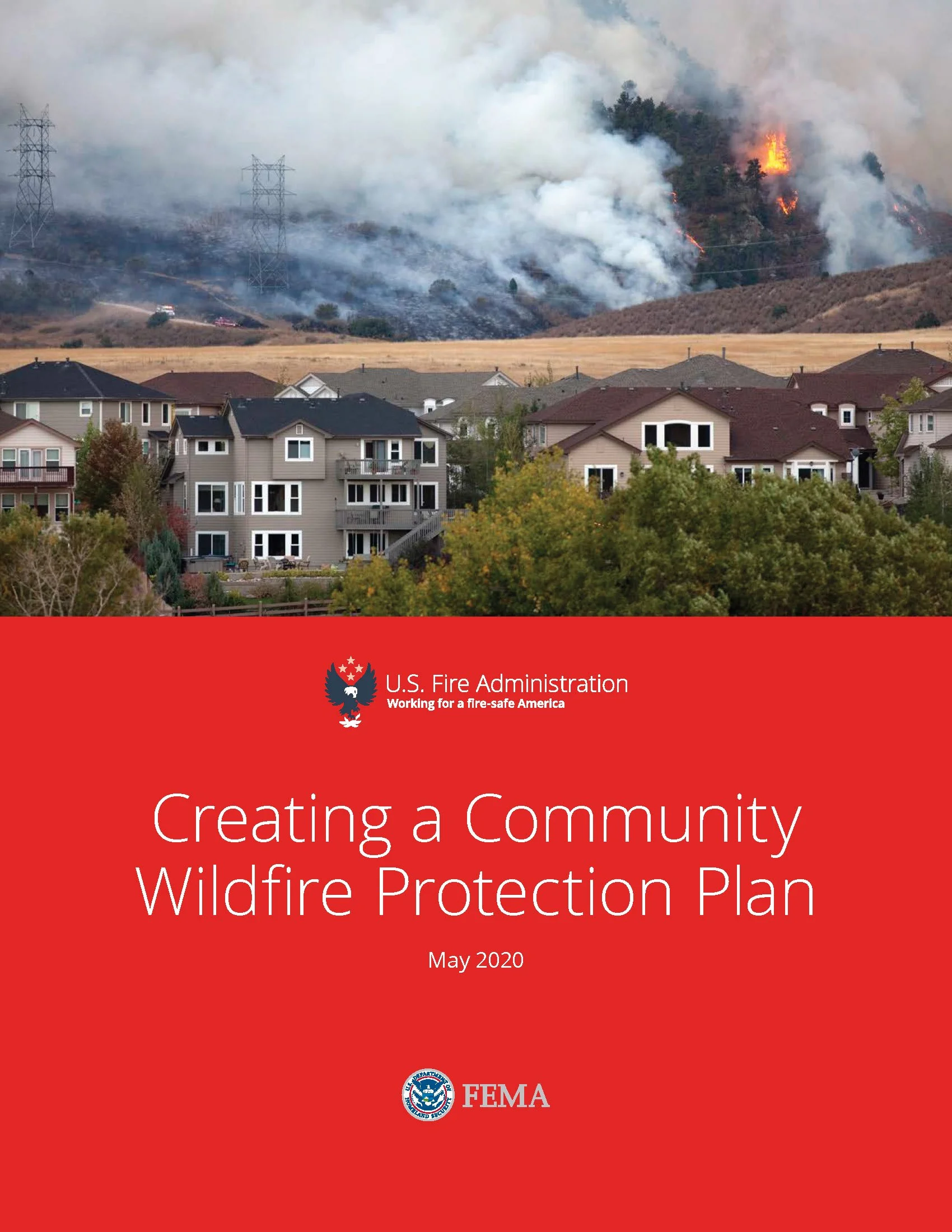
Cover to FEMA's guide to creating a C W P P; red background with white font and a photo of homes with a wildfire burning on the forested hillside behind them.

Click on the image to access FEMA’s CWPP creation template.

“Community Wildfire Protection Plans have become the primary mechanism for evaluating risk due to their emphasis on community involvement and assessment of local resources. CWPPs are also an important planning document used by emergency responders and citizens to plan for and respond to wildfire emergencies. Local leaders and governmental entities find CWPPs valuable for the purposes of identifying critical needs and prioritizing funding” (NM EMNRD, 2021).

A CWPP has five main sections:

  1. Community Risk Ratings

  2. Priority Fuel Reduction (vegetation treatments)

  3. Priority Actions (evacuation planning, education outreach, etc.)

  4. Reduction of Structural Ignitability

  5. Adoption and Signatures

Community Risk Ratings
Risk ratings are specific to distinct communities. They are usually calculated using a computer-based (GIS) wildfire risk model and must be categorized as either high, medium, or low. Models may include a number of different risk factors, each given a weight which corresponds to their importance, such as:

Fuel hazards (vegetative fuels present)
Risk of wildfire occurrence (locations of previous wildfires)
Essential infrastructure at risk (homes, businesses, power, communication facilities, etc.)
Other community values at risk (areas with scenic, recreational, economic or cultural value)
Local preparedness and firefighting capability (road access, distance from fire stations, distance from water sources)

Where appropriate, these ratings should reflect and align with national Wildland Urban Interface (WUI) objectives and goals.

Priority Fuel Reduction
A CWPP must identify and prioritize areas for hazardous fuel reduction treatments and recommend the types and methods of treatment that will protect one or more at‐ risk communities and essential infrastructure. This identification will likely be based on a combination of community risk ratings and social and economic values (tourism hot spots, areas of cultural importance, business hubs, etc.). Prioritizing fuel reduction creates a collaborative map for which areas will receive treatment in what order and why.

Priority Actions
After identifying the areas at greatest risk and greatest need for action, the next step in developing a CWPP is to select community wildfire risk reduction priorities. These actions may include fuel treatments, restoration projects, outreach and education, evacuation planning, and more.

Reduction of Structural Ignitability
In additional to priority fuel reduction projects and risk reduction priorities, a CWPP should identify actions that homeowners, residents, and communities can take to reduce the ignitability of structures throughout the area. This part of the plan may include guidelines for home hardening, creation of defensible space, and funding mechanisms for this work throughout high-priority communities.

Adoption and Signatures
The HFRA requires local governments, local fire department(s) and the state entity responsible for forest management (EMNRD) to sign off on the final contents of a CWPP. Additional signatories on your CWPP may include collaborators involved in the creation of the plan and key individuals from communities which will be impacted.


Other important CWPP elements may include a 1-2 year Action Plan, accomplishments since the last CWPP (for plan updates), and WUI Mapping, Hazard Mapping, and lots of spatial analysis.

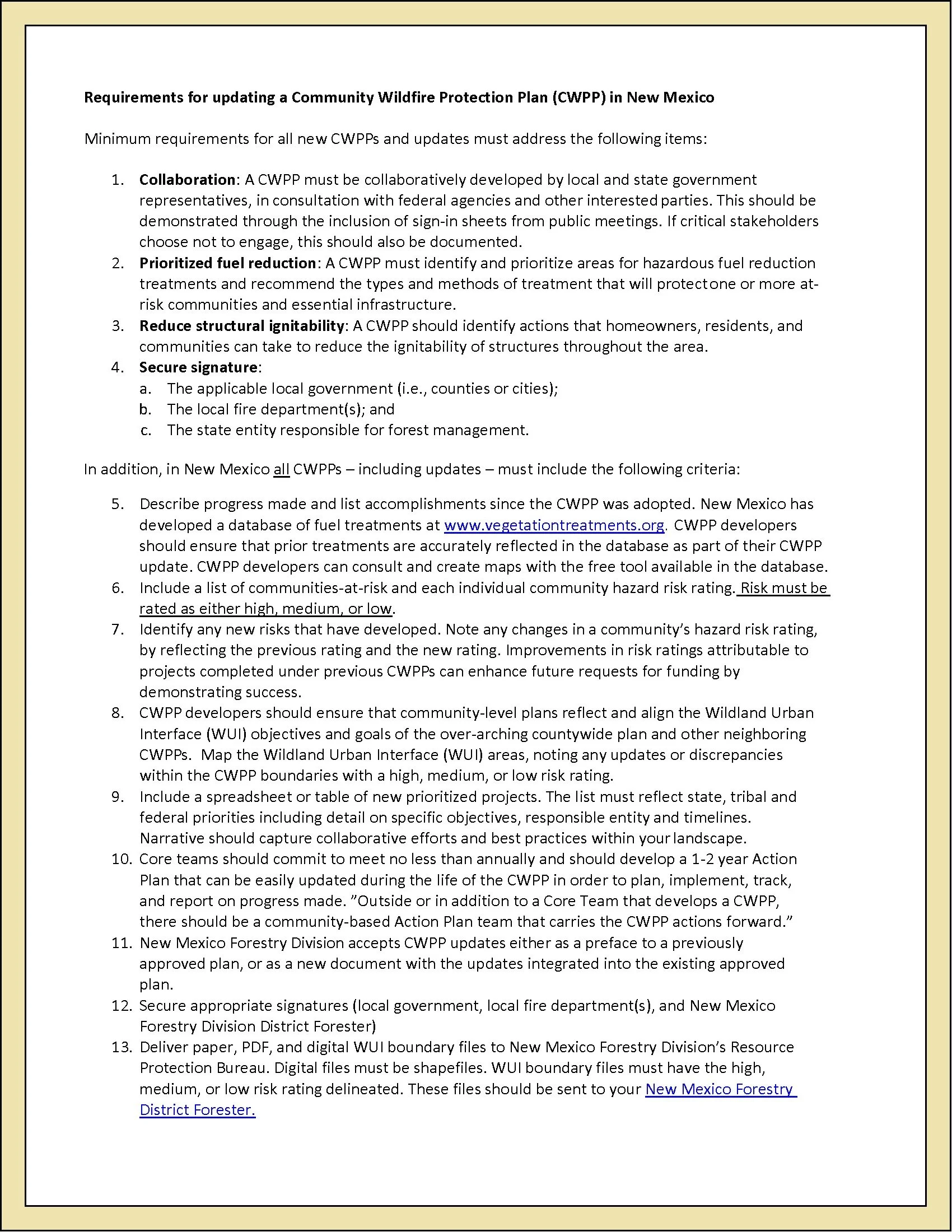
READ EMNRD'S CWPP CREATION AND UPDATE GUIDELINES
LEARN MORE IN FEMA'S FIRE ADAPTED IN 7 STEPS

Upcoming Opportunities

Spring FAC NM Webinar Series

Fire Adapted New Mexico is kicking off its spring webinar series with an informational presentation by Gabe Kohler of the Forest Stewards Guild on FAC NM’s new membership structure.

January 18 @ 2pm MST: Revitalizing Membership in FAC NM

An interactive webinar on the network’s revitalized membership structure and improved tools, resources, and facilitation for peer-to-peer knowledge exchange. This presentation will cover new levels of involvement in the learning network, upcoming workshops and grants available to members, and future plans for network growth and other continual learning opportunities.

Keep an eye on the FAC NM Events webpage for announcements and registration for our mid-March and mid-May webinars!

Community Wildfire Defense Grant (CWDG) Webinars

What: The CWDG Program will conduct a series of Listening Sessions to solicit feedback and comments on the program and provide opportunities to share recommendations for how to improve CWDG in the future.

When: January 18th, 19th, 20th and 26th.

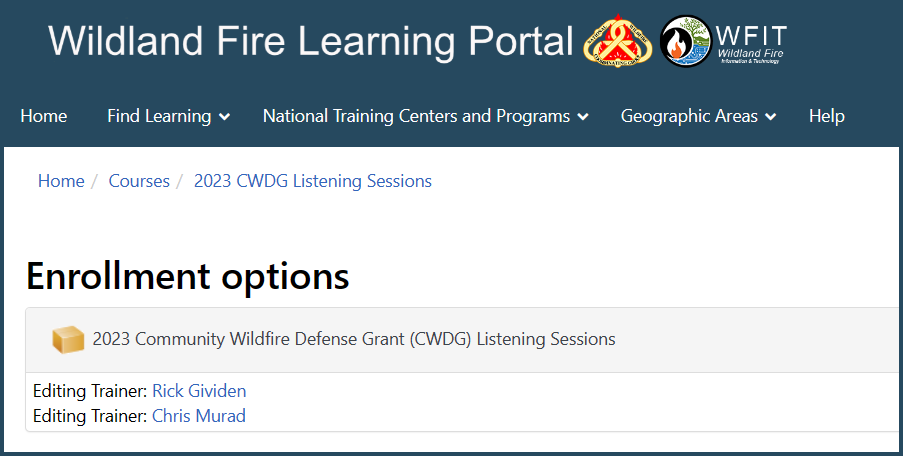
Screenshot of the Wildland Fire Learning Portal landing page for the CWDG listening sessions; navy blue banner with a white background

There are Listening Sessions scheduled for each of four Notice of Funding Opportunities, but you may to attend whichever Listening Session suits your schedule.

Sign up through the Wildland Fire Learning Portal by enrolling in the 2023 Community Wildfire Defense Grant (CWDG) Listening Sessions course, or visit this link: https://wildlandfirelearningportal.net/course/view.php?id=1908

Southwest Fire Science Consortium Monthly Webinars

January 31 @ 3pm MST: Wildfire and Climate Change Adaptation of Western North American Forests: A Case for Proactive Management

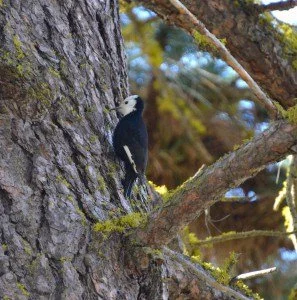
Image courtesy of John Marshall

Three experts will tell the story of forest change since colonization, and share insights and answer questions about how we might steward a legacy of forest change and mitigate climate change impacts. Following their presentations, the speakers will lead a discussion on reframing management direction and current barriers to increasing the pace and scale of forest adaptation.

Glorieta Camps Prescribed Burning to Begin with Arrival of Snow on January 19

Glorieta Camps Prescribed Burning to Begin with Arrival of Snow on January 19

Glorieta Camps, The Nature Conservancy’s Rio Grande Water Fund and the Forest Stewards Guild plan to take advantage of favorable conditions on January 19th, including snow levels, air quality, wind direction, and weather forecasts, to initiate prescribed pile burning at Glorieta Camps. This is the first of ongoing burns throughout the winter when conditions are favorable.

This burn is part of the Camps’ long-term commitment to improve forest health and reduce the risks of wildfire. Smoke and flames may be visible due to the proximity of the site to I-25 and the town of Glorieta. This prescribed burn is happening in the context of the Greater Santa Fe Fireshed Coalition landscape. The Fireshed Coalition supports a HEPA Filter Loan Program so that smoke sensitive individuals can borrow a filter for the duration of the impacts.

  • This will be the third winter of burning at Glorieta Camps with the Forest Stewards Guild and the Nature Conservancy. The previous two winters were successful at burning, mopping up piles, and patrolling until out.

  • Up to 50 acres of piles will be treated with hand ignitions by trained and qualified firefighters.

  • This burn will be implemented within the parameters of an approved burn plan.

  • The burn is in full compliance with County and state of New Mexico Smoke Permits.

  • The burn will be implemented with qualified and experienced personnel.

  • All burn operations will occur with at least 4” of snow on the ground.

  • The burn will be patrolled and mopped up by trained people until it is out.

  • Small amounts of piles may be burned each day to limit risk.  

  • The burn unit has fireline around it as an additional contingency measure.

  • More information on HEPA Filter Loan Program can be accessed here: http://www.santafefireshed.org/hepa-filter-loan-program.   

The AHAL Burn Team is supported by an agreement with The Nature Conservancy.  
The Forest Stewards Guild is an equal opportunity provider.
###

Wildfire Wednesdays #102: Wildfire and Wildlife

Hi Fireshed Community,

As we all know, the forest is home to more than just our human communities. These cold winter months when we spend more time at home provide a great opportunity to learn about how we might improve the balance between wildfire management and wildlife management. This is complex and there is no silver bullet to managing wildfire in a way that supports all species in a positive way. There will always be winners and losers with any type of management action — even when we take no action.

This Wildfire Wednesdays will provide some resources for you to better understand the effects of wildfire and wildfire risk reduction treatments, such as thinning and RX Fire, on wildlife.

This newsletter includes:

  • An overview of the effects of wildfire on wildlife from The Wildlife Professional

  • A New Mexico-Specific Science Synthesis of Forest and Woodland Treatment Effects on Wildlife

  • Upcoming and recorded webinars related to fire and wildlife

Stay safe,

Gabe

Wildfire! Toward Understanding Its Effects on Wildlife — from The Wildlife Professional

Wildlife professionals know many North American ecosystems are fire-adapted and require fire to shape their structures, functions and processes, which in turn shape wildlife habitats and populations in important ways. Over the past century, however, synergistic effects of fire exclusion, livestock grazing, timber harvest and land development have led to conditions where many wildfires are larger and burn with greater intensity and severity than they did in the past.

To better understand the overarching effects of wildfire on wildlife species, read this article from The Wildlife Professional.

Assessment of Forest and Woodland Treatment Effects on Wildlife

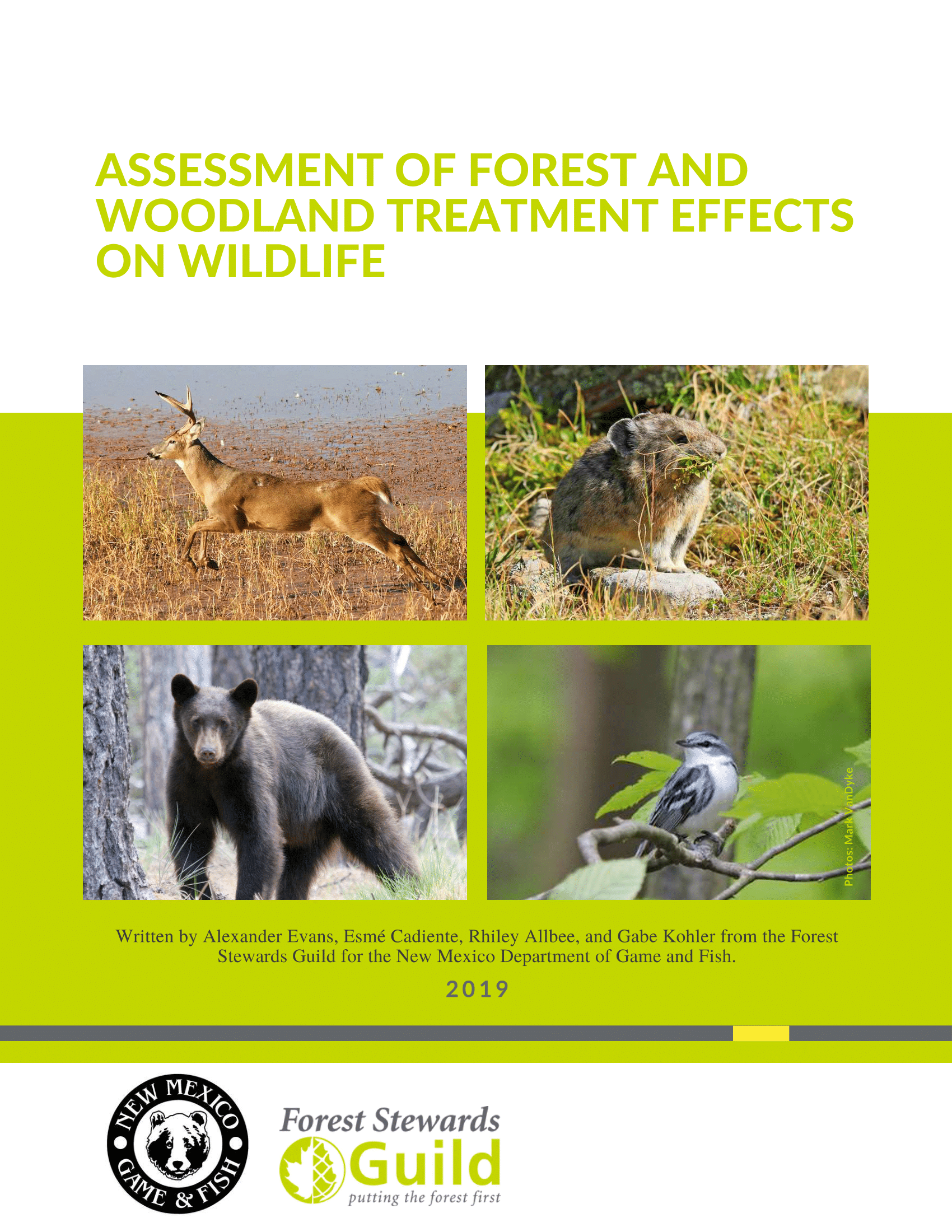
In 2019, the New Mexico Department of Game and Fish worked with the Forest Stewards Guild to complete a science synthesis of the effects of forest and woodland treatments on wildlife species. This guide is helpful to understanding how wildfire risk reduction treatments through thinning and prescribed fire may effect various wildlife species in across a range of forest types.

This guide may be useful for New Mexico landowners that want to manage their forest for a particular species of concern. Click here to access the New Mexico science synthesis.

For specific information about the effect of wildfire on birds, check out this Science You Can Use briefing paper titled “Birds and Burns.

Webinars Related to Wildfire and Wildlife

Upcoming

Fueling Collaboration: Fire and Wildlife

8:00 Pacific / 9:00 Mountain / 10:00 Central / 11:00 Eastern  (1.5 hr)
The third panel discussion of season 3 of the “Fueling Collaboration” series from eastern JFSP Fire Science Exchanges and USFS Northern and Southern Research Stations will be moderated by Lauren Pile Knapp (register).

Recorded

The Effects of Prescribed Fire on Wildfire Regimes and Impacts

Presenter: Dr. Molly Hunter, USGS SW Climate Adaptation Science Center, Research Manager / Joint Fire Science Program, Science Advisor

To access the webinar, click here.

Prescribed fire can result in significant benefits to ecosystems and society. Examples include improved wildlife habitat, enhanced biodiversity, reduced threat of destructive wildfire, and enhanced ecosystem resilience. Prescribed fire can also come with costs, such as reduced air quality and impacts to fire sensitive species. To plan for appropriate use of prescribed fire, managers need information on the tradeoffs between prescribed fire and wildfire regimes.

Science and Management of Wildfire, Fish, and Water Resources in the Western US

Presenter: Dr. Patrick Belmont, Utah State University

To access the webinar, click here.

Wildfire has increased 20-fold in the last 30 years in the Western U.S., partly due to climate change and partly due to forest and fire management practices. At the same time, many water resources are drying up. And fish populations throughout the western US are struggling due to water diversions, instream barriers, invasive species, and dwindling flows. This talk integrated across these three big, converging problems, reframing the role of wildfire in western ecosystems, discussing how wildfire, fish, and water resource problems are interrelated, and proposing solutions that match the scale of the problem.