Wildfire Wednesdays #101: Winter Means Preparing for Wildfire

Happy Wednesday and Happy Solstice, FAC NM readers!

As we celebrate the longest night of the year and the official start to winter, next year’s summertime wildfires may feel like a far-flung dream. However, it is never too early to start gearing up for fire mitigation, both around your home and in your community. While fire preparedness is year-round, winter is actually one of the best times to tackle heavy duty fire preparedness tasks.

Today’s Wildfire Wednesday features information on:

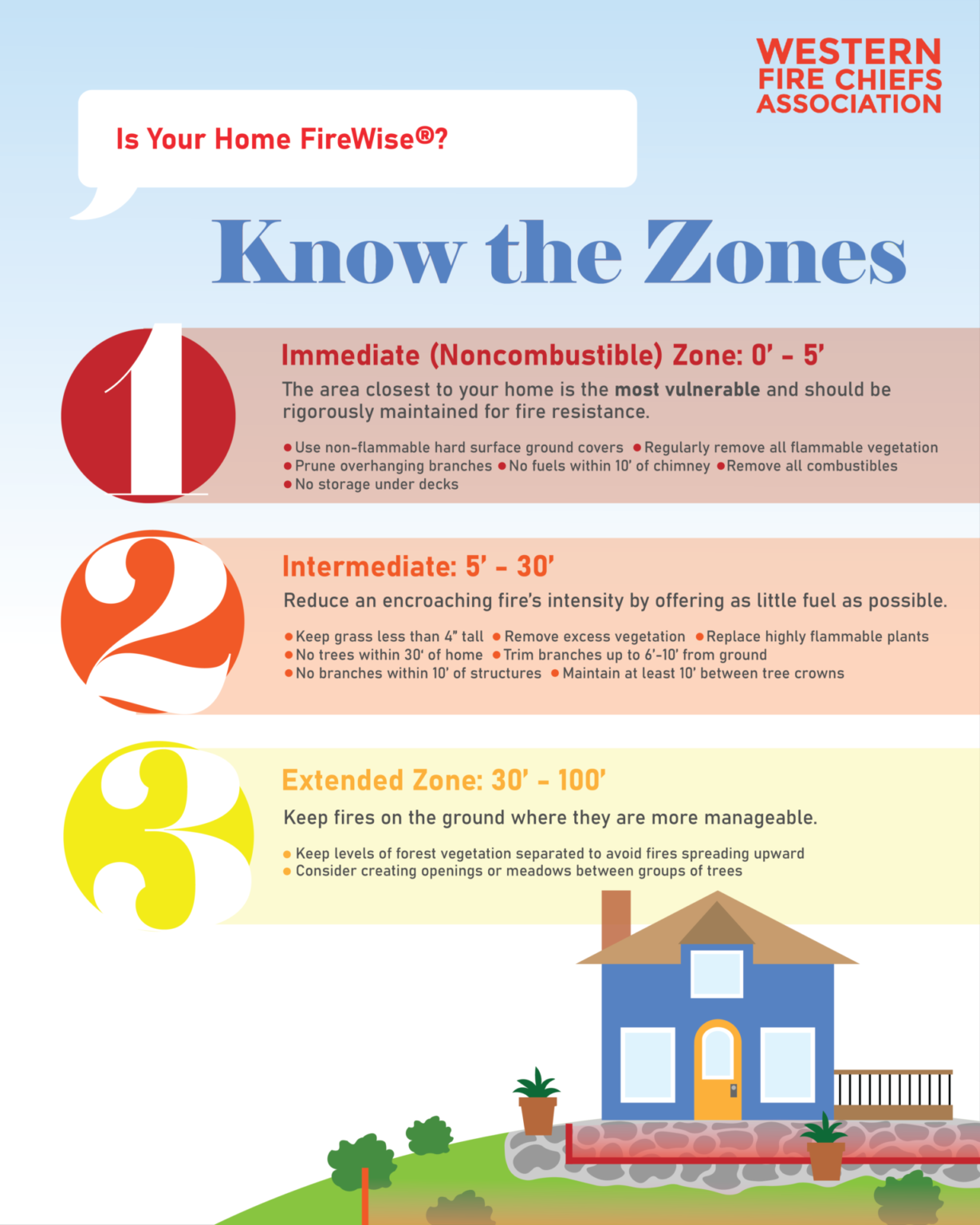
  • Creating defensible space

  • FAC Net’s Guide to Starting a Chipping Program in Your Community

  • A funding opportunity for FAC NM members to kickstart your community’s fire preparedness

  • Fire guides: information on home hardening, fire preparedness checklists, and yard tips

  • A video series on 7 Saturdays to a More Fire Resistant Home

Take care, happy holidays, and we look forward to connecting with you in the new year.

Rachel


Creating Defensible Space

Don’t disregard it: defensible space requires maintenance

Winter is often the best time to take steps to defend against fire, such as thinning out dense patches of trees, removing flammable brush and weeds, and pruning the limbs of mature trees to reduce contiguous fuels. Thinning and pruning during the cold winter months can also help reduce pest and disease infection in your trees and shrubs.

Maintenance tasks such as clearing flammable debris from gutters and around the home, making sure there are no flammable materials like firewood or patio furniture near your structures, and keeping grass and weeds mowed to less than 4 inches are all things you can do in these winter months and as part of spring cleaning to keep your home protected.

Whether you are a homeowner, renter, or transient temporary resident, your home is located in an environment that is dynamic and constantly changing. Trees and shrubs continue to grow, plants die or are damaged, new plants establish and grow, and needles and leaves drop to the ground, forming duff. Like other parts of your home, defensible space requires upkeep and conscious decision-making about your space, such as the choice to plant native grasses.

New Mexico State University ACES college, Firewise®, and Western Fire Chiefs Association (WFCA) are just a few of the entities which offer information and checklists to guide your creation of defensible zones and upkeep of defensible space.
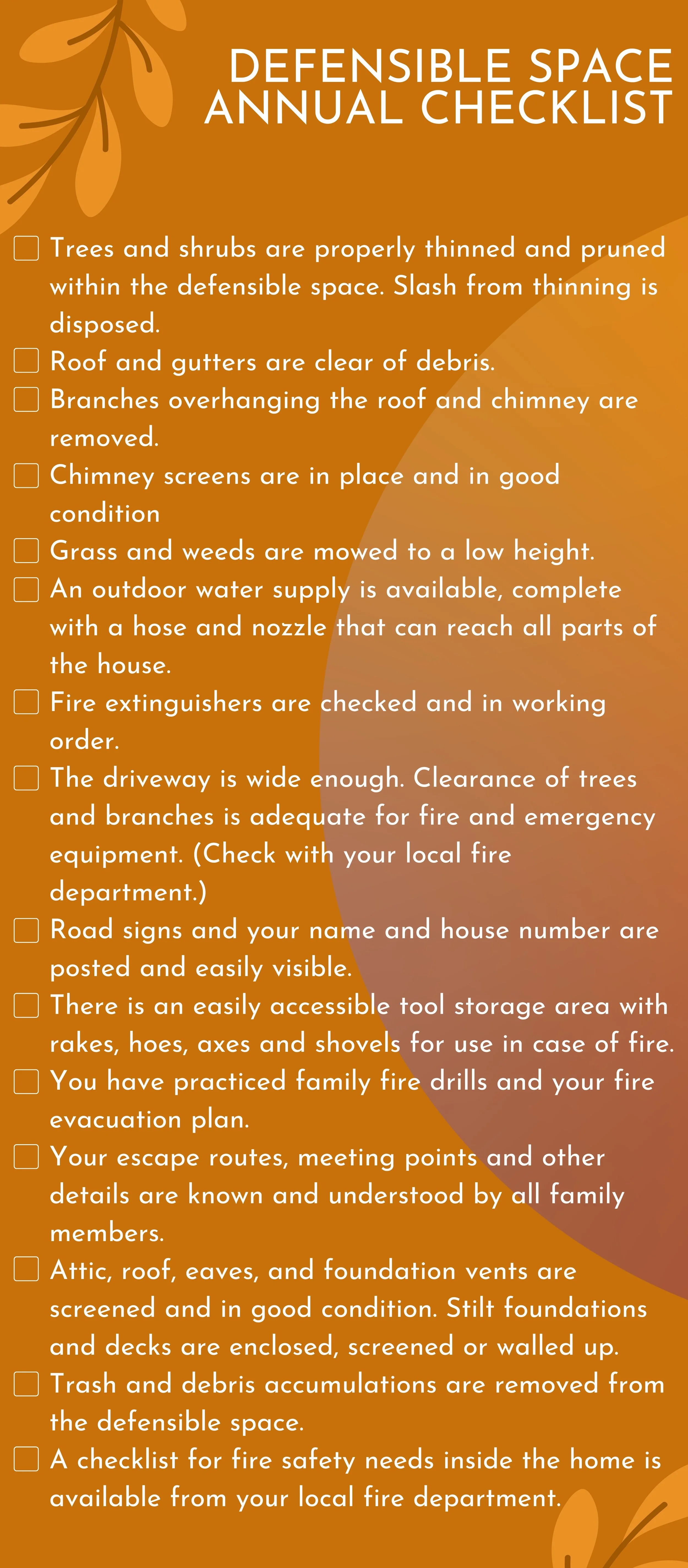
Checklist from NMSU and Firewise® on defensible space actions that can be taken annually


“Defensible space is the buffer you create between a building… and the grass, trees, shrubs, or any wildland area that surrounds it. This space is needed to slow or stop the spread of wildfire and it helps protect your home from catching fire—either from embers, direct flame contact or radiant heat. Proper defensible space also provides firefighters a safe area to work in, to defend your home.”

- (CAL FIRE, Ready for Wildfire)

A Chip Off the Old Block

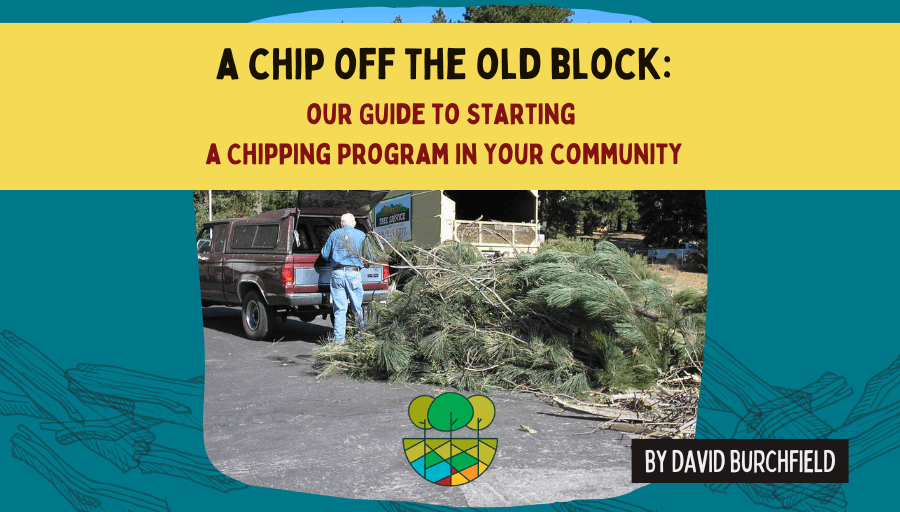
A Guide to Starting a Chipping Program in Your Community

From FAC Net: “As we say farewell to summer and winter settles in, and FAC practitioners start planning for next year, some of you may have chipping programs on your mind. Indeed, a chipping program is an important part of many fuels mitigation projects. To help you plan and dream, we have collected some insights from the field and a few practitioners to share here with you. This is hardly a comprehensive roundup, and it is not a prescriptive document as the thing that works best for you may be very different from some of your peers in the field.

When starting or revamping a chipping program, there are several things to consider, including  assessing need, funding, staffing, outreach and marketing, chipper selection, access and functional needs, chip dispersal and use, and program improvement year over year.”
  • Assessing Need

  • Funding

  • Staffing

  • Outreach and Marketing

  • Chipper Selection

  • Access and Functional Needs

  • Chip Dispersal and Use

  • Programmatic Involvement

Visit http://fireadaptednetwork.org/ under ‘blog’ or click the button below to learn more about starting a chipper program in your community.

FAC NET'S GUIDE TO STARTING A CHIPPING PROGRAM

Funding Opportunity

Application Period Open Now Through January 15:
FAC NM Microgrants for Fire Adapted Activities
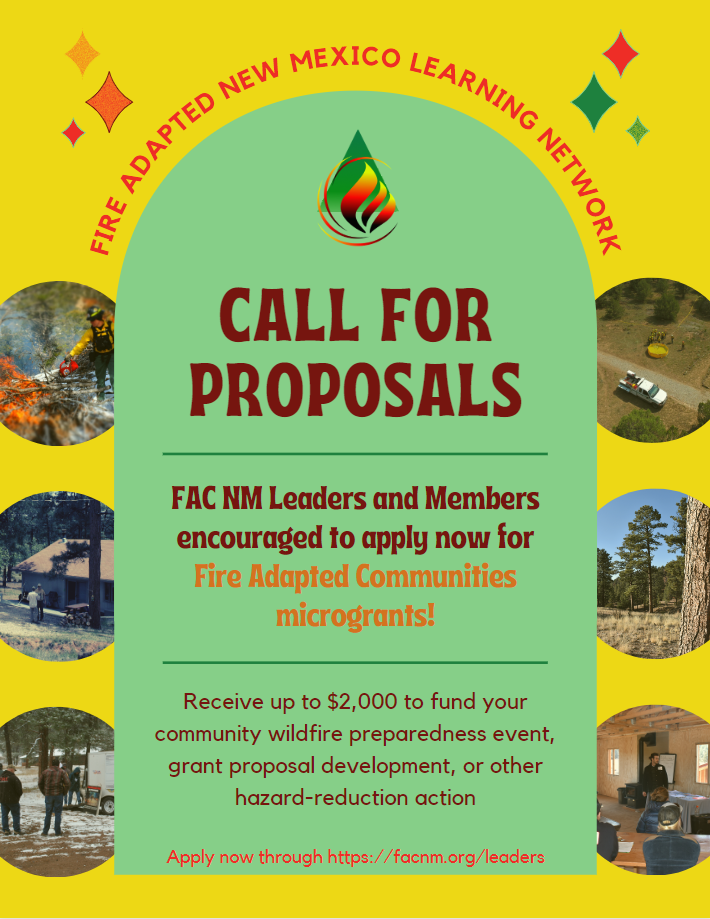
FAC NM Leaders and Members are eligible to apply for grants of up to $2,000 for financial assistance with:

  • convening wildfire preparedness events

  • enabling on-the-ground community fire risk mitigation work

  • developing grant proposals for the sustainable longevity of their Fire Adapted Community endeavor.

Applications for Round 1 are open now and close on January 15th! Visit the FAC NM Resources page or https://facnm.org/microgrants to learn more and apply now.


Tips and Tasks

Guidance on making your space fire adapted this winter

Home Hardening
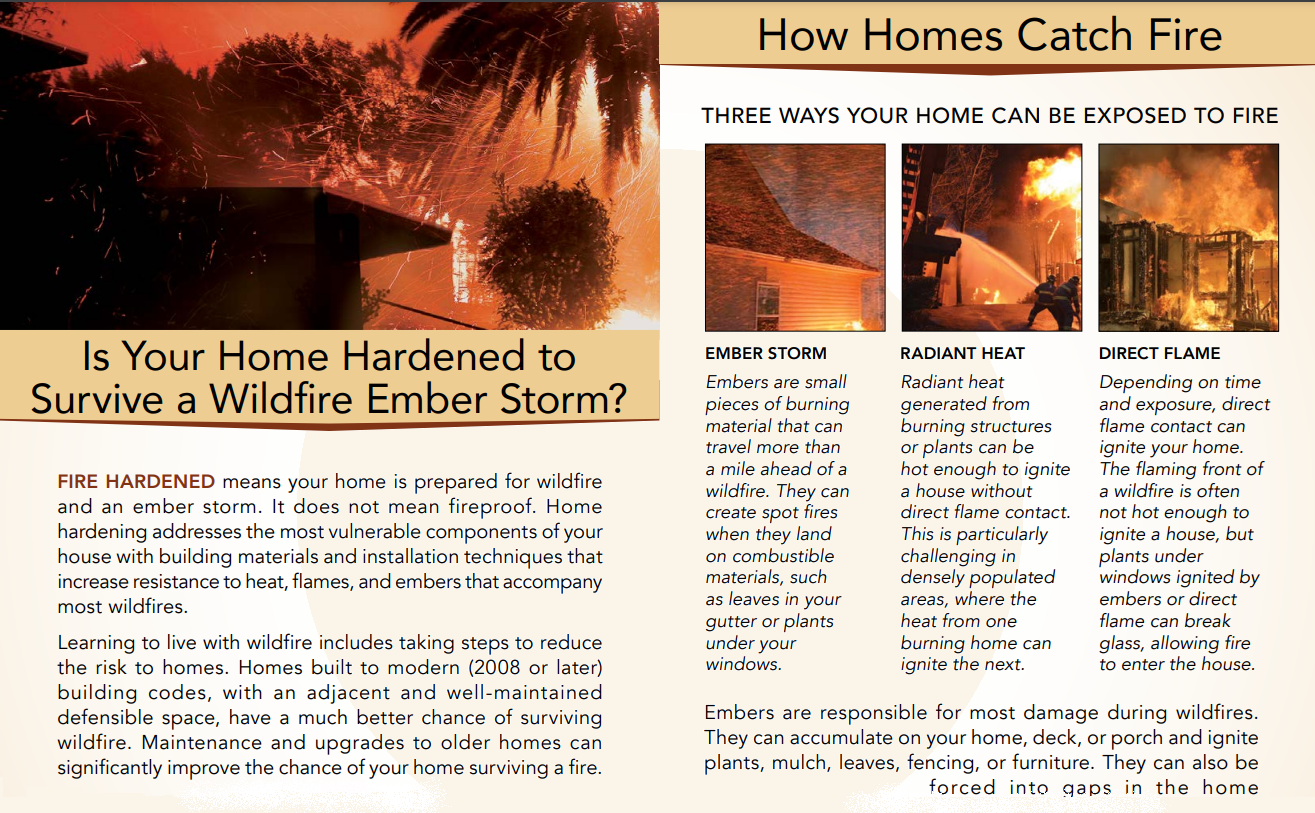
Defensible space splits the area around your home or structure into treatment zones; you can think of internal and external home hardening and yard tasks as additional zones which are prime candidates for wintertime fire preparedness.

Fire hardened does not mean fireproof; it means your home is prepared for wildfire and ember storms. Home hardening addresses the most vulnerable components of your house with building materials and installation techniques that increase resistance to heat, flames, and embers that accompany most wildfires.

Text against a mauve background identifying top 3 home hardening priorities

Priorities text courtesy of Santa Clara County FireSafe Council

Yard Preparation and Considerations
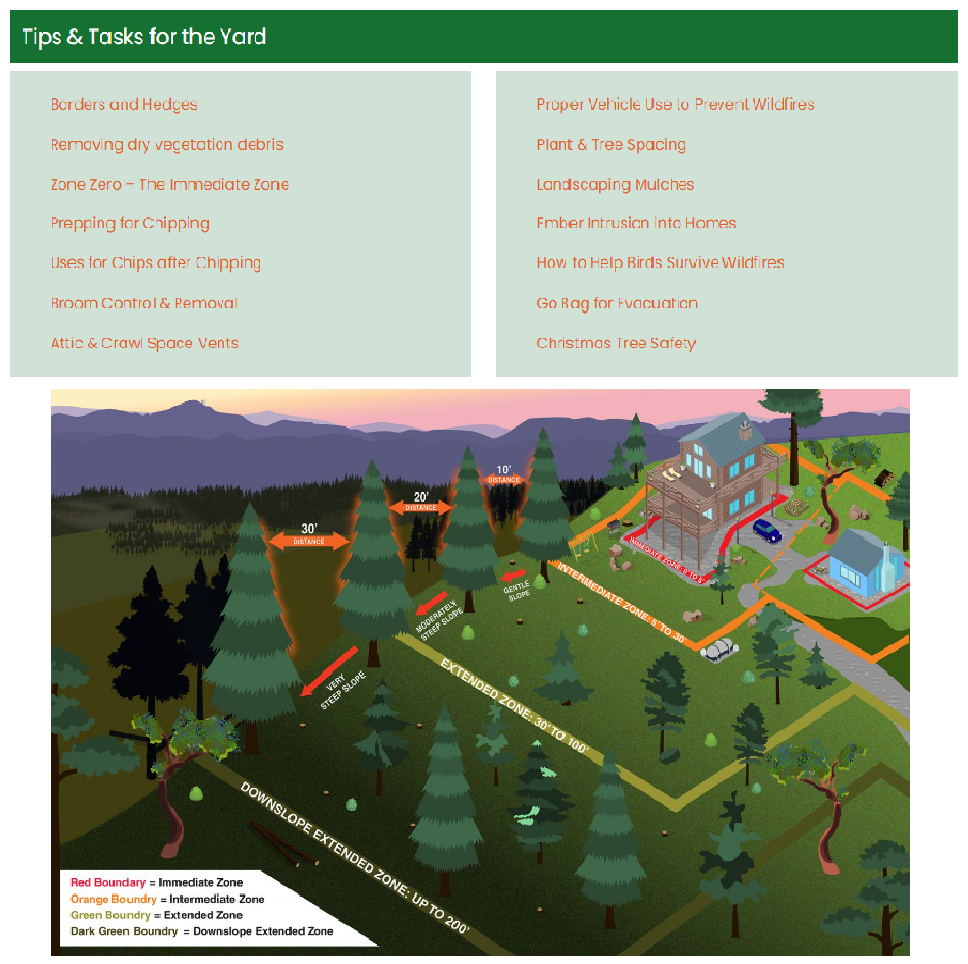
Text describing possibly yard fire preparedness tasks with a drawing below of the expanded home ignition zones defensible space, up to 200'

Image courtesy of the ‘Tips and Tricks for the Yard’ webpage from SCC FireSafe Council. Visit the website for additional resources related to each yard area.

An extension of defensible space, the tips and tasks are presented below can be done to prepare your yard and property for wildfire season now and throughout the year.

Property areas and considerations include:

  • borders, hedges, and dry vegetative debris

  • slash chipping and mulch

  • pests, disease, and vegetation spacing

  • attics and crawl space vents

  • considerations for birds

  • holiday tree safety

  • and more.

Inside and Outside the Home

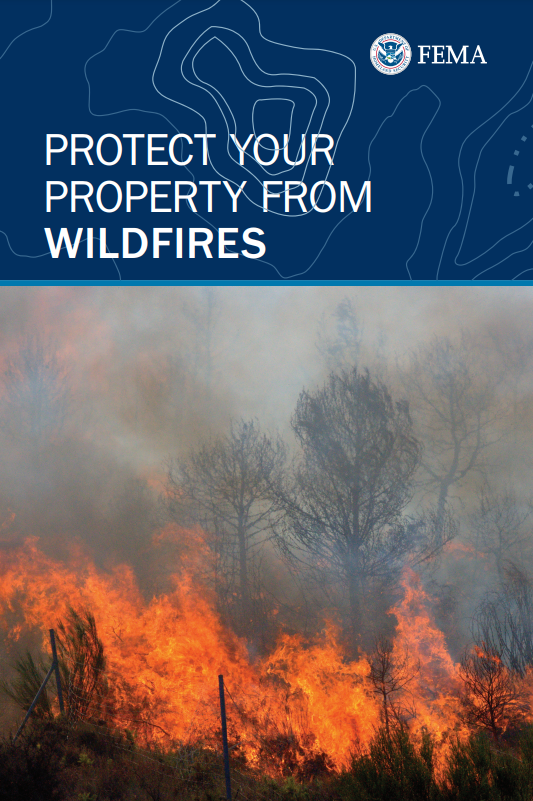
Booklet cover for FEMA's guide to Protect Your Property from Wildfire featuring an image of fire spreading across a grassy landscape with barren trees in the background

Property protection booklet cover image courtesy of FEMA.

“Owning a property is one of the most important investments most people make in their lives. We work hard to provide a home and a future for ourselves and our loved ones... While you can’t prevent all wildfires from happening, there are some ways to secure your property to minimize damage and keep your home and your future safe.”

Click the image or download the PDF from FEMA to learn simple tricks for how to fortify your space this winter, inside and outside of the home.


Additional resources

Colorado State University and New Mexico Energy, Minerals, and Natural Resources Department offer an applicable collection of Fire Preparedness Resources for homes, pets, and family, and a Living with Wildfire Guide, respectively. Throughout the cold season, set aside some time to click through and visit these resources. An excerpt of topics includes:

VISIT THE CSU FIRE PREPAREDNESS RESOURCES PAGE
VISIT EMNRD'S LIVING WITH WILDFIRE GUIDE

7 Saturdays to a More Fire Resistant Home

A video series on easy and affordable steps to better prepare for wildfires

Pacific Gas and Electric (PG&E) released a 7-part series with helpful information on and recommendations for how to prepare to live with fire. View episode 1 on defensible space below then visit PG&E’s YouTube page to learn more about affordable home hardening, preparing for evacuation, fire resistant landscaping, resilient interiors, and resilient communities.

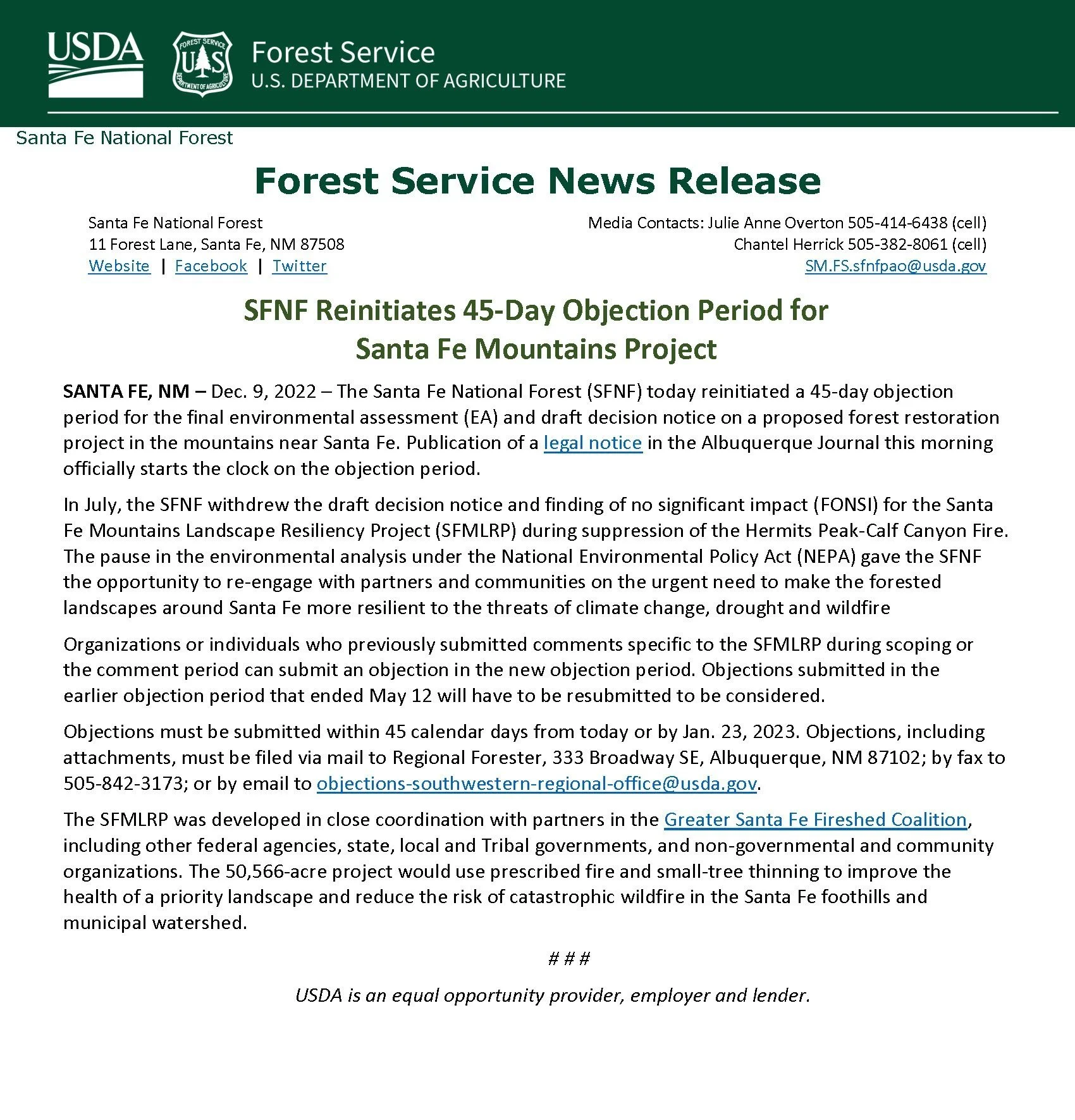
Announcement of Opportunities for Public Involvement in the Santa Fe Mountains Project

With the re-release of a Santa Fe area forest resiliency project’s environmental assessment, several opportunities for public engagement and dialogue have been made available.

Interactive Webinar: Thursday, December 15 at 6:00pm

The Greater Santa Fe Fireshed Coalition will host a livestream webinar on the ecological role of fire in the Santa Fe mountains. The public discussion will include presentations by subject matter experts with decades of forestry and fire science experience in the landscape surrounding Santa Fe. Your participation this Thursday is encouraged to keep the conversation going!

When: December 15 at 6pm

Where: Facebook Live virtual platform

Who: Greater Santa Fe Fireshed Coalition (host and facilitator)

How to join: GSFFC Facebook page under “events”

RSVP now to join the discussion!

Read a recently published Santa Fe New Mexican opinion piece by Thursday's subject matter experts and revisit Wildfire Wednesdays blog #100 discussing this and other local fire and forest science resources.

Santa Fe Mountains Landscape Resiliency Project EA release & comment period

The Santa Fe National Forest announced on Friday, December 9 that they were reinitiating a 45-day objection period for the Santa Fe Mountains Landscape Resiliency Project environmental assessment (EA). This legal document incorporates heritage, wildlife, and a number of other surveys which describe the current condition of the landscape and assess the impact of a number of potential forest and fuels resiliency treatment options.

The SFMLRP draft decision notice by the US Forest Service highlights the need to make the forested landscapes around Santa Fe more resilient to the threats of climate change, drought, and wildfire. This need has been realized in collaboration with other federal agencies, state, local, and Tribal representatives, and non-governmental and community organizations, including the Greater Santa Fe Fireshed Coalition.

Those who previously submitted comments during this EA’s previous scoping or comment periods can submit a new objection during the 45-day objection period, or by January 23, 2023.

Wildfire Wednesdays #100: Revisiting Local Knowledge about Fire in Our Landscape

Hi Fireshed Community,

We are excited to share our 100th Wildfire Wednesdays newsletter with you! 🎂 Over the years, we have used this bi-weekly blog as a forum for sharing resources and best practices across the state. We hope you have found it helpful in your work and we want to thank you for continuing to forward it along to coworkers, friends, family, and neighbors

As we move into the next 100 Wildfire Wednesdays, we want to encourage our readers to please reach out and share resources or success stories with us to highlight. We would love to amplify the great work that you all are doing around your homes and in your communities by featuring it in the Wildfire Wednesdays blog.

For this week’s Wildfire Wednesday we want to feature some local fire and forest science that can support our understanding about the ecological role of wildfire in New Mexico’s forests.

This week’s newsletter includes:

  • An interactive webinar (12/15) focused on forest and fire science in the Santa Fe Mountains

  • A webpage of scientific research relevant to Northern New Mexico

  • A (re)-introduction to the Southwest Fire Science Consortium

Stay safe,

Gabe

Interactive Webinar: The Ecological Role of Fire in the Santa Fe Mountains

Click here to download and share the flyer!

To join the event, go to the Fireshed’s Facebook page on December 15th at 6pm! To view the event directly and RSVP, click here.

Presentations by subject matter experts with decades of forestry and fire science experience in the Santa Fe Mountains, including:

  • Dr. Ellis Margolis, USGS

  • Dr. Craig Allen, UNM

  • Dr. Tom Swetnam

Craig D. Allen is a research scholar in the Department of Geography and Environmental Studies at the University of New Mexico. He lives in Nambé. Ellis Margolis is a USGS research ecologist working with the Fort Collins research center with in-depth research experience in the Santa Fe Mountains. He lives in Santa Fe. Thomas W. Swetnam is Regents Professor Emeritus, Laboratory of Tree-Ring Research, University of Arizona. He lives in Jemez Springs.

A Sampling of Local and Southwest-Focused Scientific Articles and Forest Treatment ReporT

Locally-relevant, up-to-date scientific information is essential for ecologically appropriate land management decisions. This includes decisions made on public land as well as those made on private lands — even in our backyards.

Since scientific findings can only be applied to specific context that they were designed for, there is a large amount of research related to fire and forestry. Some studies can provide us with broadly applicable findings, and others may only hold up when they applied to the specific forest that was included in the research. In much of Northern New Mexico, and especially in the Santa Fe Mountains area, we are fortunate to have a wealth of forest and fire science research that was specifically conducted in this landscape. To help provide our readers with some of the most locally-appropriate scientific studies for Northern New Mexico, the Greater Santa Fe Fireshed Coalition developed a webpage that provides a sampling of Local and Southwest-Focused Scientific Articles and Forest Treatment Reports.

Before you dig into the pile of publications listed on the webpage, start by reading these 5 topically diverse forest and fire research publications:

Next, you will find a broader list of northern New Mexico- and Southwest-focused forest and fire research articles as well as local forest treatment success stories below. Review at your leisure for additional science and practical information.

To view the full webpage of research articles, click here.

A (Re)-introduction to the Southwest Fire Science Consortium

The consortium is a way for managers, scientists, and policy makers to interact and share science. The goal is to see the best science used to make management decisions and scientists working on the questions managers need answered. The Southwest is one of the most fire-dominated regions of the US, and the Consortium is the only regional organization focused on fire research and information dissemination across agency, administrative, and state boundaries. The Consortium tries to bring together localized efforts to develop scientific information and to disseminate that to practitioners on the ground through an inclusive and open process. Please join the Consortium by attending a field trip or workshop, reading and sharing the materials on their website, and/or contributing to the fire conversation by submitting a proposal for an event or product.

To visit the Southwest Fire Science Consortium’s webpage, click here.

To view a list of publications and resources, click here.

Key objectives

  • Disseminate current science and facilitate its use among scientists, practitioners, and managers

  • Facilitate communication and collaboration among stakeholders

  • Identify and develop knowledge relevant to practitioners, managers, and policy makers

  • Develop methods to assess the quality and applicability of research

  • Demonstrate research on the ground

  • Build place-based adaptive management partnerships that promote adoption of fire science findings by fire, fuel, and land managers

  • Develop mechanisms to assess new research, synthesis, or validation needs


Forest Resiliency Treatments in the Fireshed: An Ongoing Process

Most of us begin our days by driving to school or work, running errands, dropping off and picking up our kids, and gliding through life’s rhythms with the graceful profile of the Sangre de Cristo and Jemez Mountains in the backdrop. This living landscape that we call home surrounds us but may not always be front of mind.
Yet, up in the hills, drainages, mesas, and meadows, teams of land stewards are tirelessly at work to buoy the health and resilience of our forests and wild areas against the impacts of pests, disease, drought, and catastrophic wildfire.

 
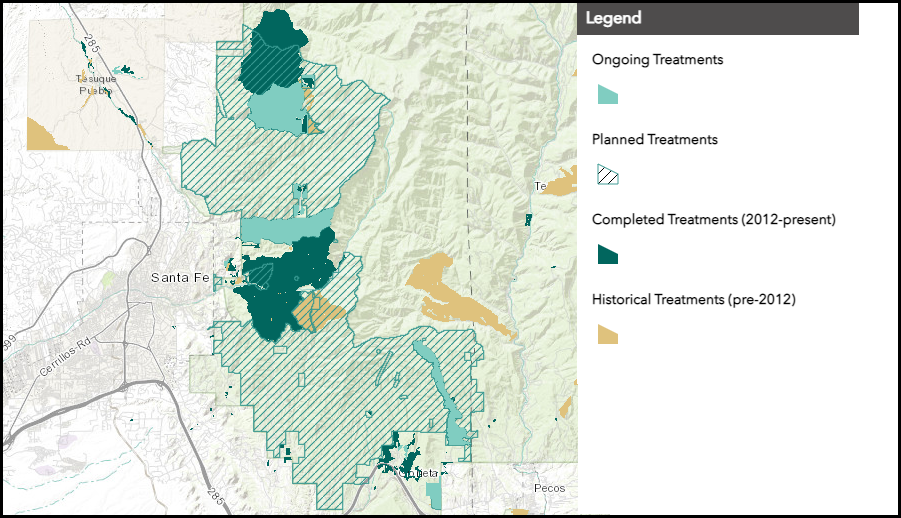
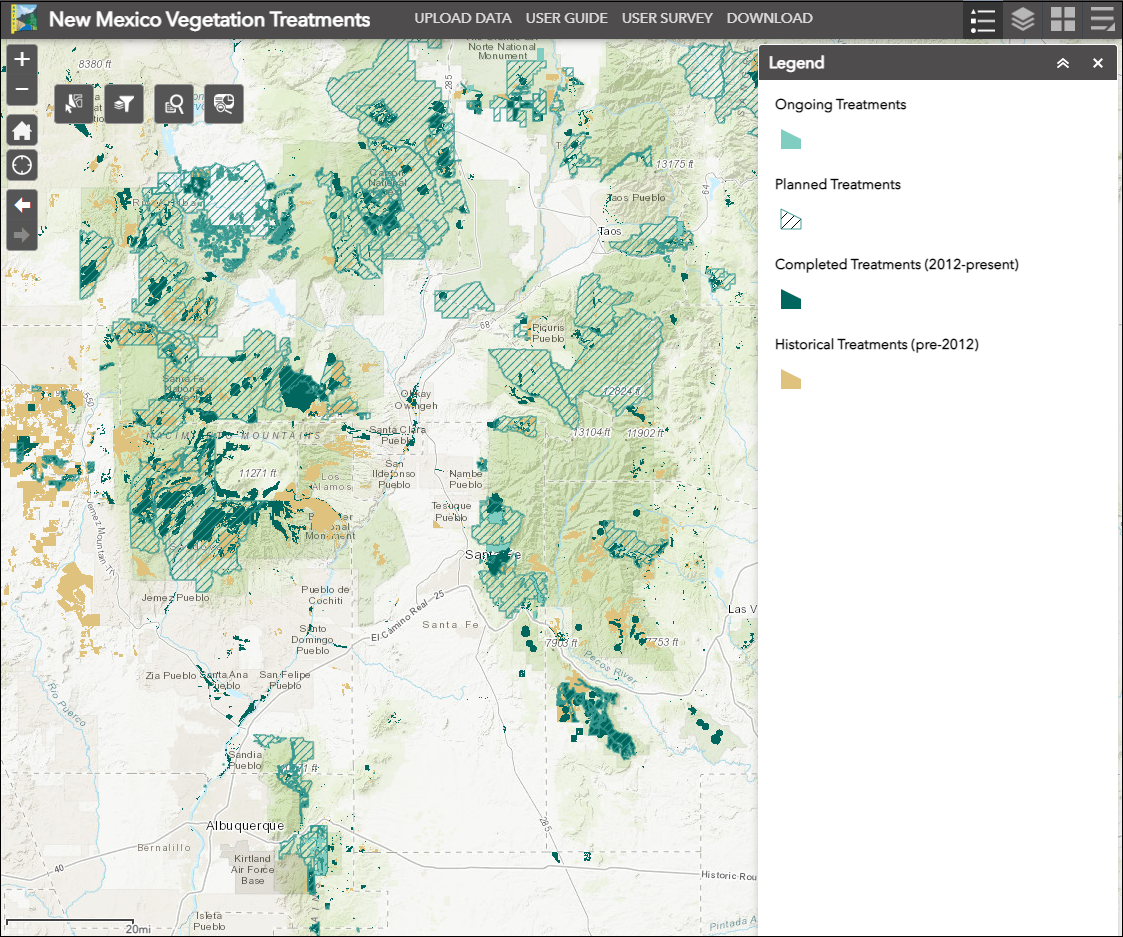
Forest treatments across NM: Opportunity Map
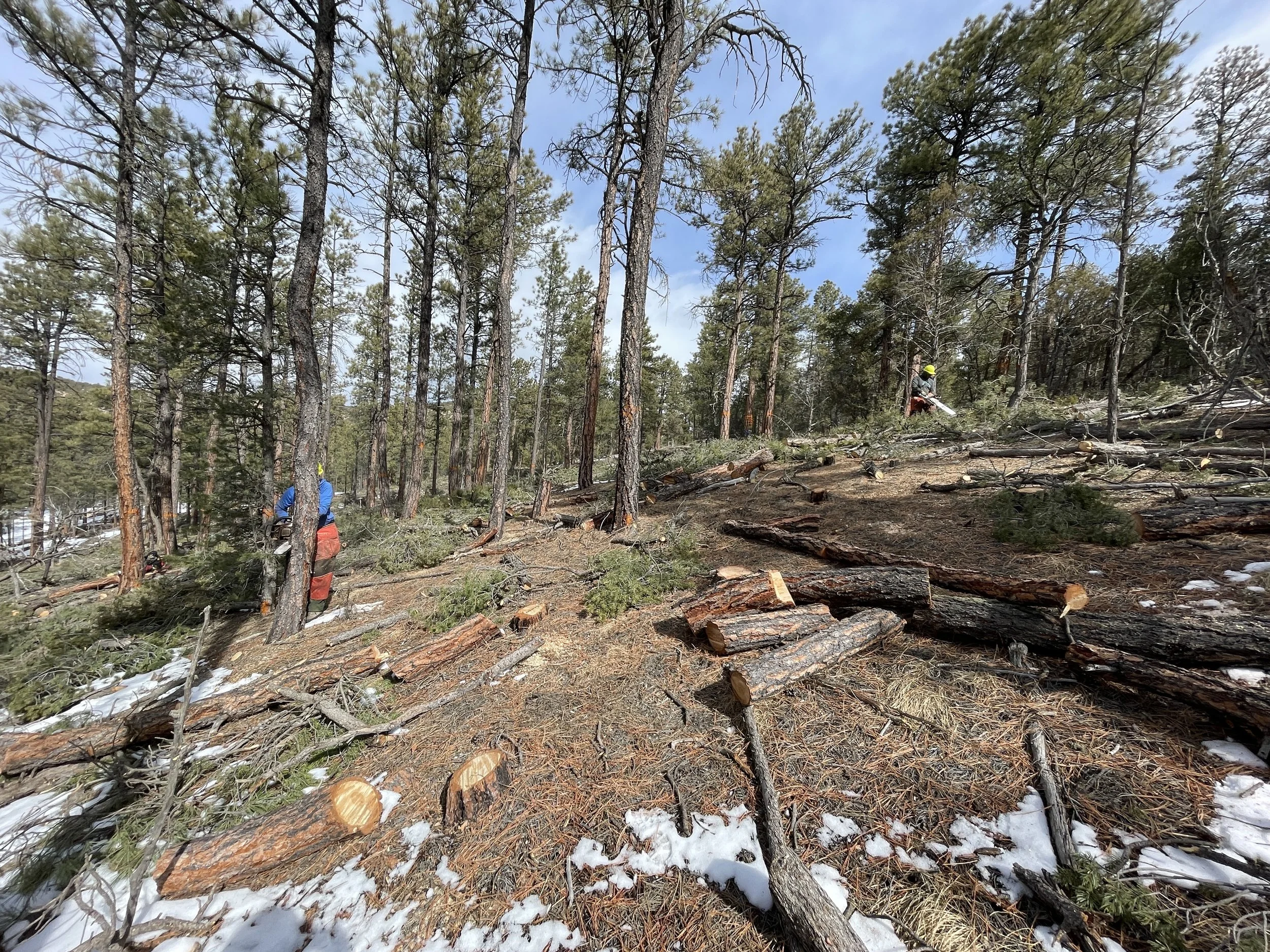
Two sawyers work to cut down small diameter overstocked trees in the patchy snow

All Hands All Lands burn team works to thin an acre by selectively removing the smallest and least healthy trees from an overcrowded forest. This work is part of the Trampas Forest Council’s initiative to empower local communities to protect their forests and urban areas north of Santa Fe.

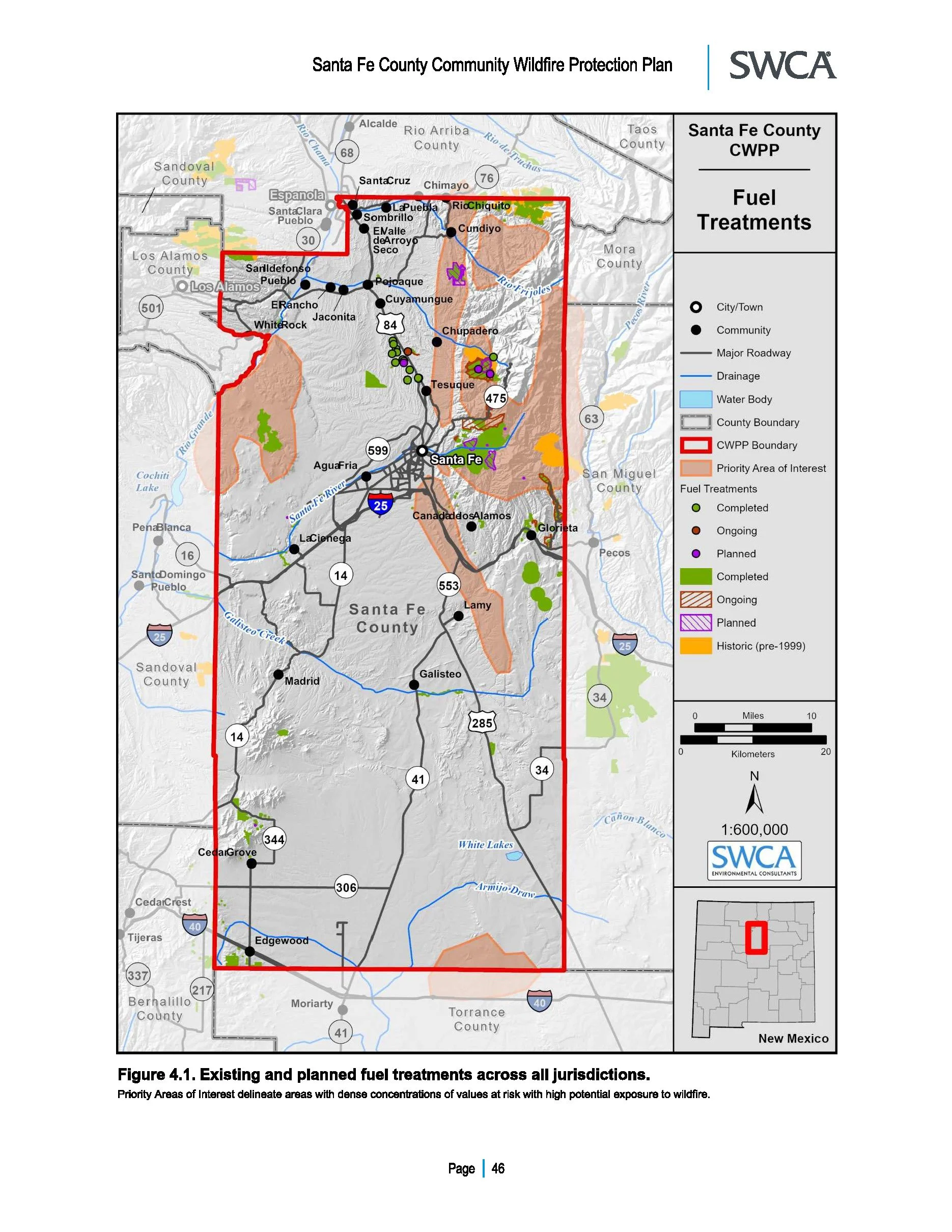
While proposed forest treatments and their associated environmental clearances receive a lot of press, this type of ecological work has a long history in Greater Santa Fe Fireshed. For as long as people have lived here they have altered the land. Over the past several decades, a variety of partners have implemented forest and fuels treatments based on local research across ecotypes and land ownerships. The 2020 Santa Fe Community Wildfire Protection Plan highlights where these treatments have or will happen as well as the science and experience-based recommendations for making Santa Fe a fire adapted county now and into the future.

Learn more about local science

Where are treatments happening?

Based on local science and traditional knowledge, federal agencies, tribes, state divisions, local county and city entities, nonprofits, and private landowners are all playing a role in reducing fire threat, securing water, and protecting our communities.

  • North of Santa Fe, the Pueblo of Tesuque and partners have worked on implementing a multi-year forest treatment in Pacheco Canyon. The thinning, burning, and slash management work done in this area provided a foothold for firefighters to head off the 2020 Medio Fire and prevent it from burning into the ski basin.

  • East of Santa Fe, the US Forest Service and collaborators have implemented multiple forest resiliency projects, including in the Gallinas Municipal Watershed WUI and Hyde Park WUI projects. These treatments improve forest health and provide water security for our community by reducing the likelihood of a high-intensity wildfire in the municipal watershed.

  • The Nature Conservancy manages the 525-acre Santa Fe Canyon Preserve, an area which has received “years of restoration and conservation” to restore its natural ecological function and diversity.

  • Local landowners have been participating for years in cost-share agreements, city initiatives, and opportunities through FAC NM and FireWise to increase their homes’ defensible space and create a safer and healthier Wildland Urban Interface.

The Santa Fe National Forest is currently revising and preparing to re-release the Santa Fe Mountains Landscape Resiliency Project Environmental Assessment for a period of public scoping and comment. This NEPA document will pave the way for treatments which seek to improve the resilience of a priority landscape to future disturbances by restoring forest and watershed health and reducing the risk for catastrophic wildfire on up to 38,680 acres of federal National Forest Systems land. This project is grounded in the latest research and risk assessments and has the support and collaborative input of a coalition of federal and non-federal partners.


View an interactive map of the state’s historic, completed, ongoing, and planned projects, as well as wildfire footprints and more. This Opportunity Map is provided by the New Mexico Forest and Watershed Restoration Institute (NMFWRI) and housed by New Mexico Highlands University.


Why treat the forest?

When Spanish and other European settler-colonizers arrived in New Mexico, they brought with them large herds of sheep, cattle, and other grazing ungulates. These herds quickly denuded the land, eating grasses and shrubs down to the roots. Without these fine fuels to carry fire across the landscape, lightning ignitions were unable to spread and the region’s natural frequent fire regime was interrupted. The creation of the US Forest Service and federal focus on wildfire suppression further disrupted the fire cycle, and in the century-long absence of wildfire that followed the state’s ponderosa pine and mesic mixed conifer forests grew unnaturally thick and dense.

We are still dealing with the ramifications of our legacy of fire exclusion. These dense forests are more likely to carry high-intensity wildfire with often catastrophic consequences for trees, soils, flora and fauna, and water. Trees have less access to limited water and nutrients as they compete with their overcrowded neighbors, especially in times of drought and environmental stress. The forests are also at greater risk of pest and disease outbreaks, with uninterrupted forest canopy to transport those pathogens, and are less able to fight them off.

Thinning and burning the forest in ways which are safe, effective, and in line with our traditional and scientific knowledge allows land managers and stewards to restore forest resiliency. Practitioners who slowly reintegrate fire into our fire-adapted ecosystems empower them to be prepared and able to withstand the next wildfire. Forest treatments allow us to realign and learn to live with the rhythms of the desert Southwest.


Wildfire Wednesday #99: Wildfire Insurance

Happy Wednesday, Fireshed Coalition readers!

Navigating the world of insurance for your home, business, or property can feel inherently complex and chaotic. Increasingly destructive wildfires and longer wildfire seasons are adding to the confusion as insurers respond to environmental upsets by changing or dropping their wildfire insurance policies. This week we will be discussing how communities can maintain wildfire insurance coverage by proactively working to protect their assets.

Today’s Wildfire Wednesday features information on:

  • findings from a Wildfire Insurance panel discussion from Montana,

  • a new report on reducing wildfire risk to insurers and the insured through loss prevention,

  • a webinar examining the role of insurance in mitigating the risks of wildfire, and

  • additional upcoming learning opportunities.

Be well and stay curious,

Rachel


Panel Discussion

Promoting and expanding wildfire risk reduction efforts

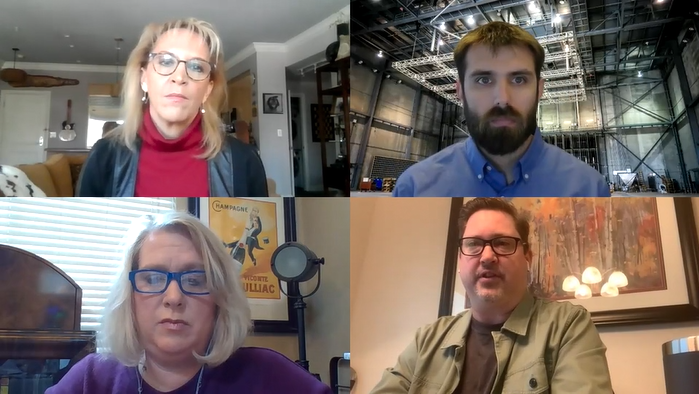
A panel of representatives from various insuring agencies (American Property Casualty Insurance Association, Insurance Institute for Business & Home Safety, Chubb Insurance) gathered in early 2021 to discuss how to better align the wildfire risk reduction efforts of community leaders and insurance providers. Hosted by the Fire Adapted Montana Learning Network, the group discussed ways to find common ground and forge alliances between Offices of Emergency Management, property owners, and insurers to ensure that everyone is better prepared for and able to mitigate wildfire risk in the wildland urban interface (WUI).

Discussion topics included:

  • how homeowners can live in the WUI and keep or obtain their wildfire insurance coverage,

  • the changing nature of wildfires as they expand further into the urban portion of the WUI,

  • the impact of home construction on personal wildfire risk,

  • increasing costs of wildfire disaster claims,

  • tools for mitigating risk in advance to prevent wildfire losses before they happen,

  • and more!

View the full discussion recording here or play the video below.


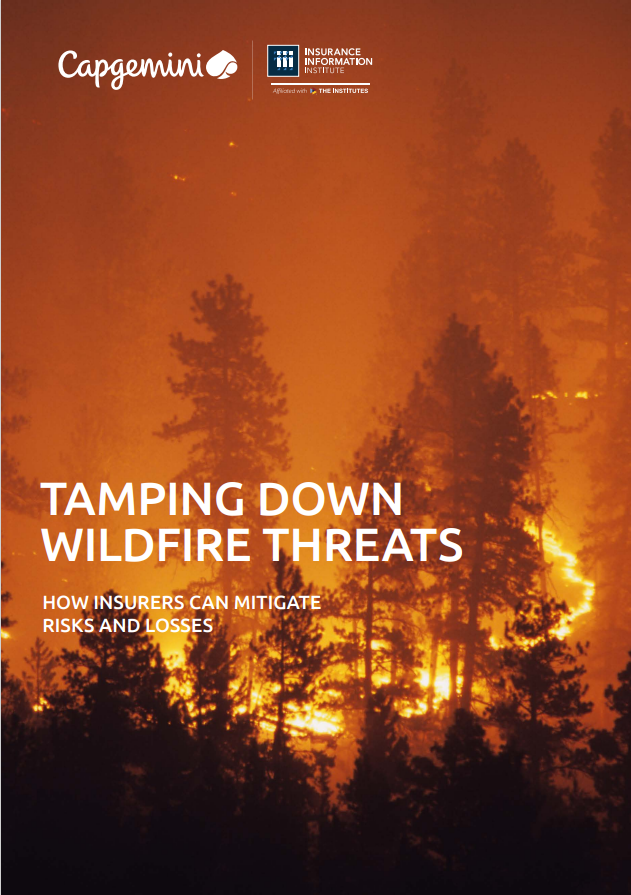
Report: Tamping Down Wildfire Threats

How insurers can mitigate risks and losses

A new report out of the Insurance Information Institute delves into the evolving complexities of wildfire threats to homes and properties and how insurers can and should respond. The intent of the report is to provide recommendations for collaborative risk mitigation and to act as a jumping off point for future topical conversations.

The beginning of the report focuses on how wildfires are not just more destructive than in the past: they now behave differently, with three out of the last five years exhibiting some kind of novel fire behavior. Beyond the immediate threat of the fire itself, increasingly intense wildfires tend to destabilize soils, increase flood risk, impact human health and quality of life, and may even be influencing hurricane frequency and intensity along the Atlantic coast. These realities represent a hardship for communities living with fire and a challenge for the insurers facing exponential increases in damage claims expenses.

Insured wildfire losses are on the rise,but insurers’ appetite for writing coverage in fire-prone areas has declined in recent years; however, ceasing to insure complex risks isn’t a strategy for long-term success. What’s needed instead is risk reduction, pre-emptive damage mitigation, and a deeper understanding of the evolving nature of this hazard.
— Insurance Information Institute

Recommendations to emerge from the report

  • Better mitigation is a starting point

    The impetus is on both at-risk communities and insurers. As the President and CEO of IBHS writes, “to strengthen the resilience of vulnerable homes and communities, adoption and enforcement of wildfire codes and standards must increase.”

  • Uncomplicate claims management

    Accelerating the pace and accessibility of the insurance claims system can make a big difference in how policyholders experience a catastrophic wildfire. Insurers are finding creative methods to process claims and adjust property values remotely to speed up the claims process.

  • Keep an eye on parametric insurance

    “Instead of paying for damage that has occurred, [parametric insurance] pays out if certain agreed-upon conditions are met, regardless of damage. For example, a parametric policy might pay out when a certain threshold of ‘acres burned’ is exceeded”, simplifying the process.

  • Data is the key

    “Climate resilience requires a sophisticated data strategy, yet only 35% of insurers… said they have adopted advanced tools – such as machine-learning based pricing and risk models – that [are] critical to unlocking new data potential and enabling more accurate risk assessments.”

Read the report summary
Read the full report

Upcoming learning opportunities

Webinars

November 30 @ 10am MST: Wildfire Risk and Insurance

In the third installment of the “Sparking Solutions” webinar series from Resources for the Future (RFF), experts will discuss the important role that insurance plays in sending signals about risk, how to balance that with equity and affordability, and what options exist for handling the growing problem of insuring wildfire risks.
Register now and revisit parts I and II of the Sparking Solutions series.


December 6 @ 12pm MST: Increases in large wildfire driven nighttime fire activity

Patrick Freeborn will discuss the results of 17 years of active fire data to characterize daytime and nighttime dynamics of wildfires across the continental US. The data indicate that nighttime fire activity in on the rise, largely due to large wildfires influencing local weather to create the conditions for fires to persist through historically cooler and wetter hours.
Register here to attend.


Workshops

November 30 @ 6pm MST: NMAA Workshop - Infrastructure Funding

The New Mexico Acequia Association (NMAA) is hosting a virtual workshop (zoom or phone) on applying for Infrastructure Funding. Register now to learn more about Capital Outlay, ACDIF and RCPP! Questions may be directed to serafina@lasacequias.org