Action through collaboration: releasing the Greater Santa Fe Landscape Resilience Strategy

A Landscape-scale Resilience Strategy to guide collective action

The Greater Santa Fe Fireshed is a 107,000-acre landscape in the southern Sangre de Cristo Mountains around Santa Fe, including lands managed by the U.S. Forest Service, the Pueblo of Tesuque, the City of Santa Fe, other non-federal public lands, and 36,370 acres of private land.
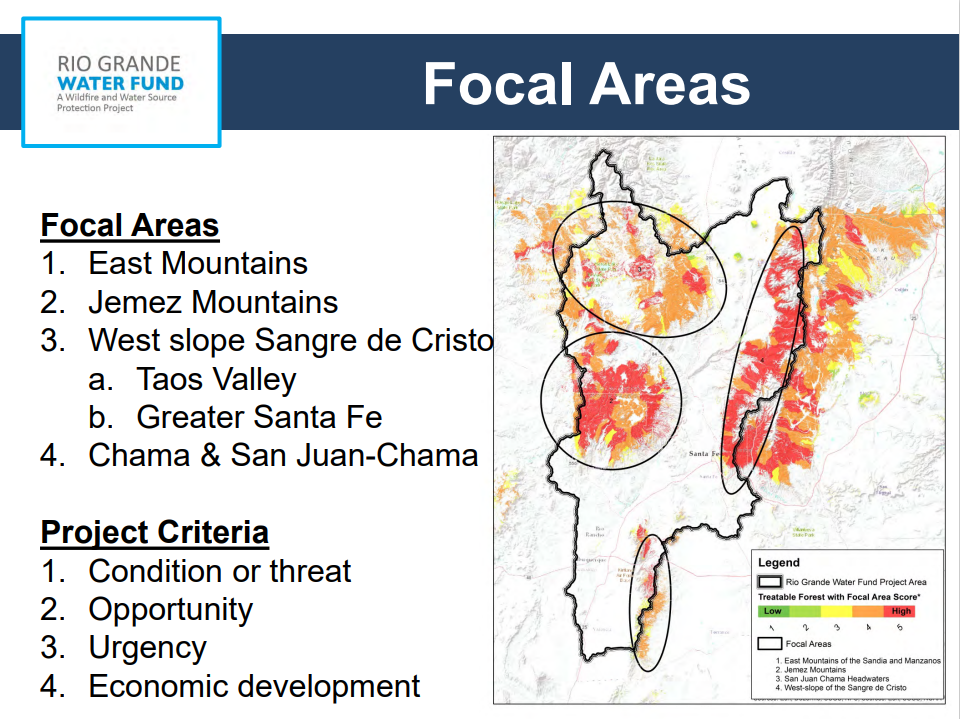
Map and description of the Rio Grande Water Fund's four focal areas, identified as being treatable forest with a high focal area score

This landscape constitutes one of the Rio Grande Water Fund’s four focal areas, is supported by the 2020 New Mexico State Forest Action Plan, and is incorporated in the Santa Fe National Forest’s Santa Fe Mountains Landscape Resilience Project Environmental Analysis.

Recognizing the importance of the Fireshed landscape and the need to scale up and coordinate fire readiness efforts, the Greater Santa Fe Fireshed Coalition has spent years developing a strategy for building landscape resilience which articulates their collective aspirations for the landscape. This strategy is based in the best available science, modeling, and assessment of community needs, vulnerabilities, and values.

Inside cover of the Landscape Resilience Strategy listing authors and contributing partners

Who wrote it?
The strategy was authored by the Greater Santa Fe Fireshed Coalition, including staff members from the New Mexico Chapter of The Nature Conservancy and the Forest Stewards Guild. The strategy includes contributions from City of Santa Fe Fire Department, New Mexico Forest and Water Restoration Institute, US Forest Service Santa Fe National Forest, Santa Fe County Fire Department, New Mexico EMNRD - Forestry Division, and many other partners.
The Santa Fe City Council and Santa Fe County Commissioners passed resolutions in 2016 supporting this collaborative work.

Why create a resilience strategy?
The 2022 Greater Santa Fe Resilience Strategy aims to improve joint work in the Fireshed Landscape and enable progress toward the Coalition’s vision of a resilient landscape, fire-adapted communities, and effective wildfire response.

How will it help?
The Resilience Strategy provides a basis for collaborative work that all partners can agree upon. It outlines the major elements needed to realize the Coalition’s vision of strong landscapes and fire prepared communities. By recognizing current conditions (ecological and community values), analyzing risk to homes, businesses, values at risk, and other assets (including a Wildfire Risk Assessment), and defining desired conditions which exhibit fire resilience, the Coalition has created a roadmap to coexisting with fire in the Greater Santa Fe Fireshed.


Major elements of the Resilience Strategy
Understanding current landscape conditions: A description of the historic and current ecological and social landscape conditions in the Fireshed. This section also highlights the scientific basis for action through a Wildfire Risk Assessment.

Defining landscape desired conditions: Based on the Mission and Vision, this section describes a series of objectives that can help Coalition members track progress.

Using multiple methods to build landscape resilience: Describes the tools available to Coalition members to improve conditions in the landscape.

Priority actions for landscape resilience: Describes how Coalition partners will coordinate work to apply the resilience-building tools across the diverse landscape.


Methods for building landscape resilience
Cartoon wooden toolbox with handle holding an assortment of construction tools including a hammer, pliers, nails, and a handsaw

Tools available to help build resilience in the Fireshed landscape include:

  • Vegetation management, including thinning and controlled burning.

  • Spatial analysis to identify joint priorities.

  • Preparing our human communities for wildfire through a combination of defensible space thinning and reduction of structural ignitability.

  • Communication, both amongst Coalition members and between Coalition partners and the broader public.

Critical to the success of the Resilience Strategy is the understanding that 1) Coalition members will share resources and expertise whenever possible, and 2) the public will be engaged in reducing fuels on their own properties, reducing structural ignitability, being prepared for wildfire, and holding support for surrounding agency land management work.


Vision for our collective future

This diverse group of collaborators envisions “a landscape with healthy forests and secure water sources. Communities in and near forested landscapes are fire adapted, with residents who take responsibility to reduce risks before wildfire occurs. Prepared communities feel secure and understand the role of fire in the landscape. Residents support treatments, including prescribed burns and managed wildfires, and accept smoke associated with fire management. Fire using agencies provide well-coordinated, safe, and effective response to wildfires, and strive to mitigate smoke impacts to communities. Resilient forests and thriving communities provide economic, recreational, and spiritual benefits for residents and visitors to enjoy.”

Map of completed, ongoing, and planned fuel treatments in the Santa Fe County area

Figure 4.1 from page 46 of the 2020 Santa Fe County Community Wildfire Protection Plan (CWPP): existing and planned fuel treatments across all jurisdictions. The priority area of interest delineates areas with dense concentrations of values at risk with high potential exposure to wildfire. See the full CWPP here.

Coalition members have already invested years and substantial funds treating the forests and urban areas surrounding Santa Fe and adjacent communities to reduce susceptibility to fire. Partners are actively seeking funding opportunities to continue putting the resilience strategy plan into action, including the recent submission of a $1.2 million grant application for wildfire mitigation work in surrounding communities which is anchored in the strategy. It takes the involvement of all members of our greater Santa Fe community to be fire adapted! We invite you to get involved by reading the 2022 Greater Santa Fe Resilience Strategy today.

Become a partner

Organizations that will add to the Coalition’s capacity and that are willing to sign onto the strategy and support the operating principles can join the Coalition as partners.

Click here to read the resilience strategy in full

Wildfire Wednesdays #98: Evacuation Planning

Hi Fireshed Community,

Evacuation is complex and difficult to plan for. It depends greatly on the type of emergency, or the duration of the emergency, and the needs of the community being evacuated. Fire practitioners, emergency managers, and local community organizations across the country work hard to include flexible evacuation and safety plans into their work each day.

One thing about evacuation is for sure — the more we work within our communities before an incident to plan and communicate about evacuation, the better our response will be. This involves personal wildfire evacuation planning as well as community-level planning.

With this in mind, this week our Wildfire Wednesdays newsletter will focus on both personal evacuation planning as well as planning guides that support community-level planning. We pull in materials from the National Fire Adapted Communities network (thank you!) that we hope will support New Mexico communities in preparing for 2023 and beyond.

Stay safe,

Gabe

Personal Evacuation Planning

For individual residents and homeowners wanting to consider their personal wildfire evacuation plan, the Ready, Set, Go! (en español) personal action guide is a great place to start. This guide helps residents be Ready with preparedness understanding, be Set with situational awareness when fire threatens, and to Go, acting early when a wildfire starts.

The Ready, Set, Go! guide is designed to be prepared well in advance of a wildfire and includes check lists and emergency supplies lists to support communication within your household.

There is a special section about ranches and farms that will help you consider how to evacuate livestock, protect valuable equipment, and more. Animal evacuation takes careful planning and communication to those that live around you. Start these conversations early and check-in about them annually to make sure you have a clear plan.

En Español


Community-Level Evacuation Planning

If you are looking for a resource to help you or your community work through the evacuation planning process, this FREE, 2020 Federal Emergency Management Agency (FEMA) guide is a great start.

Planning Considerations: Evacuation and Shelter-in-Place Guidance for State, Local, Tribal and Territorial Partners.

This guide takes a whole-community approach, provides an overview of key concepts and critical considerations and dives into the planning process itself. 

Communication Resources

Communication Planning

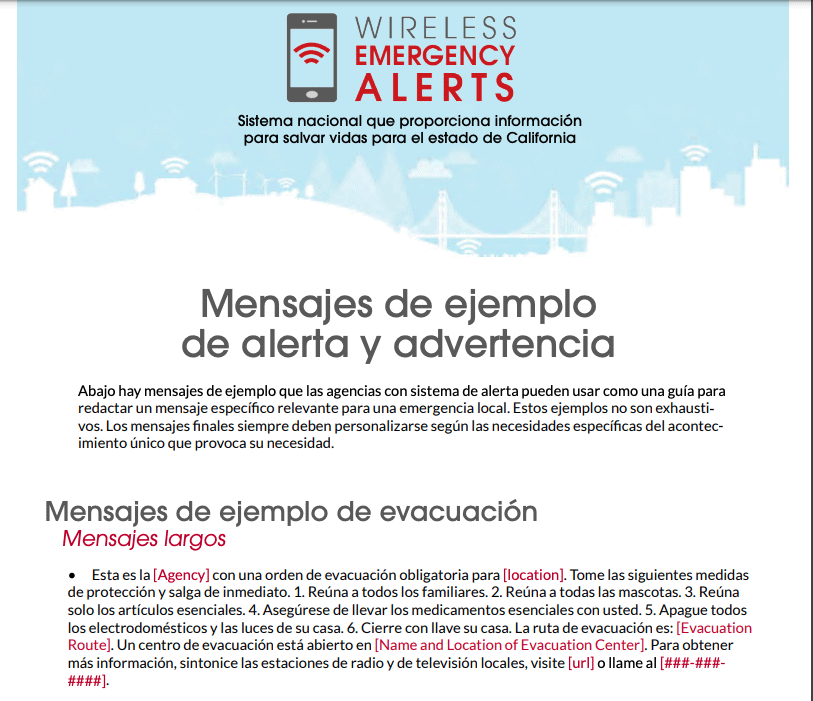
Evacuation and warning wireless emergency alert template in Spanish from California.

If you are looking for tips and tools to help you communicate more effectively during evacuation, there are several great resources available to you: 

  • The Department of Homeland Security document, Best Practices in Wireless Emergency Alerts, contains guidance for establishing wireless emergency alerts as well as information on setting up a training and drilling program.

  • FEMA also has a toolkit available for those who routinely issue alerts and warnings. The Alerts, Warnings, and Notifications Program Planning Toolkit contains a step-by-step, FREE, web-based app that helps you create a customized plan for alerts and warnings. Users can input their own information, guided by prompts and informed by many of the available resources, and then save a Microsoft Word document that can be further edited and refined.

  • The Federal Communications Commission website on multilingual alerting contains general guidance for issuing alerts and warnings in multiple languages. Some states, such as California, have created evacuation alert and warning templates in multiple languages.

Communication Materials for Livestock and Animals

Example of stickers and placards for your home from the ASPCA.

Communication with those residents in rural areas where animals and livestock is a consideration is unique and requires different messaging. Here a few resources specific to that community:  

Modeling and Tools

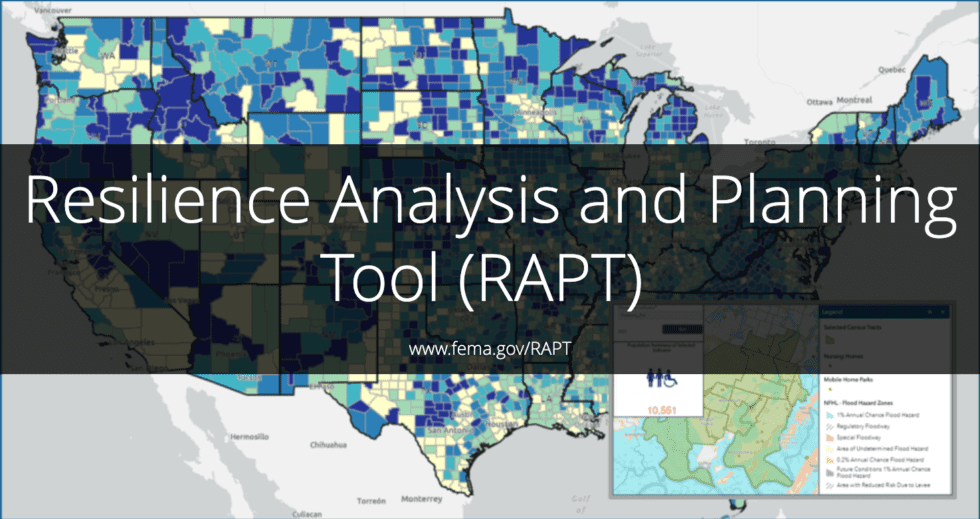
The Resilience Analysis and Planning Tool Storymap

Our ability to model behavior, traffic flow and evacuation vulnerability continues to increase.  Several tools are available to help communities plan. 

Evacuation Planning for Access and Functional Needs

There is no perfect blueprint for evacuating communities ahead of a wildfire. Even so, there are inclusive planning resources for evacuations to go as smoothly as possible for people with many different needs.

FEMA has a guide specifically for integrating functional needs into general population shelters, and NFPA’s evacuation guide for people with disabilities breaks down planning considerations for specific needs. FAC Net held a recent webinar on how to engage people with access and functional needs in emergencies, covering communication tools and shelter accommodations. Emergency Medical Services for Children (EMSC) has a guide specifically about supporting kids with special needs during a disaster (available in multiple languages).

Engagement Opportunity! November 2022 NM Wildland Urban Fire Summit

2022 New Mexico Wildland Urban Fire Summit

Community Recovery, Cultivating Resilience

November 16-18, 2022


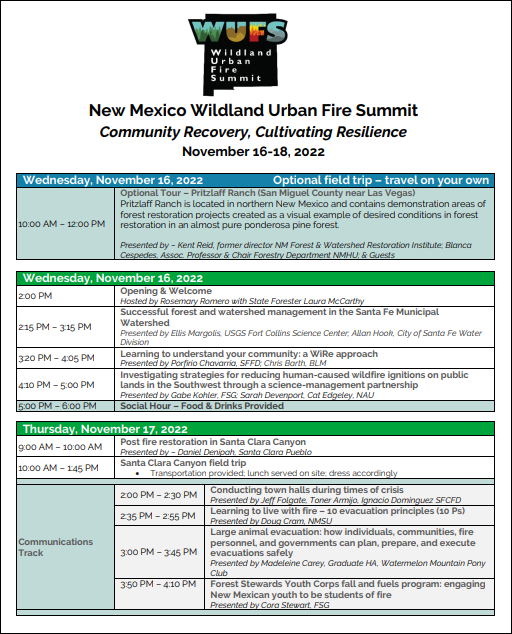
A collaborative group of fire-focused agencies and organizations is presenting the 2022 Wildland Urban Fire Summit (WUFS) in Santa Fe. WUFS is New Mexico’s leading event for wildfire preparedness and planning. This event is tailored to land management professionals and practitioners and is open to the public. Click here to book lodging and click here to learn more about the New Mexico Wildland Urban Fire Summit.

Register Now

Where: The Lodge at Santa Fe
When: November 16-18, 2022
Cost: $75

Summit highlights:

  • Optional pre-summit tour on Wednesday, November 16th to Pritzlaff Ranch in San Miguel County (only 30 spots available!)

  • Social/networking hour on Wednesday, November 16th

  • Group tour of Santa Clara Canyon on Thursday, November 17th (transportation & lunch provided)

  • Communications & tools/resources tracts on Thursday, November 17th

  • CWPP workshop on Friday, November 18th


Join your peers, community leaders, fire service professionals, and federal, state, tribal, and local governments for this in person event. Learn from local communities adapting to a wildfire environment about the latest techniques, strategies, and resources for wildfire adaptation and resilience. Expand your network of peers and experts to assist you in your fire/disaster resiliency goals.

Travel grants are available for attendees.
Go to https://www.swfireconsortium.org/funding/travel-grants/ for more information and to access the application.

Wildfire Wednesday #97: Landscape Collaboratives and Continual Learning

Hello, Fireshed Coalition readers!

Just as your durability as a fire adapted community lies in the melding of each individual’s specialties, strengths, and diverse perspectives, the capacity of landscape collaboratives comes from the unique viewpoints and experiences that each partner brings to the table. Building, maintaining, and encouraging open communication and the exchange of knowledge in these collaboratives is integral to their success.

Today’s Wildfire Wednesday features information on:

  • What is a good starting point for landscape collaboratives?

  • Prioritizing needs and project implementation

  • Continual learning - Wildland Urban Fire Summit 2022

  • Plus, staying informed with webinars and news

Take care,
Rachel


Getting started

What is a landscape collaborative?

Landscape management often spans hundreds of thousands of acres and multiple jurisdictions. Forming a landscape collaborative to address this large scope and the resulting diverse needs allows for creativity, adaptivity, and the capacity to tailor approaches to site-specific conditions. A landscape collaborative can be defined as a multi-party group of stakeholders who share a vested interest in the cohesive management of a defined landscape. These groups may identify as a collaborative, a coalition, a cooperative, or use another term altogether.

A group of individuals stands in a clearing on a sunny day in a ponderosa pine forest

Image courtesy of Alan Barton, 2022. Pictured: Pacheco Canyon Field Tour.

While partners may be united in their desire to care for the land and communities therein, forming and maintaining a landscape collaborative comes with challenges. Necessary factors to ensure the success of the collaborative are upkeep of social relationships among partners (working relationships), legitimate coordination (effective communication), and the collaborative capacity of the community (investing time, energy, and funding sources).

What is a good starting point for forming a landscape collaborative?

Several elements are generally present for a landscape collaborative to form:

  • A shared geographic region

  • Common concerns threatening or requiring attention in that region

  • Multiple individuals or groups with an interest in addressing these concerns

  • Social connectivity between potential partners

  • Resources to enable collaboration, including time, personpower, and facilitation

Convening your group:
Begin by talking to potential project partners, those who you have worked with or who you know share an interest in the same type of landscape management. Identify a meeting space and invite these individuals to discuss common goals, concerns, values at risk, and scope of work and focus area. Figure out who will organize and facilitate meetings of the collaborative to maintain momentum. Identify potential funding sources as appropriate. Once you have convened collaborative partners and established that you intend to work together, you can move on to utilizing existing documents to guide your proposed objectives and actions.

Utilizing the 2020 New Mexico Forest Action Plan

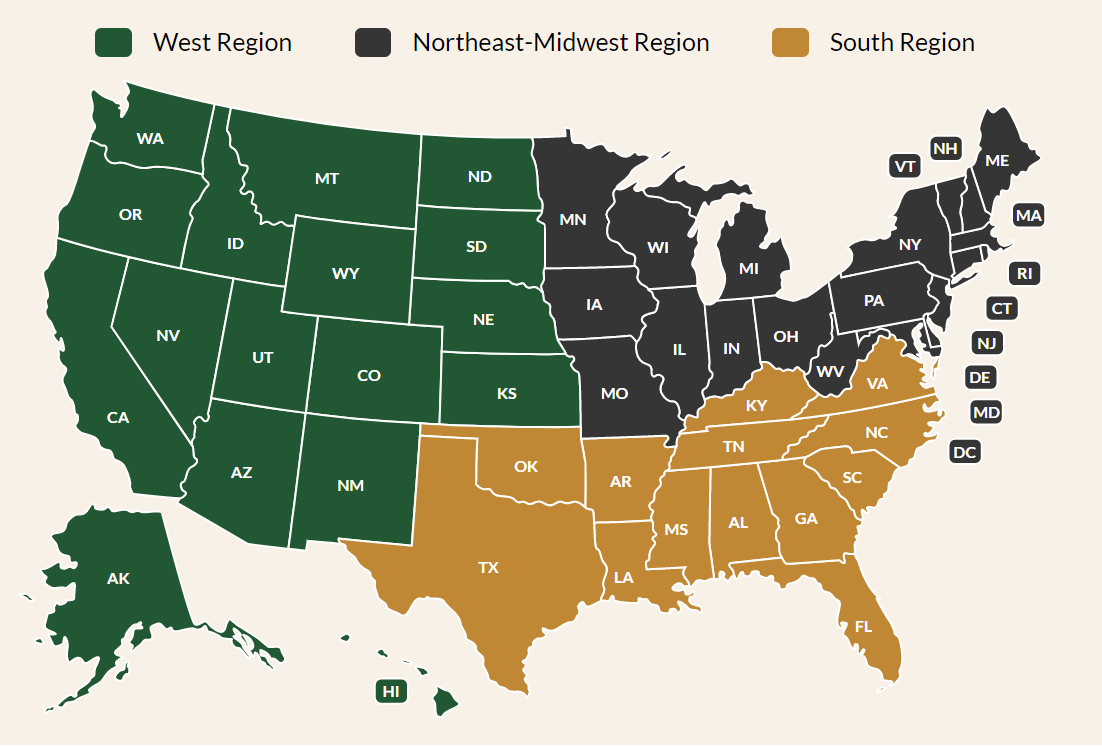
Regions into which state Forest Action Plans fall. Click to see how New Mexico aims to conserve and protect its forests over the long run.
Image courtesy of National Association of State Foresters.

States are required by the USDA Forest Service to develop a Forest Action Plan (FAP) on a recurring 10-year plan cycle. New Mexico’s 2020 plan builds upon the first plan developed in 2010.

The EMNRD Forestry Division worked with many partners to create the 2020 New Mexico Forest Action Plan. It provides an assessment of the current conditions of our natural resources and sets forth strategies that address key issues in forest and watershed management in a changing climate.

Key elements in the FAP which aid in the creation of landscape collaboratives are: 1) the vision and next steps for collaboration between agencies and organizations, 2) identification of priority landscapes and regions, and 3) current landscape and watershed conditions and corresponding risks.

Read more about the 2020 New Mexico Forest Action Plan.


Establishing Priorities

Choosing focus areas

Each stakeholder in the landscape collaborative will likely bring their own distinct priorities to the table. To avoid conflict and find common ground, the group can focus on the following determinants to guide their cohesive priorities.

Places most likely to get funding

Cartoon graphic of hands holding green dollar bills

Once the collaborative moves from the hypothetical planning phase to the tangible, sources of funding will be imperative for implementation of management activities. Identify potential funding sources such as state agreements and grant opportunities, inquire with others as to what types of projects have been most successful in acquiring funding, and focus on landscapes which have been pre-identified as priorities in planning documents by funding groups (such as the Environment Department, EMNRD Forestry Division and USDA Forest Service).

Priority landscapes

Pull out some maps and identify which areas of interest for your collaborative overlap with county, state, federal, and tribal priority landscapes. Look into the assessments which led to those priority designations (watershed vulnerability, fire hazard, etc.) and determine how those fit in with your collaborative’s idea of landscape risk. Start with the FAP priority landscapes and work from there.

Risk modeling and values at risk

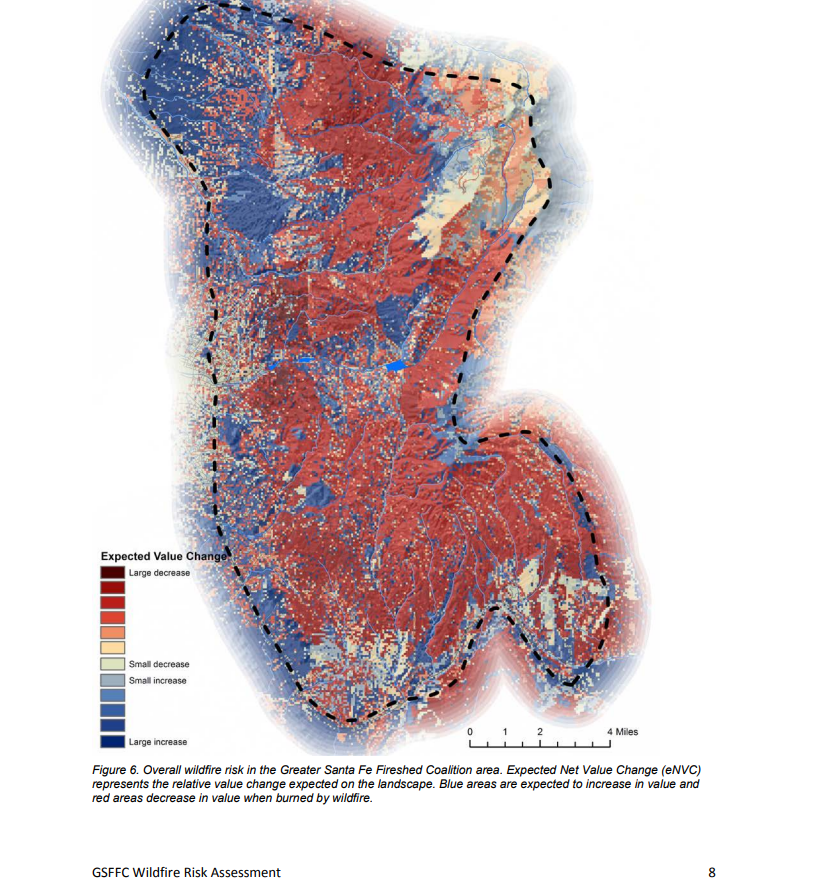
Color-coded model of expected value change of a landscape following a fire in the santa fe fireshed

Look for existing geospatial models, data, and published papers which describe the relative risk faced by your landscape of interest. If you have the capacity, consider using existing data or partnering with a group that specializes in risk modeling to produce assessments of risk specific to that area. Identify specific values at risk (homes, infrastructure, recreational and cultural sites, source water, etc.) which may be prioritized for protection.

Environmental clearances

The environmental clearances required prior to project implementation vary by land jurisdiction. On lands owned by the State, land managers must complete heritage surveys and check for Threatened and Endangered species before beginning work on any management activities. On federal lands, managers must go through the requirements of the National Environmental Policy Act. Identifying areas which have already received environmental or NEPA clearances accelerates the implementation process, can make your project more competitive for funding opportunities, and should be part of the prioritization process.


Continual Learning

Wildland Urban Fire Summit 2022:
Community Recovery, Cultivating Resilience

Continual learning and finding spaces which enable exchange of knowledge between land managers are integral to project relevancy, adaptive management, and cross-boundary collaboration. In mid-November, a collaborative group of fire-focused agencies and organizations is presenting the 2022 Wildland Urban Fire Summit (WUFS) in Santa Fe. This event is tailored to land management professionals and is open to the public.

Theme: Community Recovery, Cultivating Resilience
Where: The Lodge at Santa Fe
When: November 16-18, 2022
Cost: $75

WUFS is New Mexico’s leading event for wildfire preparedness and planning. Join your peers, community leaders, fire service professionals, and federal, state, tribal, and local governments for this in person event. Learn from local communities adapting to a wildfire environment about the latest techniques, strategies, and resources for wildfire adaptation and resilience. Expand your network of peers and experts to assist you in your fire/disaster resiliency goals.

Summit highlights:

  • Optional pre-summit tour on Wednesday, November 16th to Pritzlaff Ranch in San Miguel County (only 30 spots available!)

  • Social/networking hour on Wednesday, November 16th

  • Group tour of Santa Clara Canyon on Thursday, November 17th (transportation & lunch provided)

  • Communications & tools/resources tracts on Thursday, November 17th

  • CWPP workshop on Friday, November 18th

REGISTER NOW

Stay Informed

Webinars

December 6 at 12:00 MST: Southwest Fire Science Consortium presents a webinar on Increases in large wildfire driven nighttime fire activity observed across the conterminous United States with Dr. Patrick Freeborn.

Notable press releases

October 12: In New Mexico, Partners Collaborate to End Siege from Megafires

Post-fire resources

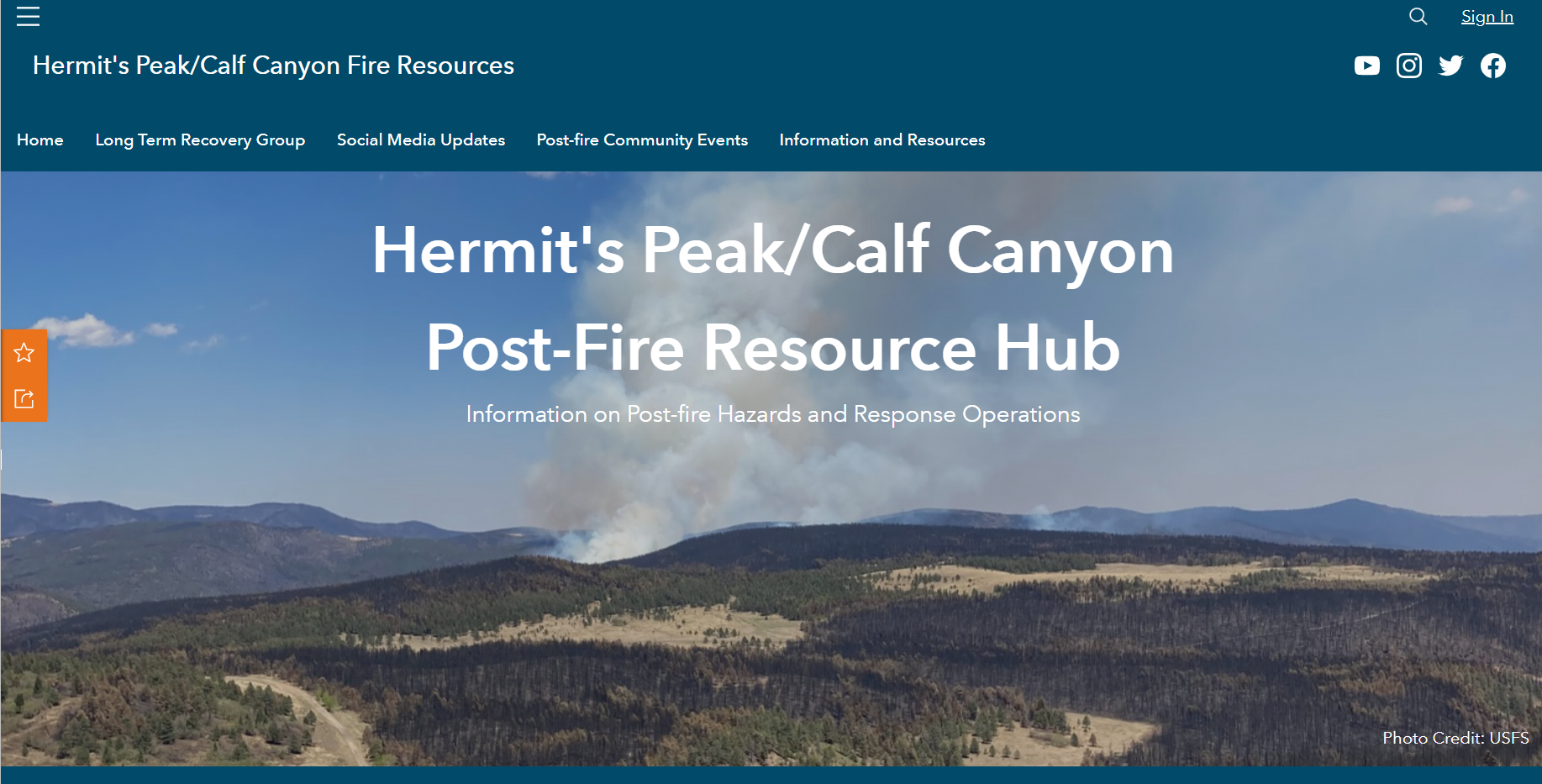
New Mexico Highlands University and partners have released a Post-Fire Resource Hub providing information on post-fire hazards and response operations for the Hermits Peak/Calf Canyon Fire.

Wildfire Wednesday #96: What is a Fire Adapted Community?

Communities continuing to be impacted by recent wildfires across New Mexico can find recovery information through the After Wildfire NM website. Additional resources, including documenting your losses, getting debris removed, finding the right contractor, and more are available through United Policyholders and Coalitions and Collaboratives.


Hello and happy Wednesday, Fireshed Coalition readers!

Living in a fire-prone landscape, sometimes it can feel like you’re being bombarded with a slurry of fire-related acronyms, organizations, and initiatives all vying for your attention - living with fire, fire science consortiums, fire adapted communities, firewise, fire smart, becoming fire ready, fire networks, fire resources. Today’s Wildfire Wednesday aims to help you better become prepared for wildfire by laying out some of the key differences between two primary fire-preparedness initiatives: Fire Adapted Communities and Firewise USA.

Today’s Wildfire Wednesday features information on:

  • Simplifying Firewise and FAC

  • Which one is for me?

  • Plus, opportunities to Learn More through a wildfire solutions webinar series and TNC’s cultural forestry virtual learning event

Best,

Rachel


Simplifying Firewise and FAC

What is Firewise?

The Firewise USA recognition program is administered by the National Fire Protection Association (NFPA) and provides a collaborative framework to help neighbors in a geographic area get organized, find direction, and take action to increase the ignition resistance of their homes and community and to reduce wildfire risks at the local level.

Firewise focuses primarily on homeowner and resident fire mitigation before a wildfire. Their recommended mitigation actions include home hardening, fortification of the home ignition zone, organization of a Firewise community board, neighborhood risk reduction activities, and joining the program as a Firewise USA Site.

Through risk assessments, community organization, and individual and collective action, the goal of Firewise is to effectively lower community susceptibility to fire.

New applications can be completed online at portal.firewise.org. More information on creating a firewise home and community can be found below.

What is Fire Adapted Communities (FAC)?

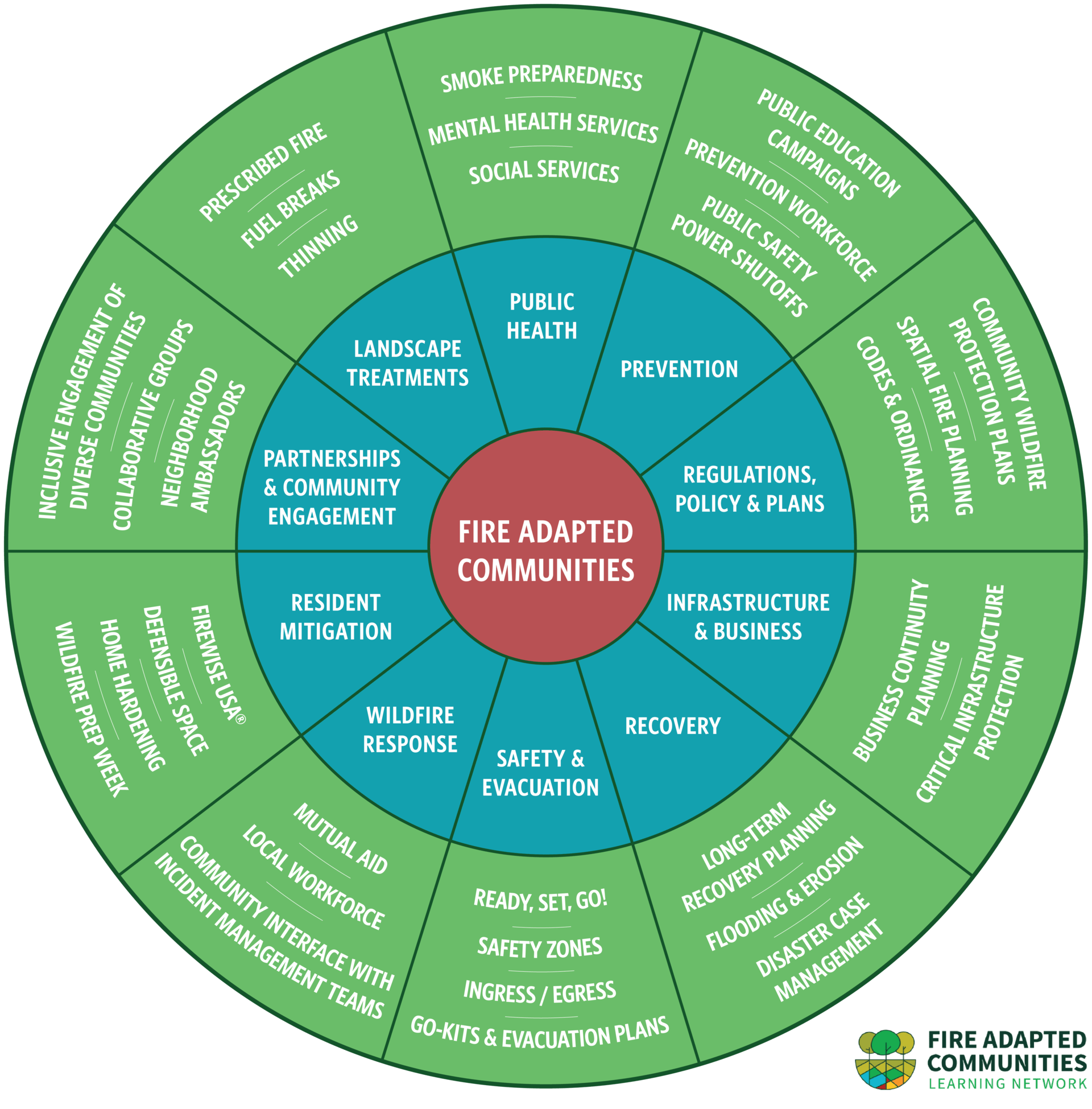
Fire Adapted Communities is a comprehensive framework for community wildfire resilience. It is a way of thinking about how to live better with wildland fire. A fire adapted community is one which understands its risk and takes action during all phases of the wildfire cycle - before, during, and after - to be more resilient. FAC was born out of the 2009 National Cohesive Wildland Fire Management Strategy.

View the FAC community resilience framework and suite of actions by clicking on the graphic to the right.

FAC looks beyond residents and individual actions and broadens the scope of what it means to be fire ready.

FAC encompasses the Fire Adapted Learning Network, a peer learning and professional relationship-building initiative. FAC Net connects people to resources and to other practitioners so they can share approaches, tailor strategies for their place, and make a difference in wildfire outcomes on-the-ground. They combine support for on-the-ground project work with professional development, peer learning and coaching, and long-range strategic planning.


Which one is for me?

Choosing the best program for your community

Firewise and FAC grew out of the same need - to build fire ready communities - and there is a lot of overlap between the two initiatives. Firewise is an important program that supports FAC concepts and wildfire resilience and the two approaches compliment one other.

If you, as an individual or community, are just getting started with your fire adapted journey, Firewise offers an approachable and straightforward suite of actions to build leadership, community cohesion, and to encourage people to mitigate their individual risk.

If you are ready to begin interfacing with your peers, learning more about the science, technology, and lessons learned behind wildfire, and want to access additional resources for education, community programs, and comprehensive resilience through all phases of wildfire, FAC will be a good fit.

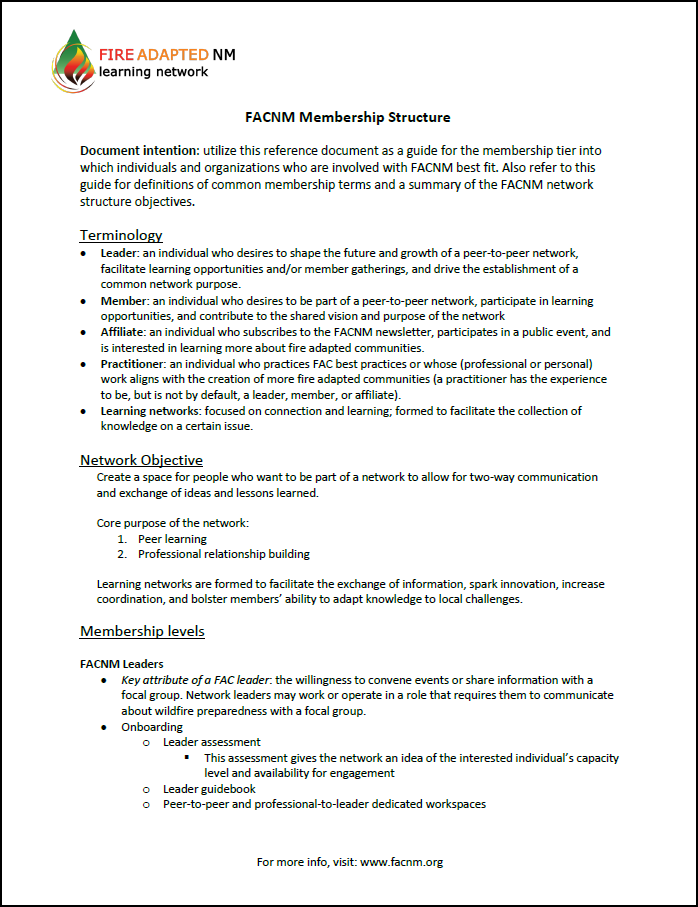
Your local chapter - Fire Adapted New Mexico - offers involvement at three levels: Leader, Member, and Affiliate. Each level of involvement is associated with increasing expectations, but also a greater pool of resources. Read about the FACNM membership structure and how to get involved here.

Learning networks are formed to facilitate the exchange of information, spark innovation, increase coordination, and bolster members’ ability to adapt knowledge to local challenges. The purpose of the FACNM network is to create a space for people who want to be part of a network to allow for two-way communication and exchange of ideas and lessons learned.


Learn More!

Sparking Solutions Webinar Series

Resources for the Future is hosting a three-part webinar series on Meeting the Wildfire Challenge.

Part 1: The Fuels Management Challenge and Opportunity; Examining the role of fuels management in mitigating the impacts and intensity of wildfires
Watch the recording and read about the conversation here.

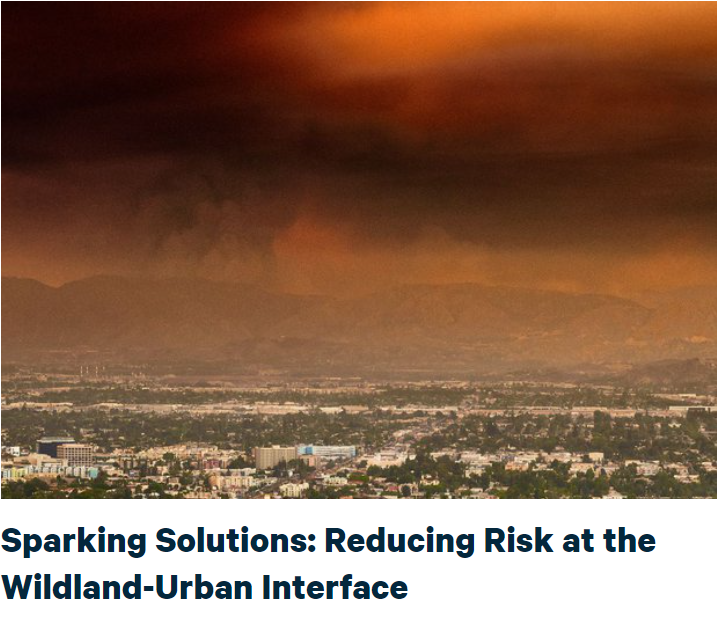
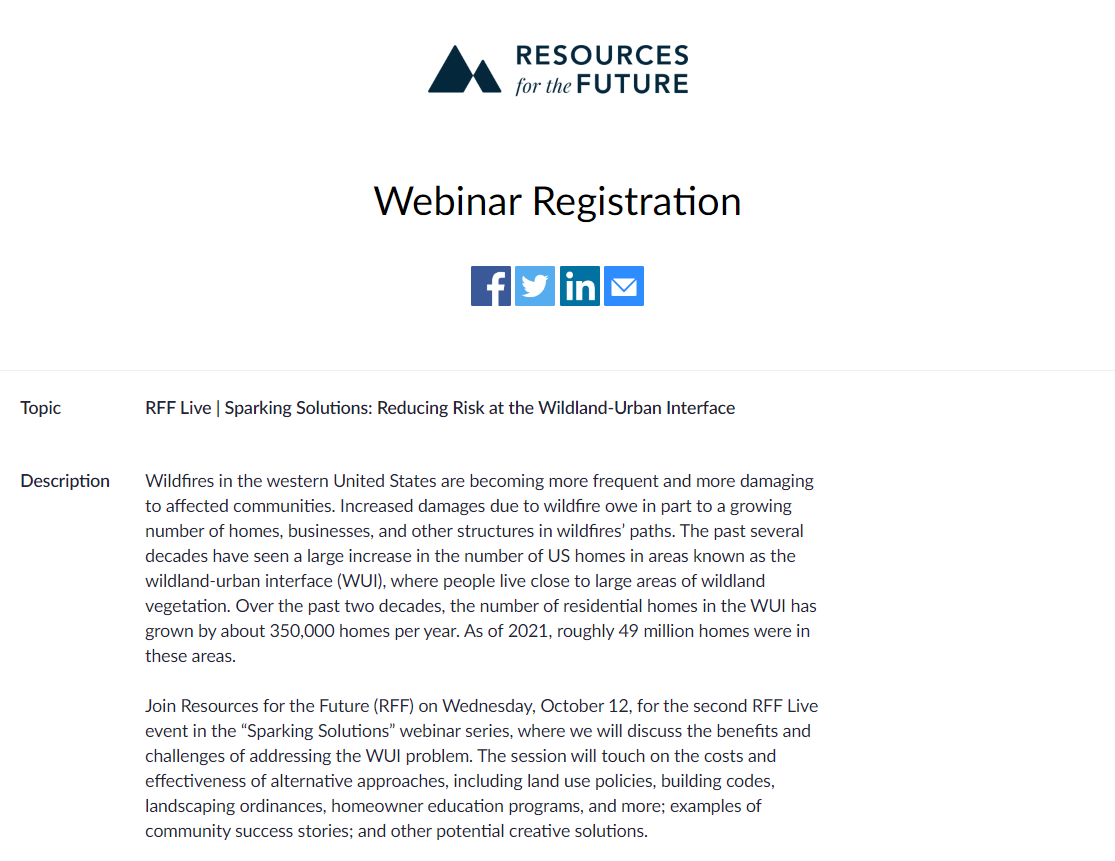
Part 2: Reducing Risk at the Wildland-Urban Interface; a conversation exploring the benefits and challenges of addressing the WUI problem
October 12th at 1:00 - read about the webinar and RSVP here.

Part 3: Wildfire Risks and Insurance
Details to be announced. Keep an eye on this webpage to learn more.

Cultural Forestry Virtual Learning

In July of 2022, The Nature Conservancy - New Mexico Chapter held a virtual learning event on Enabling Sustainable Traditional and Cultural Forestry Practices. The event illuminated how Forest Councils in New Mexico allow communities to get the wood needed to heat their homes and cook their meals while improving forest health.

You can now read about cultural forestry through this blog from TNC or by watching a recording of the virtual event here.

Updates on the Calf Canyon Hermits Peak Wildfire

A government spending bill was passed Friday (9/30) which provides an additional $2.5 billion in relief aid to those affected by New Mexico’s largest wildfire. The funds will be distributed through FEMA. Read more about it here.