Wildfire Wednesdays #61: Fire-Adapted Gardening & Landscaping

Hello Fireshed Coalition Members!

We hope you all had a great holiday weekend and Fourth of July. Although we’re well into gardening season here in New Mexico the blooms we’ve seen around our community lately have inspired us to write a garden/landscaping-focused post! There are many ornamental and native plants that thrive in our yards across New Mexico and you can incorporate these plants and other design concepts into your garden to make your property more fire-adapted.

This Wildfire Wednesday includes information on:

  • Landscaping your defensible space

  • “Fire Wise” plants for New Mexico

  • NM Cooperative Extension & County Extension services

Happy gardening!

Liz

Landscaping Defensible Space

Often when we think of defensible space we are focused on removing plant material from our property, but you can still have many plants and creative landscaping in a fire-adapted yard! Check out some advice from F.C. Dennis’ Fire-Resistant Landscaping fact sheet for how to appropriately landscape your defensible space around your home.

Defensible space landscaping design tips from F.C. Dennis:

  • Landscape according to the recommended defensible-space zones. That is, the plants near your home should be more widely spaced and lower growing than those farther away.

  • Do not plant in large masses. Instead, plant in small, irregular clusters or islands.

  • Use decorative rock, gravel and stepping stone pathways to break up the continuity of the vegetation and fuels. This can modify fire behavior and slow the spread of fire across your property. It is highly recommended that the first 3-5 feet away from the house be gravel, flagstone, pavers, or some other non-flammable material.

  • Incorporate a diversity of plant types and species in your landscape. Not only will this be visually satisfying, but it should help keep pests and diseases from causing problems within the whole landscape.

  • In the event of drought and water rationing, prioritize plants to be saved. Provide available supplemental water to plants closest to your house.

  • Use mulches to conserve moisture and reduce weed growth. To reduce fire danger, it is best to use a non-organic mulch such as pea gravel or stone, but leaf mold or compost is also acceptable. Mulch can be organic or inorganic. Do not use pine bark, thick layers of pine needles or other mulches that readily carry fire.

  • Be creative! Further vary your landscape by including bulbs, Garden art and containers for added color.
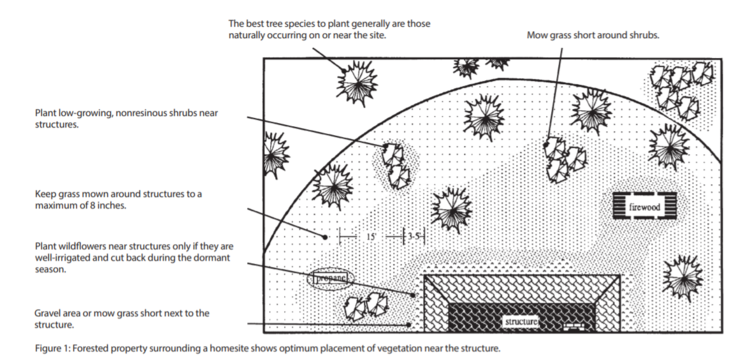
Screenshot+2021-06-30+150453.png

Image credit: F.C. Dennis Fire-Resistant Landscaping; Fact Sheet No. 6.303

Fire Wise Plants for New Mexico

The New Mexcio locust plant (photo: USDA Forest Service)

The New Mexcio locust plant (photo: USDA Forest Service)

Once you’ve designed or altered your yard to be more fire-resistant you may want to plant some new species that will support your defensible space! The Santa Fe Botanical Garden has great information about “Firescaping” and which plant species are appropriate for our yards in New Mexico, click here to learn more.

Also, Check out this Fire Wise Plant Materials guide from the New Mexico Cooperative Extension Service to learn more about Firescaping and for a list of all recommended trees, shrubs, flowers and ground covers for your yard!
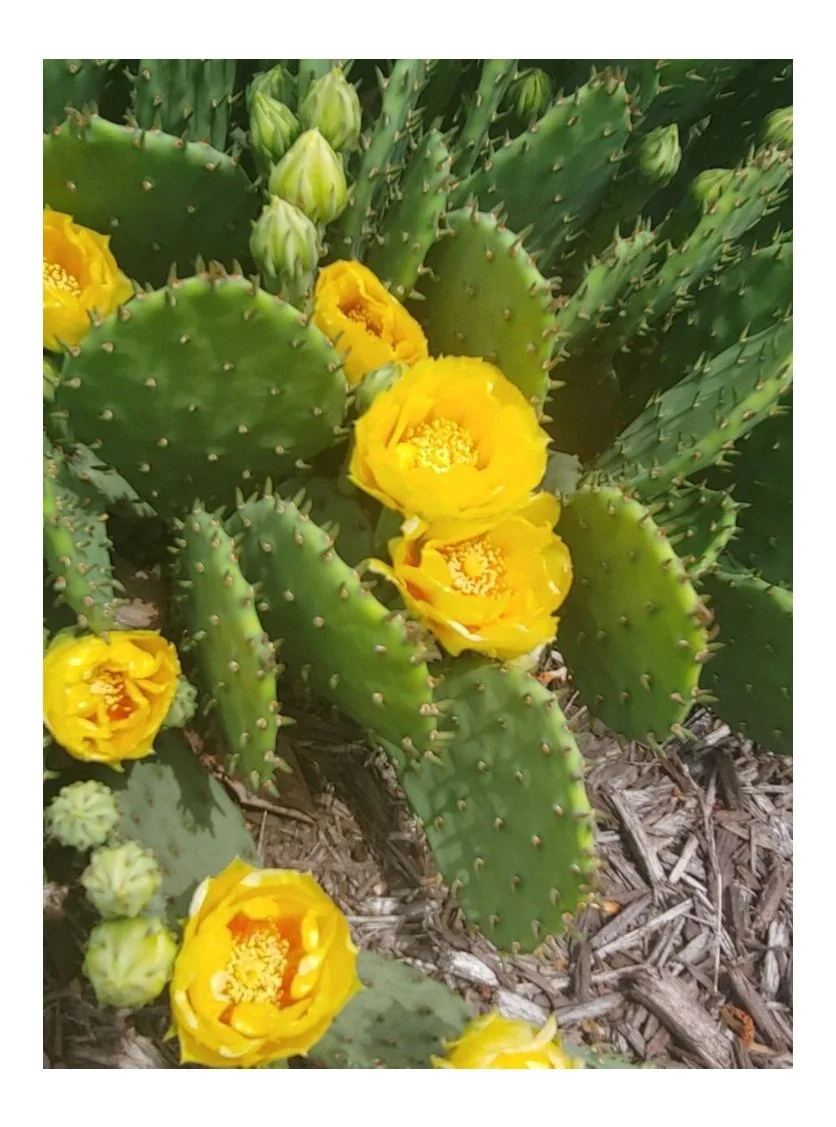
Prickly Pear Cactus (Photo credit: Amy Stone, OSU Extension)

Prickly Pear Cactus (Photo credit: Amy Stone, OSU Extension)


NM Cooperative Extension

NM Cooperative Extension and your County Extension offices are one of the best resources available for guidance and information about your garden and property. The Cooperative Extension Service exists to provide “practical, research-based knowledge throughout New Mexico”. Not only do they have a variety of information, publications, and videos on their website but they encourage you to reach out directly to your County Extension office if you have questions. Click here to discover which County Extension office can help you with your garden or landscaping project.
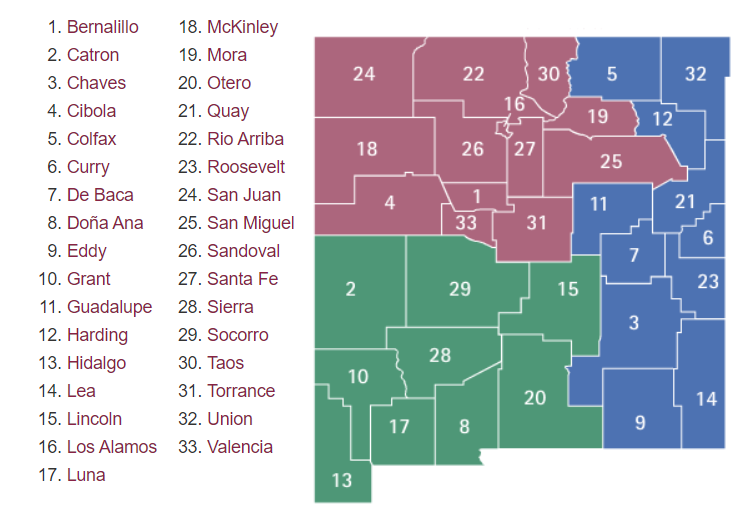
Different County Extension jurisdictions across New Mexico (https://aces.nmsu.edu/county/)

Different County Extension jurisdictions across New Mexico (https://aces.nmsu.edu/county/)

Wildfire Wednesdays #60: Take Action!

Hello Fireshed Members!

We hope you’re enjoying the rainy weather we’ve been fortunate enough to have across much of Northern New Mexico this week! We’re grateful for a little moisture on the ground before this upcoming weekend’s festivities and hope everyone will stay diligent with some fire restrictions being lifted across the state.

Did you know that there are different levels of engagement you can have with the Fire Adapted Communities New Mexico Learning Network? Receiving this newsletter is a great start and if you’re feeling ready to become a little more involved and connect with other individuals in our community we’re here to tell you how! If receiving this newsletter is enough for you, we also have an way for to you take a small action to increase your fire preparedness in our community.

This Wildfire Wednesday features two ways to take action:

  1. Become a FACNM “member”

  2. Sign up for wildfire alerts

Keep reading to learn more about these actionable tasks. Hope you all have a wonderful Fourth of July and holiday weekend!

Liz


Become a FACNM Member

DSC_0151.png

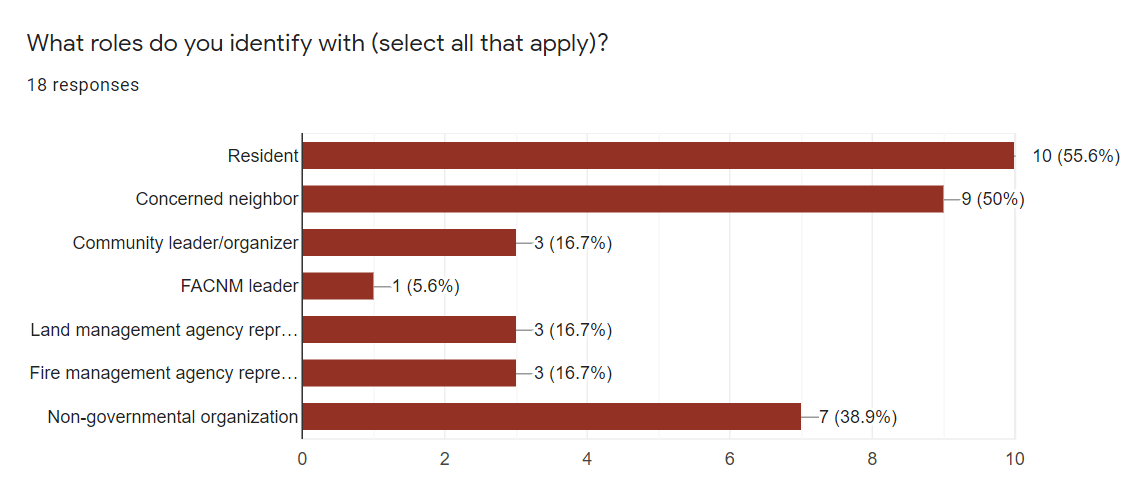
If you’re interested in connecting with community leaders and professionals who are working towards making our communities more fire-adapted, becoming an official member of the Fire Adapted Communities New Mexico Learning Network is a great next step for you! Members consist of residents, retirees, fire professionals, emergency responders, researchers, architects, ranchers, hydrologists, foresters, and more! Membership costs nothing and you gain access to events, learning opportunities, and it connects you with a network of professionals who can support you in efforts to make your community more fire-adapted.

A breakdown of how our FACNM members self-identify within their community.

A breakdown of how our FACNM members self-identify within their community.

To sign up to become a member of the FACNM network click here to visit the directory page and select “Add”. You will then be added to our member list and receive updates about networking and learning opportunities.


Sign up for Alerts

Signing up for wildfire alerts is a small, actionable task that will help ensure you are informed and prepared this wildfire season! Click on any of the pages below to sign up. We also recommend bookmarking this InciWeb site which shows all of the active wildfires across the USA so you can plan ahead and be prepared!

New Mexico wide:

  • NM Fire Information (click on the + at the bottom of the page to add your email, shown on the right)

Santa Fe fireshed:

Wildfire Wednesdays #59: Fire Professionals

Hello Fireshed Members!

This week we wanted to highlight and provide resources for one important group within our Fire Adapted New Mexico Learning Network: Wildland firefighters & fire professionals. These individuals are essential to protecting our forests and communities and they face both physical and mental risks associated with their jobs. We’re grateful for all fire professionals and are sharing resources we hope can support them both on and off the job. [Warning: this post references suicide].

This week’s Wildfire Wednesday includes:

  • Background information on fire professionals for those who may be less familiar with the field.

  • Information on physical health for fire professionals.

  • Mental health resources for fire professionals.

  • A link to a success story involving firefighters in the Medio fire.

Have a great week everyone!

Liz


An Introduction to Fire Professionals

For those of us who may be unfamiliar with the many different types of fire professionals and what their jobs entail, The Forest Service’s People Working in Fire webpage provides good background information and great informative videos that can give you insight into the jobs and lives of firefighters.

Click Here to visit the People Working in Fire page


Physical Health

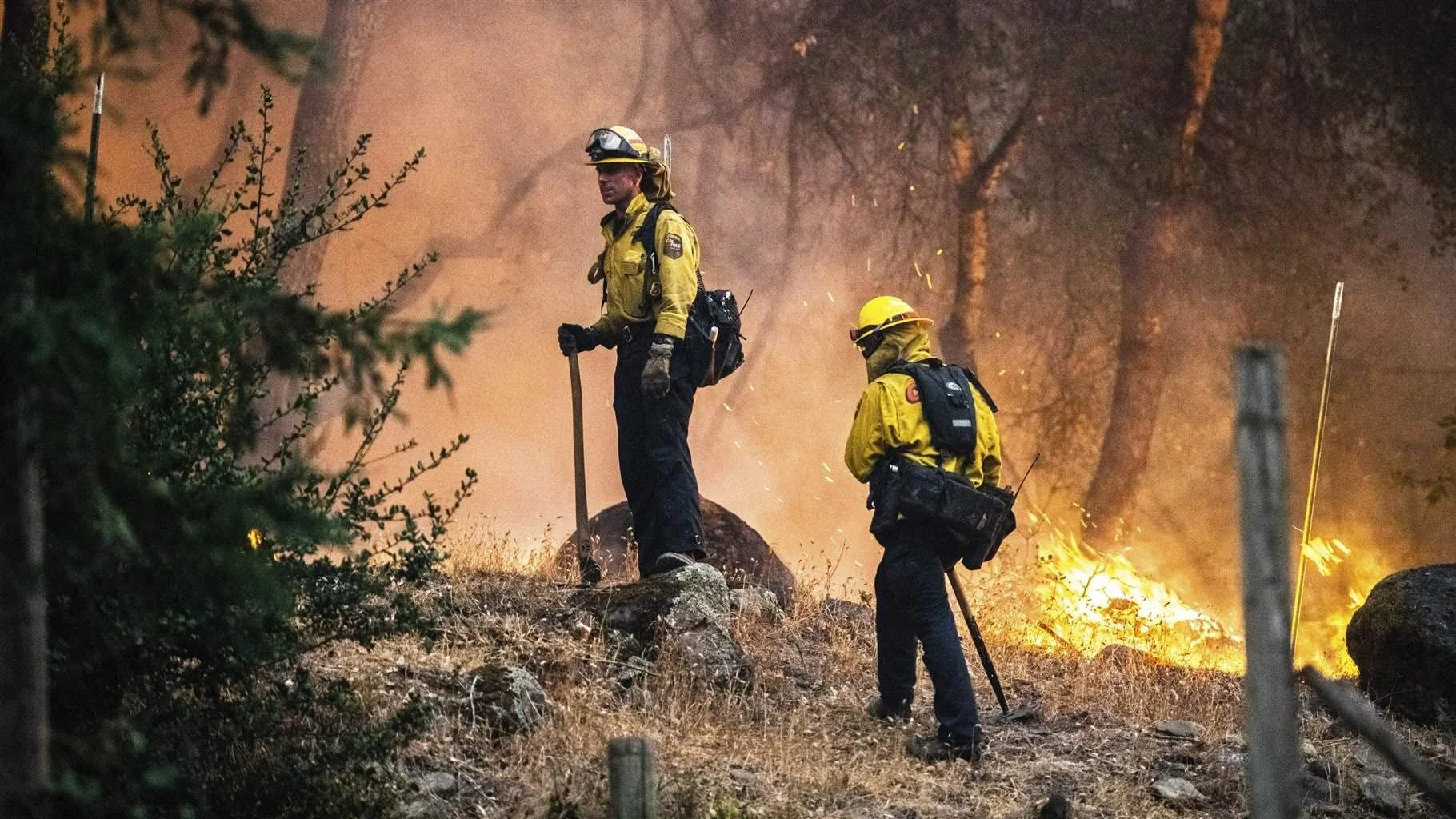
Photo credit: Chris Tuite

Photo credit: Chris Tuite

The recent tragic death of Tim Hart, a smokejumper responding to a fire in New Mexico, demonstrates the inherent risk that fire professionals face on a daily basis. Firefighters additionally face increased rates of lung cancer, cardiovascular disease, hearing loss, and other smoke-related illnesses - but there are steps that one can take to reduce risk. The National Institute for Occupational Safety and Health (NIOSH) is currently working on a research project to deepen our understanding of the relationship between firefighters and cancer rates, click here to read more about this research.

Here is some advice from the Leukemia & Lymphoma Society Firefighters and Cancer Risk webpage on how to reduce your risk of fire-related cancer (visit this page for more details on how to carry out these steps):

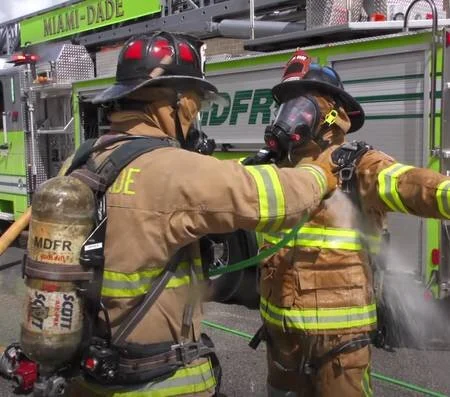
Photo Credit: Miami-Dade Fire Rescue

Photo Credit: Miami-Dade Fire Rescue

  • Protect yourself at work. 

    • Reduce exposure to diesel exhaust from the fire apparatus.

    • Clean and care for PPE and SCBA properly.

    • Wash yourself as soon as possible after every fire.

    • Store PPE gear correctly to avoid contaminating other areas in the firehouse or apparatus.

    • Always be cautious at the fire ground.

  • Talk to your doctor. As a firefighter, make sure your doctor knows your work or volunteer history, even if you are retired.

  • Record your exposure. The International Association of Firefighters (IAFF) recommends that firefighters keep a personal record that tracks exposures and incident responses.

  • Follow healthy lifestyle behaviors. Good nutrition, physical activity, and avoiding tobacco and alcohol can decrease your risk of cancer and other diseases. For more information about healthy lifestyle recommendations, download or order the free fact sheet Healthy Behaviors.


Mental Health

In the recent Workforce Resilience Ignite Talk Series “Wildland Firefighters Mental Health and Well-being” (video included below), fire professionals discussed the mental health risks associated with the job and the difficulty of “fitting in” when off-assignment. It was particularly inspiring to hear from Mark Titus, a fire professional who shared his journey of recovery from PTSD after his initial reluctance to seek help. It is not uncommon for firefighters to struggle with PTSD, substance abuse, suicidal thoughts or difficulties in relationships but there are resources available to help address and manage these challenges.

Click on the programs below for mental health resources specifically for fire professionals:

Firefighter Behavioral Health Alliance

The Code Green Campaign

Share The Load Program

If you or someone you know is struggling with a mental health crisis call the National Suicide Prevention Hotline (available 24 hours in English & Spanish)

1-800-273-8255


2020 Medio Fire Success Story

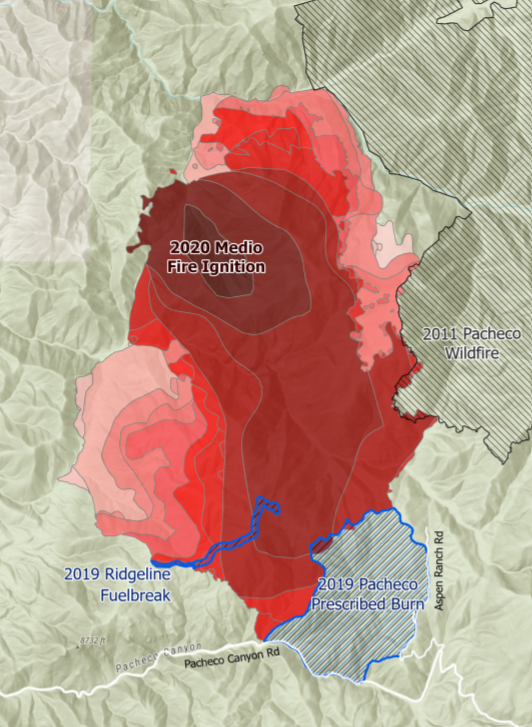
Read the Medio Fire Factsheet and explore the Great Santa Fe Fireshed Coalition website to learn about how previous treatments and fire professionals successfully managed the 2020 Medio Fire to protect homes and vital resources in our community.

CLICK HERE TO LEARN MORE

Wildfire Wednesdays #58: Coping with Smoke

Happy Wednesday Fireshed Members!

We hope you are staying cool despite this hotter weather and staying alert to air quality warnings. Given the smoky conditions we’ve been experiencing the past few weeks we wanted to share with you some smoke-specific resources so you can be prepared and healthy this fire season!

This Wildfire Wednesday features:

  • Smoke Preparedness Resources (including information on the HEPA loan filter program)

  • DIY box fan air filter to improve home air quality

  • Upcoming webinar of interest - Prescribed Fire Smoke and Community Health: Successes From Smoke Ready Communities

  • An additional resource on fireshed-specific analysis on fuel treatments

Liz


Smoke Preparedness Resources

There is a lot of information available regarding smoke preparedness. Here we’re sharing some of our favorite resources (some of which you may have visited before) to help you learn about what you need to do in your home so you can be healthy despite the smoke.

  • Recommended reading: The Fire Adapted New Mexico Learning Network has compiled relevant resources for learning about smoke preparedness, smoke impacts, and current air quality information. There is also information available on this website about the HEPA filter loan program which provides filters to sensitive individuals during periods of high smoke impact in some areas of Northern New Mexico.

    Click here to read more about Smoke from the Fire Adapted New Mexico Learning Network

  • Recommended watch: This 1-hour video featuring Gabe Kohler (FACNM; Forest Stewards Guild) and Alison Lerch (Fire Adapted Communities Learning Network; Coalitions in Collaboratives) is an interview-style webinar addressing questions about smoke and community preparedness.

    Click here to watch this informative webinar

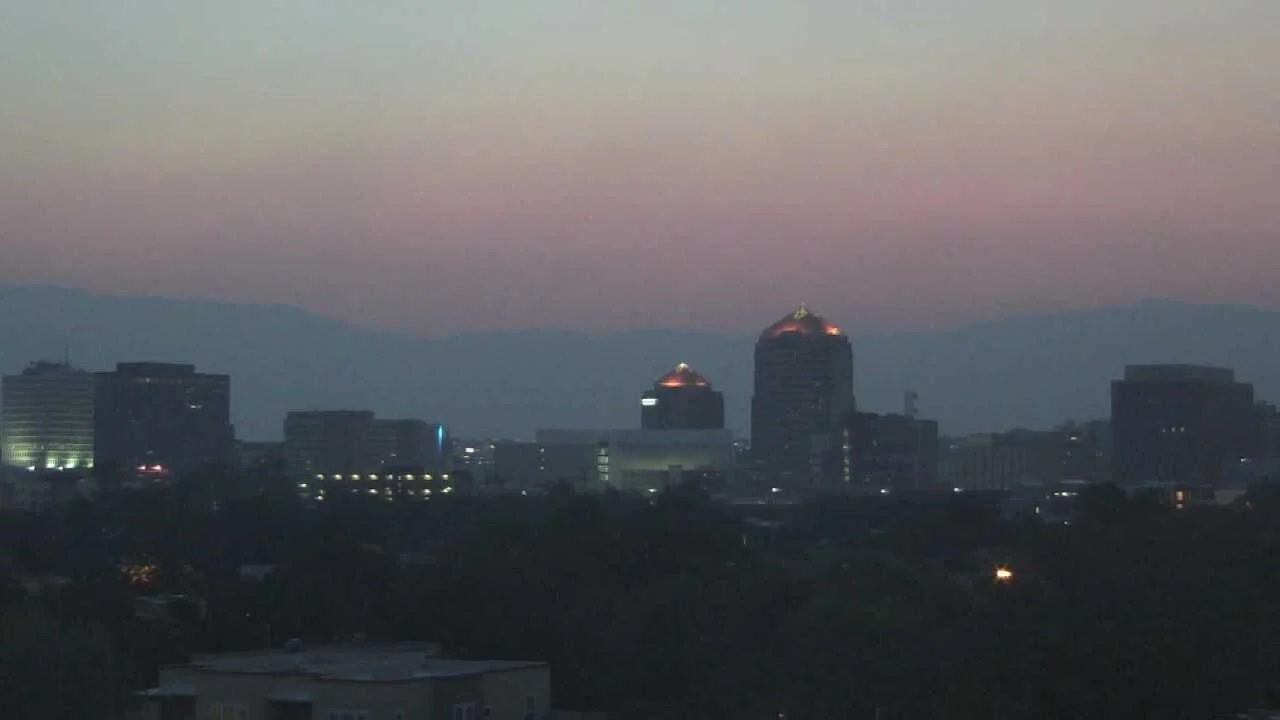
Smoke-filled skies in Albuquerque during the 2019 wildfire season (Photo credit: KRQE)

Smoke-filled skies in Albuquerque during the 2019 wildfire season (Photo credit: KRQE)


Photo Credit: Cody Nelson

Photo Credit: Cody Nelson

DIY Box Fan Filter

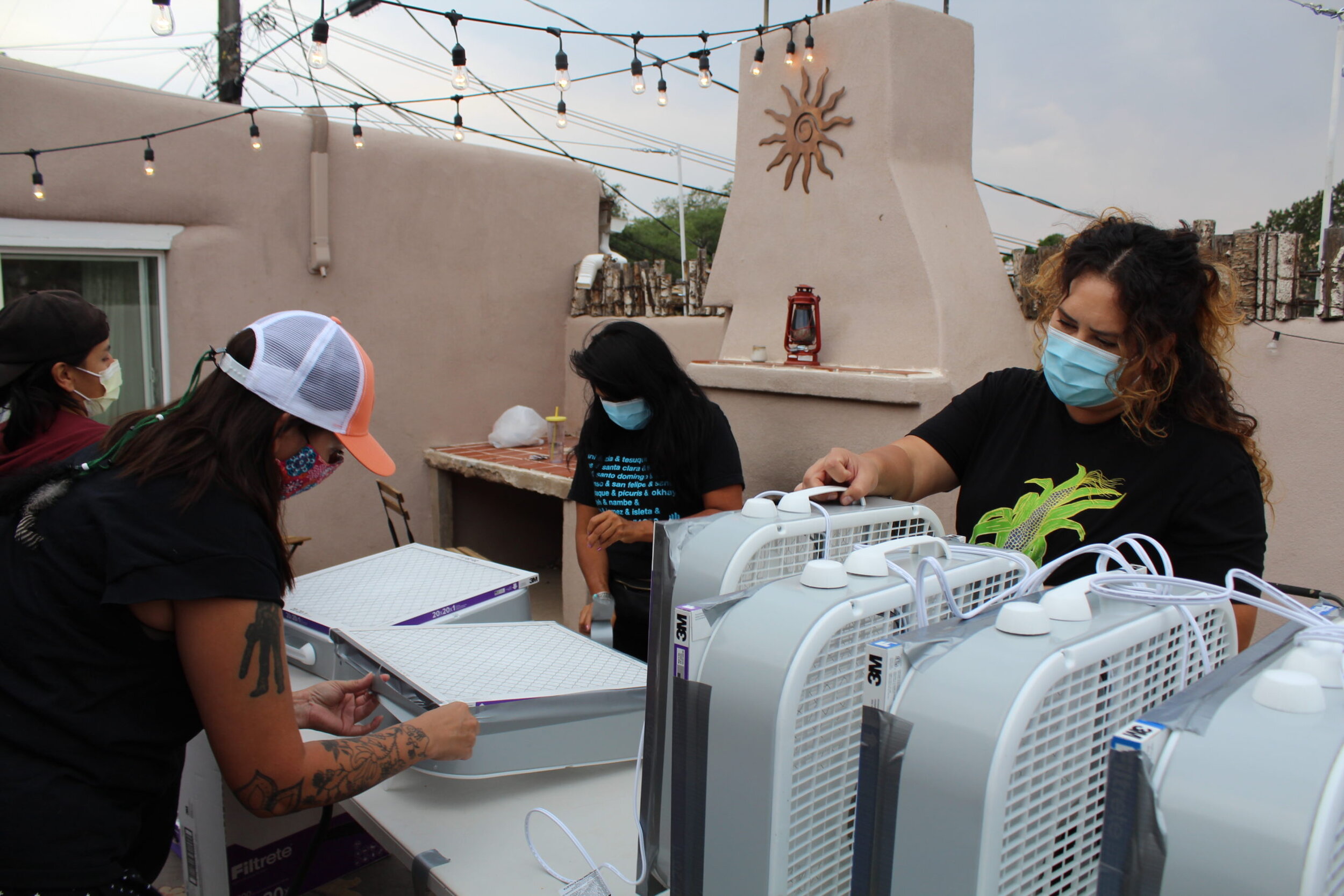
It’s those who are the most vulnerable in our communities that suffer disproportionate impacts from wildfires and smoke. During the Medio Fire, in the midst of the COVID-19 pandemic, air filters were widely unavailable. A group of indigenous women (Three Sisters Collective) took it upon themselves to make their own box fan filters for at-risk community members, click here to read more about how this effort worked in their community. These inexpensive ($22-40) filters can reduce harmful materials in the air from wildfire smoke by up to 95% and are a good alternative when HEPA filters are unavailable or too expensive for a household.

Click on these resources below to learn how to build your own box fan filter:

Confederated Tribes of the Coolville Reservation Air Quality Program

Climate Smart Missoula


Upcoming Webinar:

Prescribed-Fire-Smoke-and-Community-Health-Successes-from-smoke-ready-communities-425x425.jpg

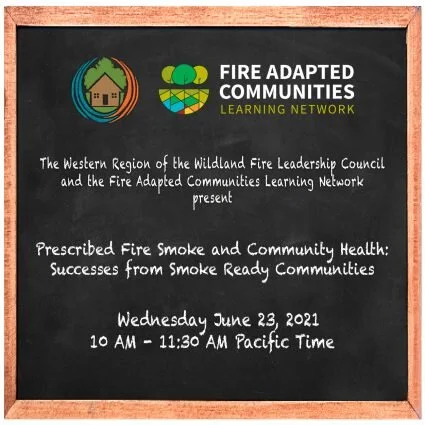
Join the Fire Adapted Communities Learning Network on Wednesday June 23rd at 11am MDT for their upcoming interactive and informational webinar Prescribed Fire Smoke and Community Health: Successes from Smoke Ready Communities as part of their Living with Wildland Fire series. This webinar will feature four communities who are “directly addressing this impact through communication and messaging efforts that help communities, especially sensitive and vulnerable populations, prepare to receive and live through smoke events”

Click here to register for this webinar!


Relevant Fireshed Resource: Triple Bottom Line Analysis of Fuel Treatments

Photo credit: The Greater Santa Fe Fireshed Coalition

Photo credit: The Greater Santa Fe Fireshed Coalition

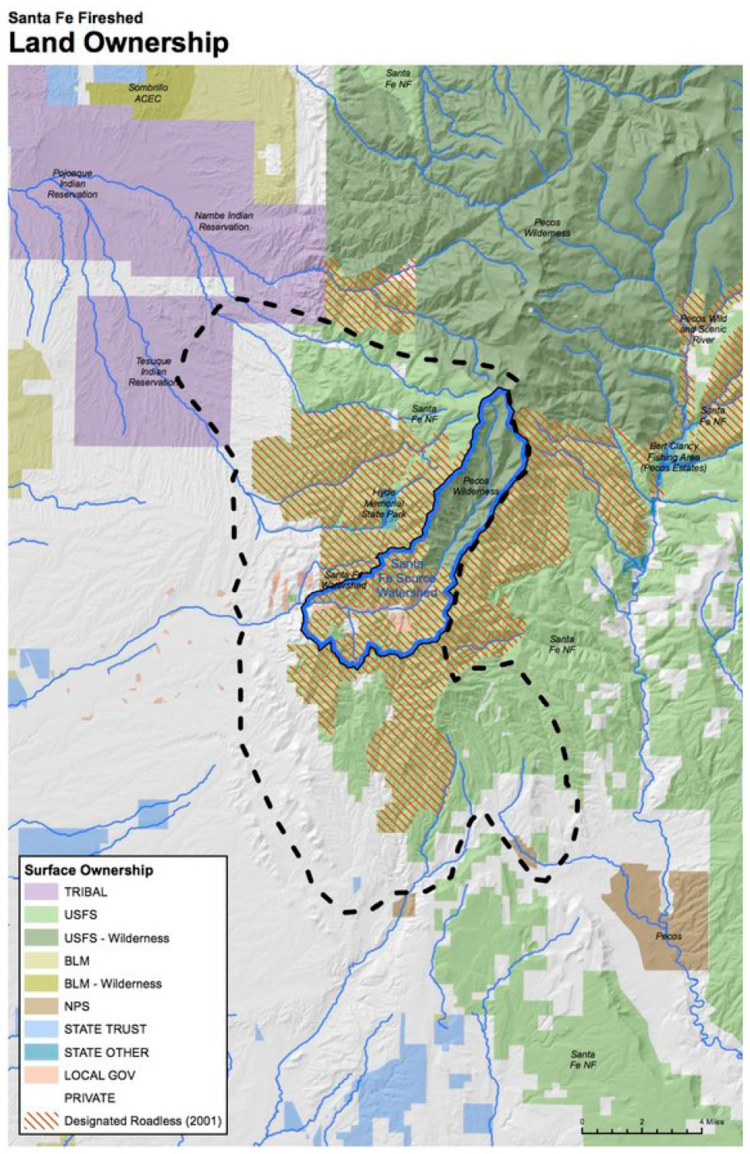
“The U.S. Forest Service engaged Earth Economics to conduct an analysis of the social, environmental, and economic benefits that the fireshed provides for the surrounding community, and to explore the impact of the proposed fuel reduction treatment on these benefits. This study seeks to capture the costs and benefits of the proposed treatments to inform and prioritize fuel reduction decision-making.

This conservative analysis found that the proposed fuel treatments are estimated to generate between $1.44–$1.67 in benefits for every dollar invested in treatment. The majority of these benefits directly accrue to the Santa Fe community, through avoided air quality impacts, recreational losses, damages to structures, and source water impacts. The remaining benefits accrue to public agencies at the state and national level or to the global community (in the case of avoided carbon emissions).”

Click here to read this report

Wildfire Wednesdays #57: Housing & Fire

Hello Fireshed members!

We hope you’re all staying healthy and taking precautions while the air quality remains poor in parts of the state. In the past thirty years, more than 32 million homes have been built within the wildland-urban interface (WUI) in the USA. Whether you are a renter, have owned property for decades, are a new homeowner, or have a vacation home here in New Mexico, we all have responsibilities when it comes to preparing for wildfire season. We wanted to provide some information for different housing scenarios to help clarify what you are responsible for and what resources are available to help you prepare!

This Wildfire Wednesday features:

  • Wildfire preparation resources for renters & homeowners

  • Advice on how to help your neighbors prepare for wildfire season

  • An upcoming webinar of interest

Liz


Renters

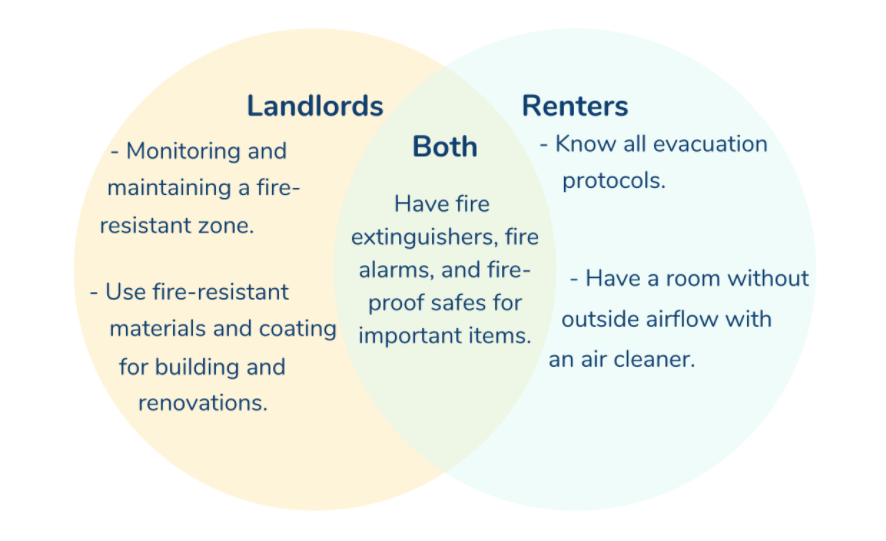
When renting property in the wildland-urban interface it can be difficult to know whether certain responsibilities fall to you or your landlord / property manager. While landlords are responsible for maintaining the area around the property to reduce risk of wildfire damage, there are steps that tenants should also take to be prepared.

Important steps for renters:

  • Review your renter’s insurance to see if wildfire damage is included. The landlord’s property insurance does not cover your personal belongings within the building.

    • Take photos of your valuable possessions to support potential insurance claim

  • Meet with your landlord to discuss wildfire risk and prevention

    • Walk through the property to discuss concerns

    • Make sure the fire extinguisher and smoke detectors are accessible and up-to-date.

    • Discuss evacuation plans

      • Who is responsible for turning off the gas and pilot lights?

      • What is expected of you as a tenant during an evacuation?

Image source: Avail

Image source: Avail

Click here for more resources on how to navigate tenant and landlord responsibilities in preparation for and during natural disasters.


Homeowners & Landowners

This neighborhood which sustained damage from the 2007 Witch Fire shows how one house can be destroyed while the one adjacent remains intact (Photo credit: Sandy Huffaker/Getty Images)

This neighborhood which sustained damage from the 2007 Witch Fire shows how one house can be destroyed while the one adjacent remains intact (Photo credit: Sandy Huffaker/Getty Images)

Over the past 56 blog posts we’ve provided a lot of information to landowners/homeowners about how to prepare your property for wildfire season. Today we wanted to share with you some more specific resources about lesser-known ways to reduce wildfire risk on your property.

Click here to explore the variety of ways you can harden your home to wildfire.

Click here to learn about the combustibility of different types of landscape mulches.

Click here to read the Resources for Private Forest Landowners in New Mexico to learn about technical and financial assistance for landowners for forest health and wildfire risk reduction.


Working Together

The social component of wildfire risk reduction in our WUI communities is critical. Research has shown that homeowners are more likely to improve their defensible space when they see their neighbors doing the same thing or when they have encouragement from their community. Here is some advice on how to talk to your neighbors about wildfire risk in your community amended from Nevada County’s Fire Safe Council “Talking to Your Neighbors About Defensible Space” Document:

  1. Approach your neighbor in a friendly manner with the goal to educate them and open the dialogue about the fire danger in your area and the benefits of making their property more fire safe. Make an earnest expression of your concerns as they relate to your property.

  2. Provide them with written information on the high fire danger in your neighborhood and what action steps can be taken to mitigate this danger (Stop by the Forest Stewards Guild office for written information handouts). Let them know the importance of working across property lines to reduce the fire hazard.

  3. Give them information on local resources to help with the problem such as:

  4. Gauge their response. If you sense resistance or hostility don’t push the issue. Leave the information with them and let it go for now. Follow up with them in a week or two and see if they have had a chance to read the material and what their opinion is on it.

  5. If you are able and willing, ask if you may assist them with the area you are concerned with. Focus on areas that are within 100’ of a structure or are affecting evacuation routes. If your neighbor agrees to allow you to assist them in resolving the problem, put in writing what the scope of work will be, who assumes the liability and who pays what costs, if any.


Upcoming Webinar:

webinar6_10.png

Tomorrow, June 10th at 10:00am The Nature Conservancy is hosting a virtual event, Revitalizing Cultural Burning Practices, New Mexico and Beyond moderated by Lindsey Quam, the Deputy Director of Forests/Forestry and Tribal Liason, NM Forestry Division and featuring Margo Robbins from the Indigenous Peoples Burning Network and Rene Romero from the Division of Natural Resources for Taos Pueblo.

This event will highlight the longstanding relationship between American Indian cultures and fire, challenges related to fire faced by Indigenous communities and ways in which partners and TNC are supporting American Indian communities' efforts to revitalize their traditional cultures in today's context.”

Click here to register for this virtual event.