Wildfire Wednesdays #56: Families & Fire | National Firewood Workshop

Hello Fireshed Members,

Hope you all had a nice holiday weekend! My name is Liz Bailey and I’m a new Southwest Project Coordinator at the Forest Stewards Guild, I’ll be helping Gabe out with some of our FACNM materials. I’m new to Santa Fe and excited to be here and learn more about how fire adapted communities are keeping informed and engaged across New Mexico. I’m particularly passionate about restoration ecology and am drawn to the diverse terrain and invaluable forests here in the Southwest. We’re eager to hear from you if there are topics you would like featured here on Wildfire Wednesdays, please email me at liz@forestguild.org if you have any suggestions or questions!

Preparing for fire season looks different from family to family and there are certain precautions you may want to consider depending on who your family members are. This Wildfire Wednesday features resources targeted towards your family members who might need additional considerations when preparing for wildfire season including:

·       Household pets

·       People with disabilities

·       Elderly

·       Pregnant women & new parents

We hope this information helps you and your family be more prepared for wildfire season! Check out the bottom of this post for information about an upcoming webinar.

Liz

Household Pets

Photo credit: Klaus Vedfelt

Photo credit: Klaus Vedfelt

Our pets are a part of our family and should be incorporated into our evacuation plans and go-kits! If there is threat of a wildfire, bring your pets inside your home in case an evacuation notice is issued and you need to move quickly. If you can, you should take your pet with you during an evacuation but know that many evacuation centers do not accept pets unless they are registered as service animals. You can use sources like Red Rover or Pet Finder Shelter Center to find temporary shelters to house your animal, or BringFido.com to find pet-friendly rentals.

To make sure your pet has the proper supplies and documentation they need in the case of an emergency or evacuation, check out the Wildfire Preparedness for Household Pets guide. They have great suggestions like including your pet’s medical files on a flash drive to keep in your kit!

Click here to download the pet evacuation kit from the National Fire Protection Association.

People with Disabilities

In the United States, more than 13% of people in our population have some type of disability. Although common, disabilities present themselves in different ways and may affect one’s ability to evacuate during an emergency.

Click here to explore the NFPA Emergency Evacuation Planning Guide for People with Disabilities that was developed by the Disabilities Access Review and Advisory Committee.

“The NFPA Emergency Evacuation Planning Guide for People with Disabilities has been developed with input from the disability community to provide general information on this important topic. In addition to providing information on the five general categories of disabilities (mobility impairments, visual impairments, hearing impairments, speech impairments, and cognitive impairments), the Guide outlines the four elements of evacuation information that occupants need: notification, way finding, use of the way, and assistance. Also included is a Personal Emergency Evacuation Planning Checklist that building services managers and people with disabilities can use to design a personalized evacuation plan.”

You can also visit nfpa.org/disabilities for more resources

Elderly
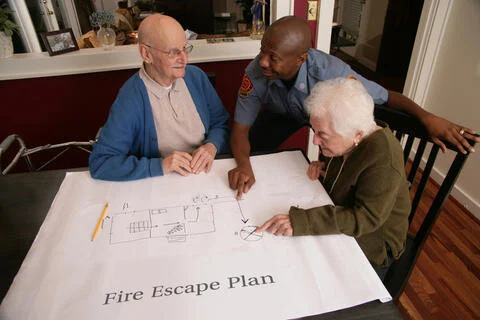
Photo Credit: US Fire Administration

Photo Credit: US Fire Administration

Our elderly population is the most vulnerable demographic to wildfire mortality, those 85 and up over 4 times more likely to die in a fire compared to the rest of the population. If you have an elderly family member you can help them develop a plan and disaster kit in case of an emergency. The American Red Cross has a Disaster Preparedness For Seniors By Seniors that covers the basics in preparing for an emergency, what to do during an emergency, and what to expect after.

Click here to download the Disaster Preparedness For Seniors By Seniors guide.

Pregnant Women & New Parents

Image: Biscotto Design

Image: Biscotto Design

The threat of wildfire and smoke are concerning for anyone, but especially pregnant woman and parents with babies. Pregnant women should take extra care to minimize smoke inhalation during wildfires. The Center for Disease Control has some great information for pregnant women, breastfeeding mothers/infant feeding, new moms and postpartum women in the context of natural disasters and wildfires in particular.

Click here to read the CDC’s Safety Messages For Pregnant, Postpartum, and Breastfeeding Women During Natural Disasters and Severe Weather. (en Español)

Click here to read more about Wildfire Smoke and Pregnancy (en Español)


Upcoming Webinar: National Firewood Workshop
Photo: A-Plus Tree Services

Photo: A-Plus Tree Services

In addition to these family-based resources we’d also like to highlight an upcoming webinar, National Firewood Workshop hosted by NC State University Wood Products Extension. This online event on June 9th and 10th is a “free two-day workshop held on the Zoom online platform focuses on the business side of the split firewood industry. We invite everyone to come and dig deep into the business issues of operating a profitable firewood business and have the top professionals in the firewood industry discuss the issues of equipment, sourcing wood, insects and quarantines, marketing, sound business management, transportation, brokers buying for large stores, dry kilns, automation and employee issues… This is a great workshop for buyers and sellers of firewood as well as equipment vendors, arborists, foresters and government supporters of forestry.”

To register for this event click here and then select the orange button “Select a Date” to register with your information. There is no cost to attend and you can stay for as much or as little as you’d like!

Wildfire Wednesdays #55: Recreate Responsibly

Hi Fireshed Members,  

We are excited to get outside and enjoy the outdoors this Memorial Day weekend and hope you are too. Although there has been rain recently, New Mexico is still in severe drought and the risk of wildfire remains high. With that in mind, please take precautions and recreate responsibly this weekend to keep families and firefighters safe.  

This Wildfire Wednesdays features:  

  • An article on how to safely camp and recreate during fire restrictions. 

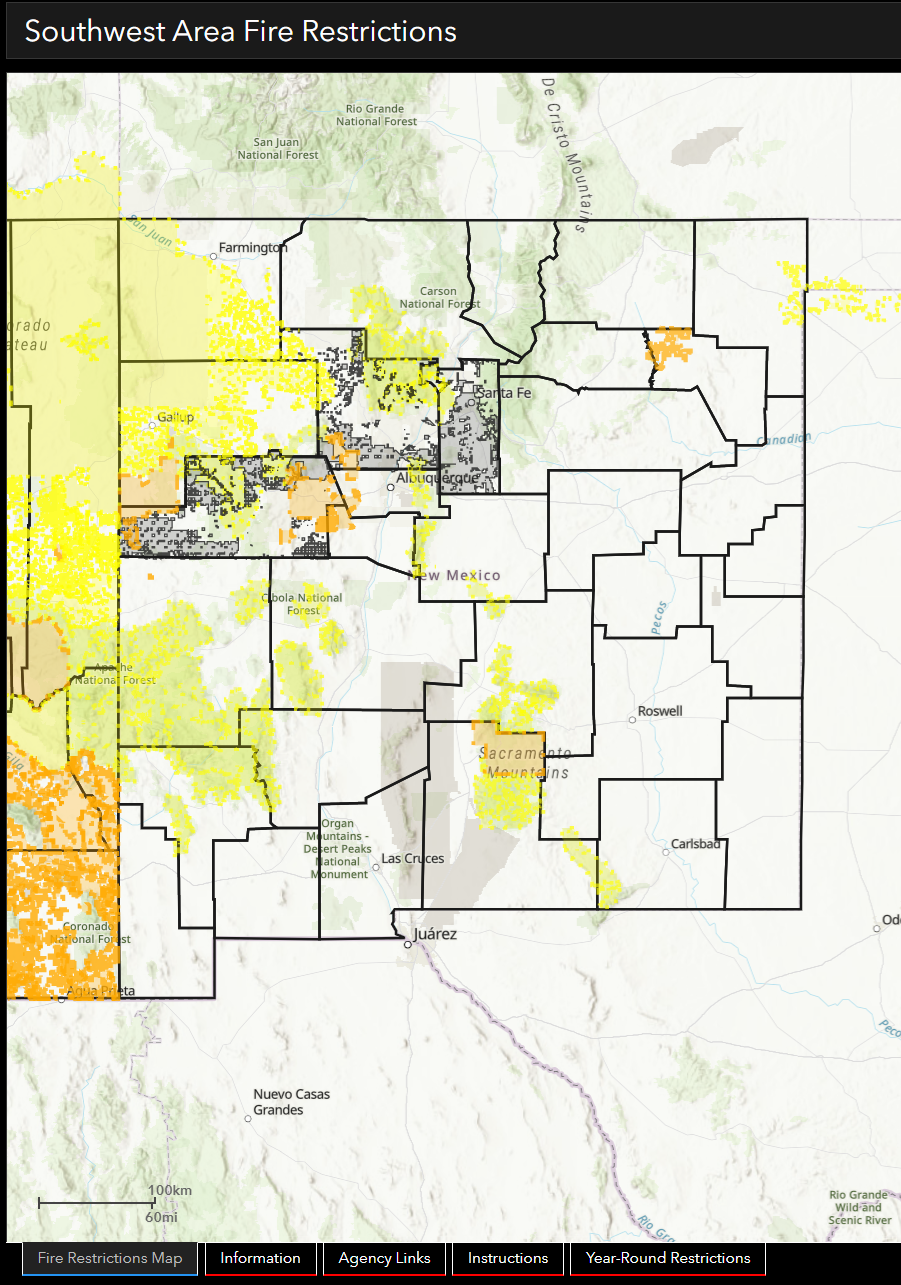
  • A new mapping tool to check current fire restrictions across the state. 

  • Fire prevention messages to share with your friends, family, and neighbors.  

Thanks & enjoy the holiday weekend!

Gabe 


How do I Stay Warm Without a Fire? How to Camp and Recreate Safely During Fire Restrictions 

Photo credit: Sarote Impheng/EyeEm/Getty Images

Photo credit: Sarote Impheng/EyeEm/Getty Images

Having a campfire can feel like an integral part of the camping experience but with fire restrictions in place and increased interest in Leave No Trace ethics, there are times when it is necessary to forgo the fire. There are plenty of ways to stay warm (and even roast marshmallows!) without a campfire plus it can create some unique opportunities, like a better view for stargazing. In this REI blogpost an Outdoor School Instructor shares her tips and tricks for how to make the most of going fire-less.

Click here to read the REI blog post

Know Before You Go: Check Fire Restrictions Using this New Mapping Tool  

Map Credit: Esri, USGS | Esri, HERE, Garmin, FAO, NOAA, USGS, EPA | U.S. Bureau of Land Management - New Mexico State Office

Map Credit: Esri, USGS | Esri, HERE, Garmin, FAO, NOAA, USGS, EPA | U.S. Bureau of Land Management - New Mexico State Office

Before you head out on your next adventure it is critical to know whether there are fire restrictions and how your plans may be affected. This interactive tool allows for you to click on your destination, see what fire restrictions are in place in that area, and learn about what the fire restrictions mean. For example, some of New Mexico’s forests are in Stage 1 fire restrictions (shown in yellow on the map) this means that you cannot have a dispersed campfire but you can have a campfire in a designated firepit at your Forest Service campsite when written notice allows.

Click here to explore fire restrictions

Fire Prevention Messages to Share with your Friends, Family, and Neighbors 

You can be an advocate for fire prevention by sharing these messages on Facebook, Twitter, Instagram, email or platform of your choice! We learn best from those we trust so by sharing these messages on social media you make a big difference within our community.

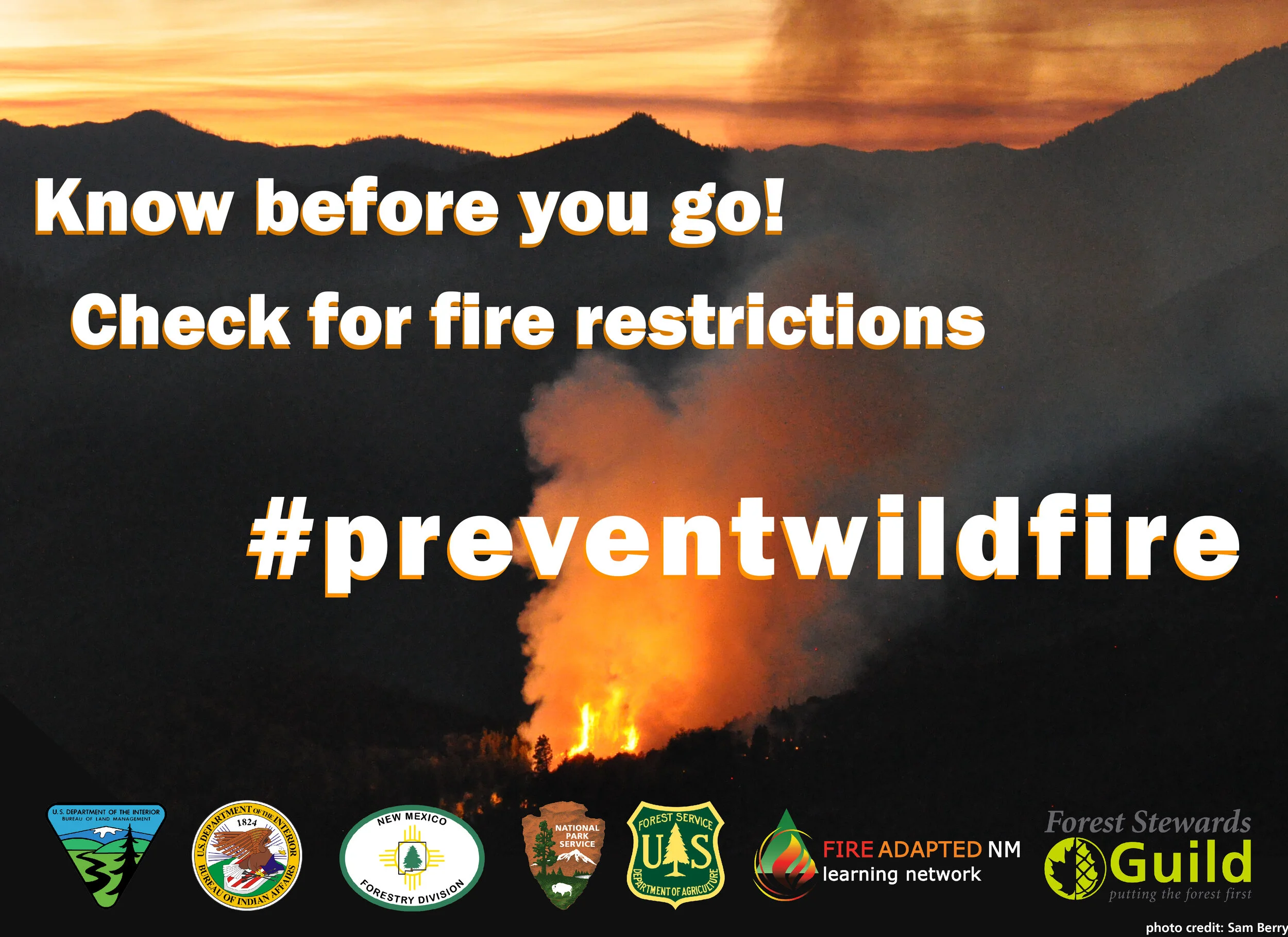
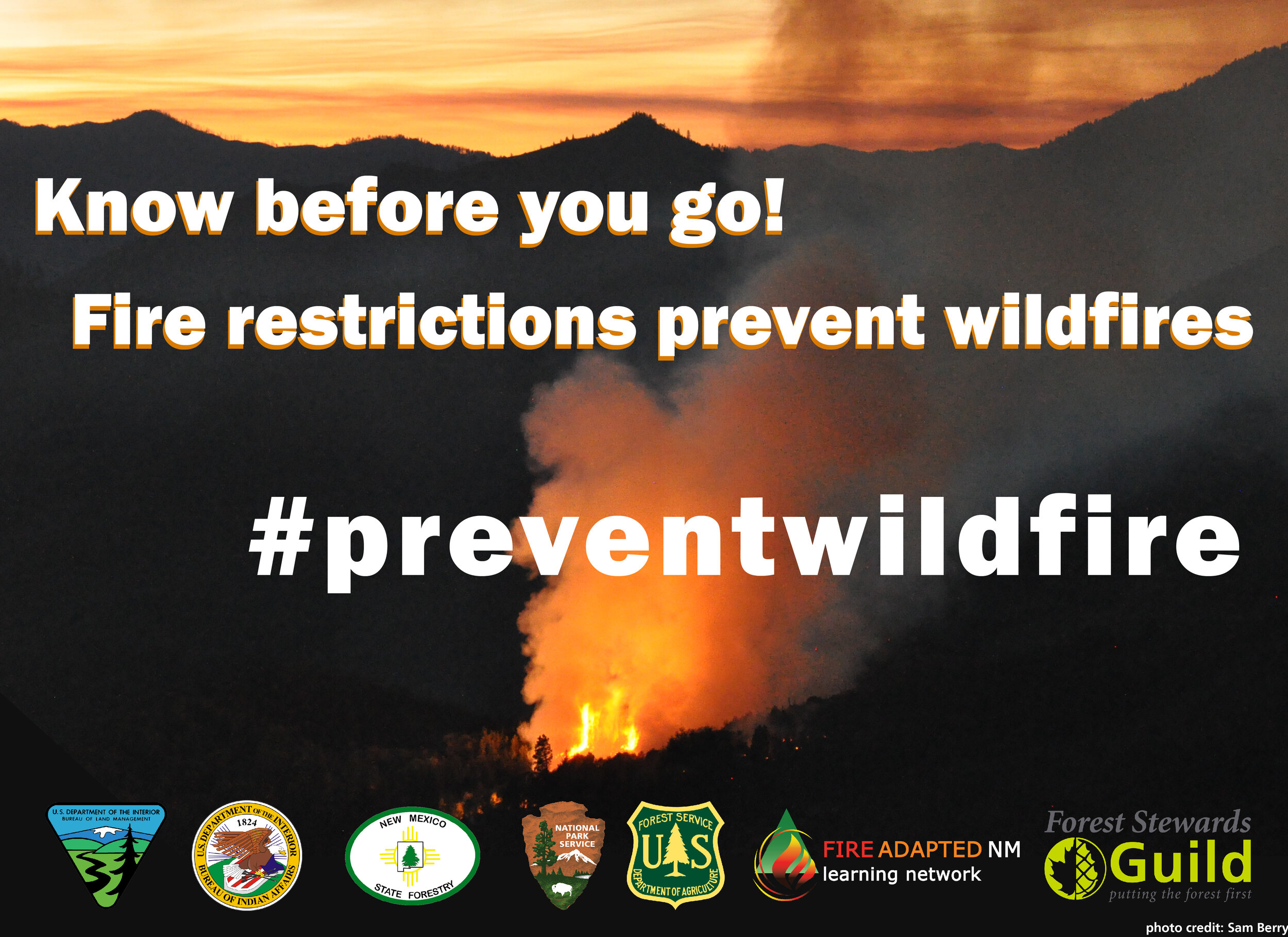
restrictions.jpg

Know before you go

Encourage your friends to check fire restrictions before your next adventure!

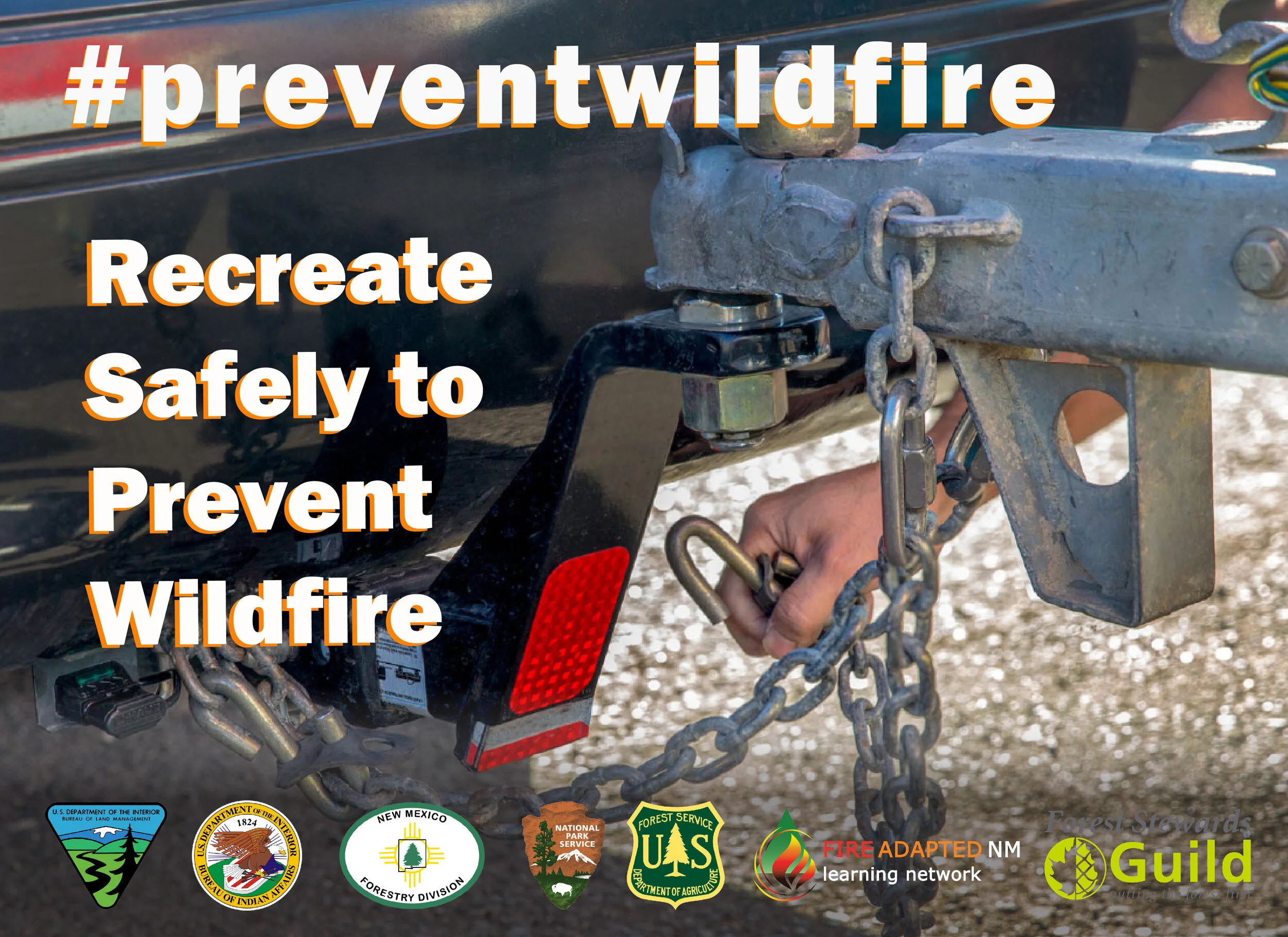
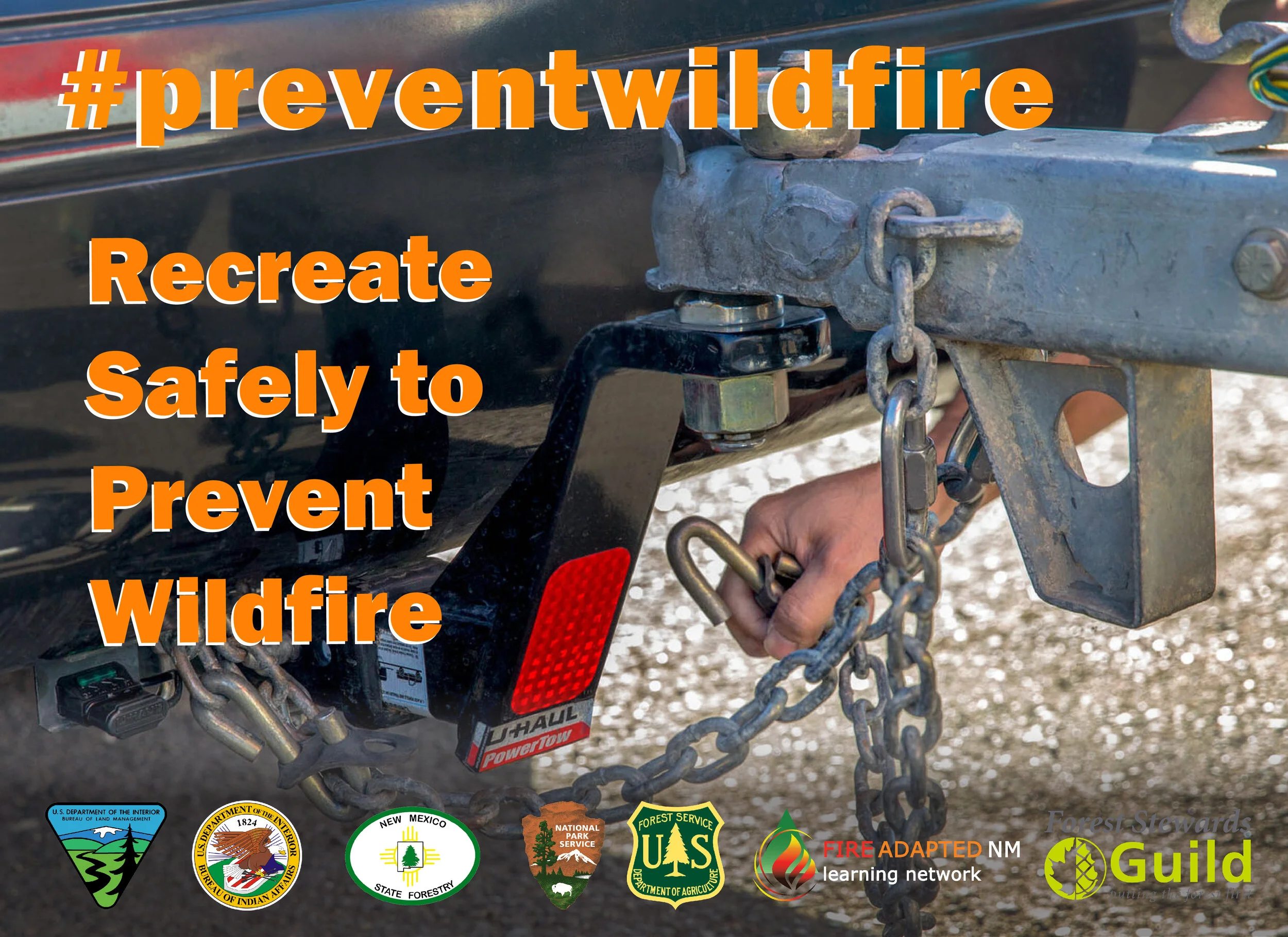
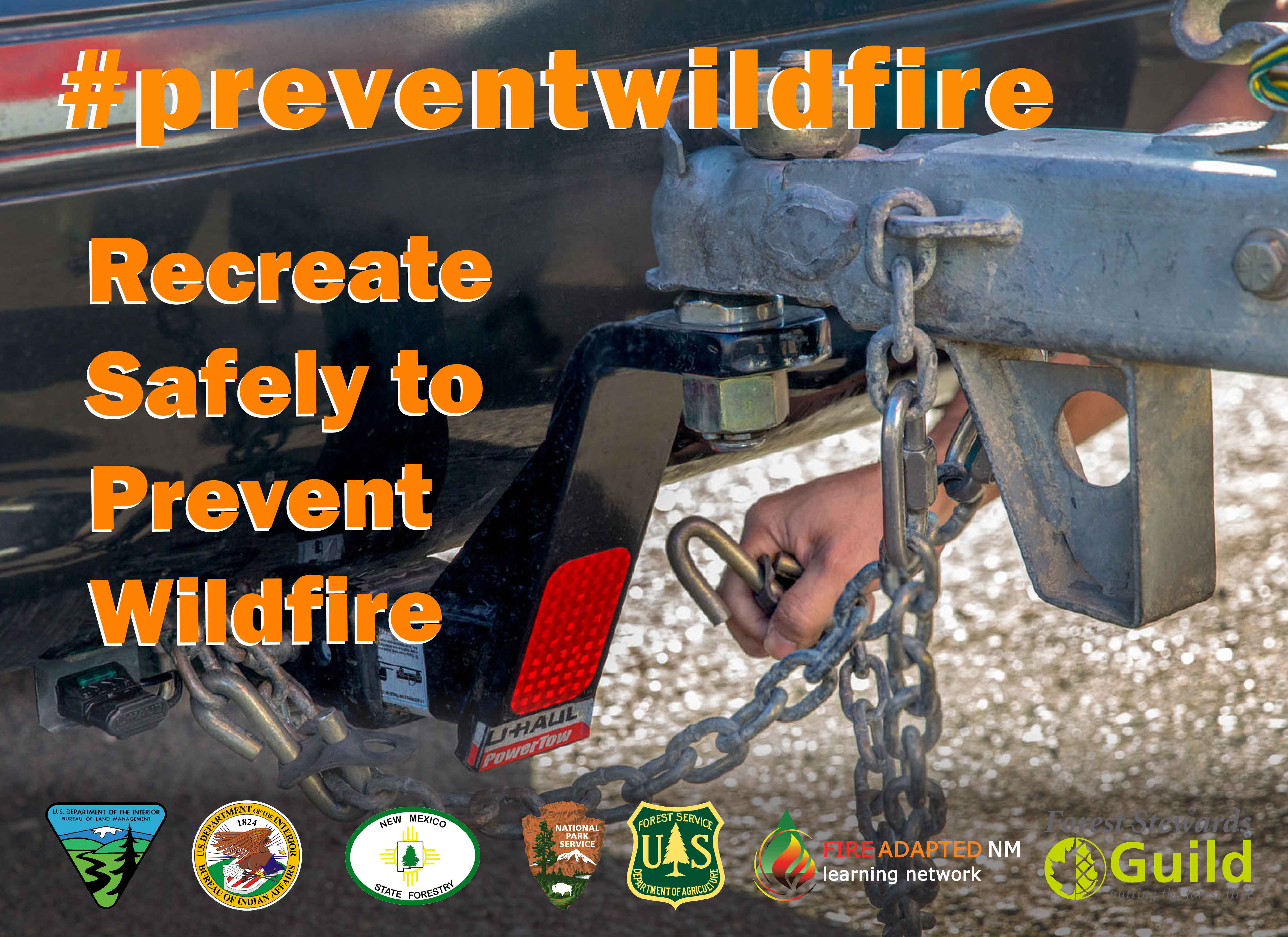
chains.jpg

Check your chains

Making sure your chains don’t drag is a simple way you can make sure not to contribute to the human-caused wildfires in New Mexico.

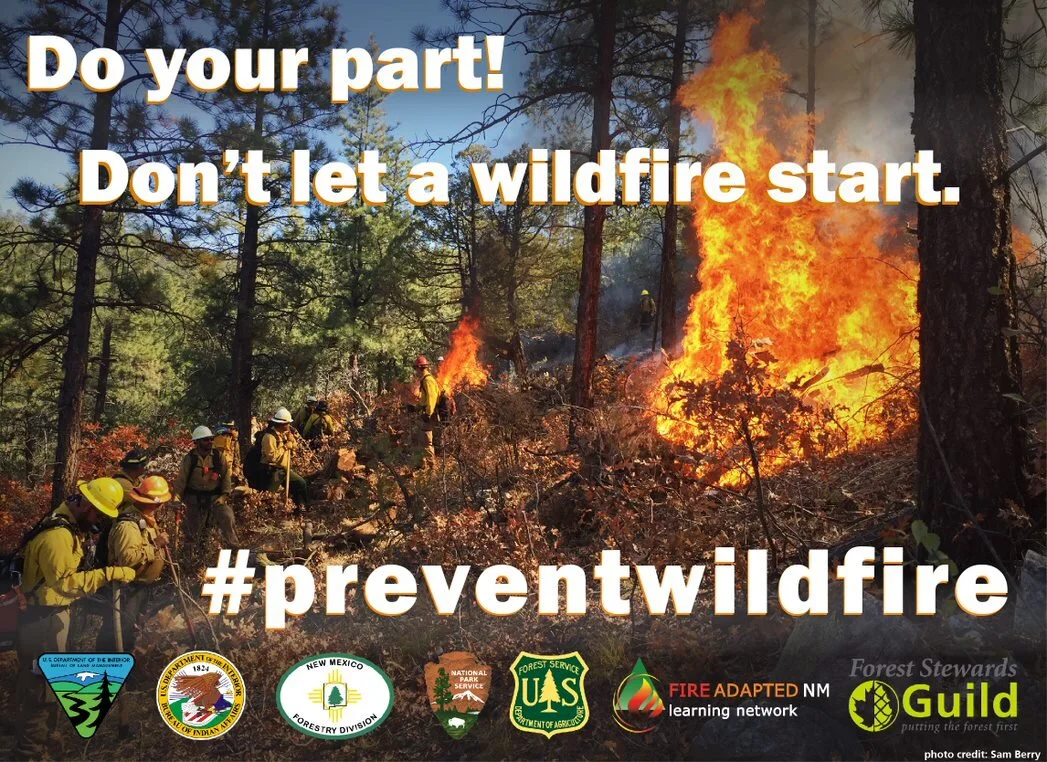
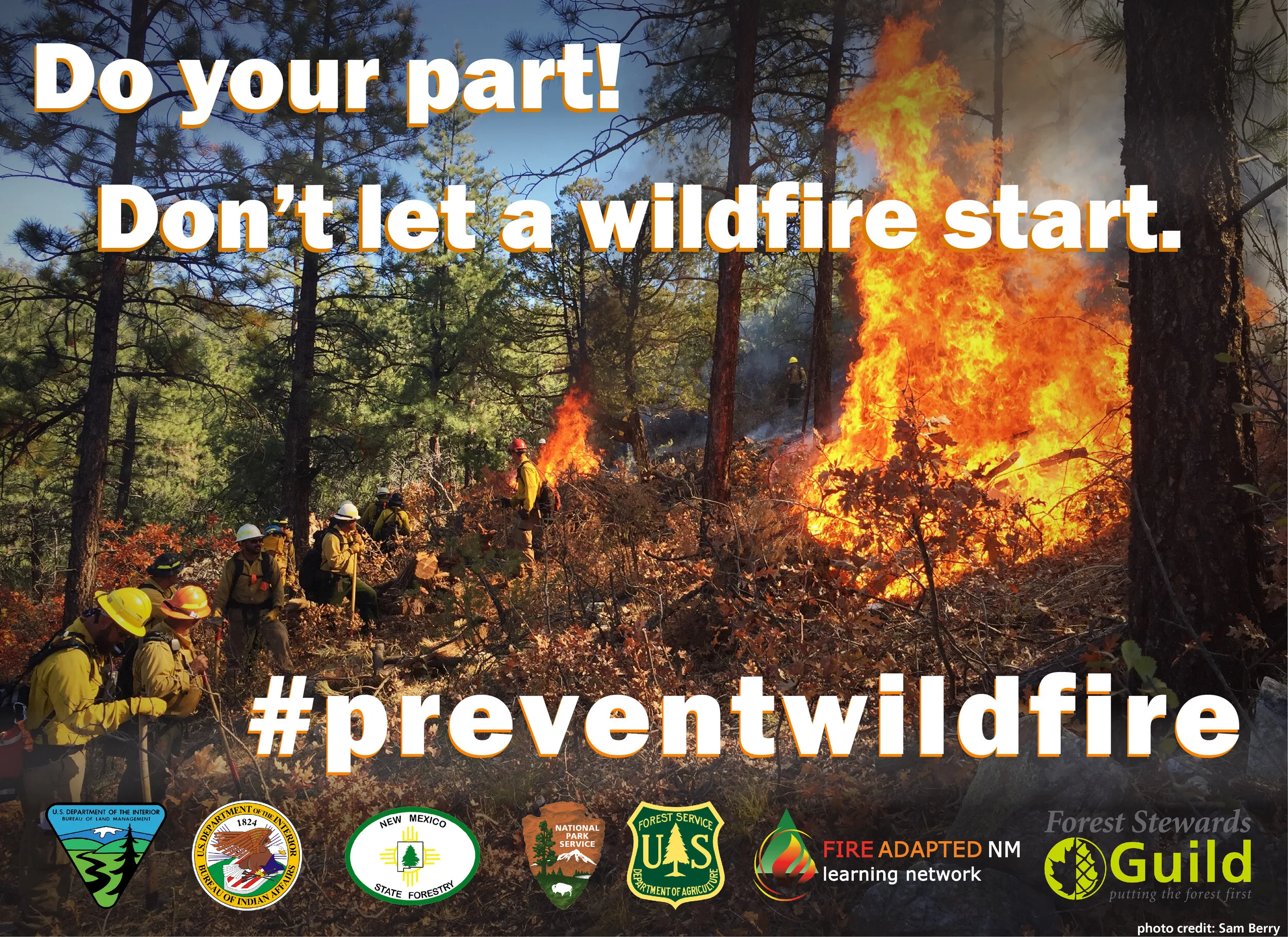
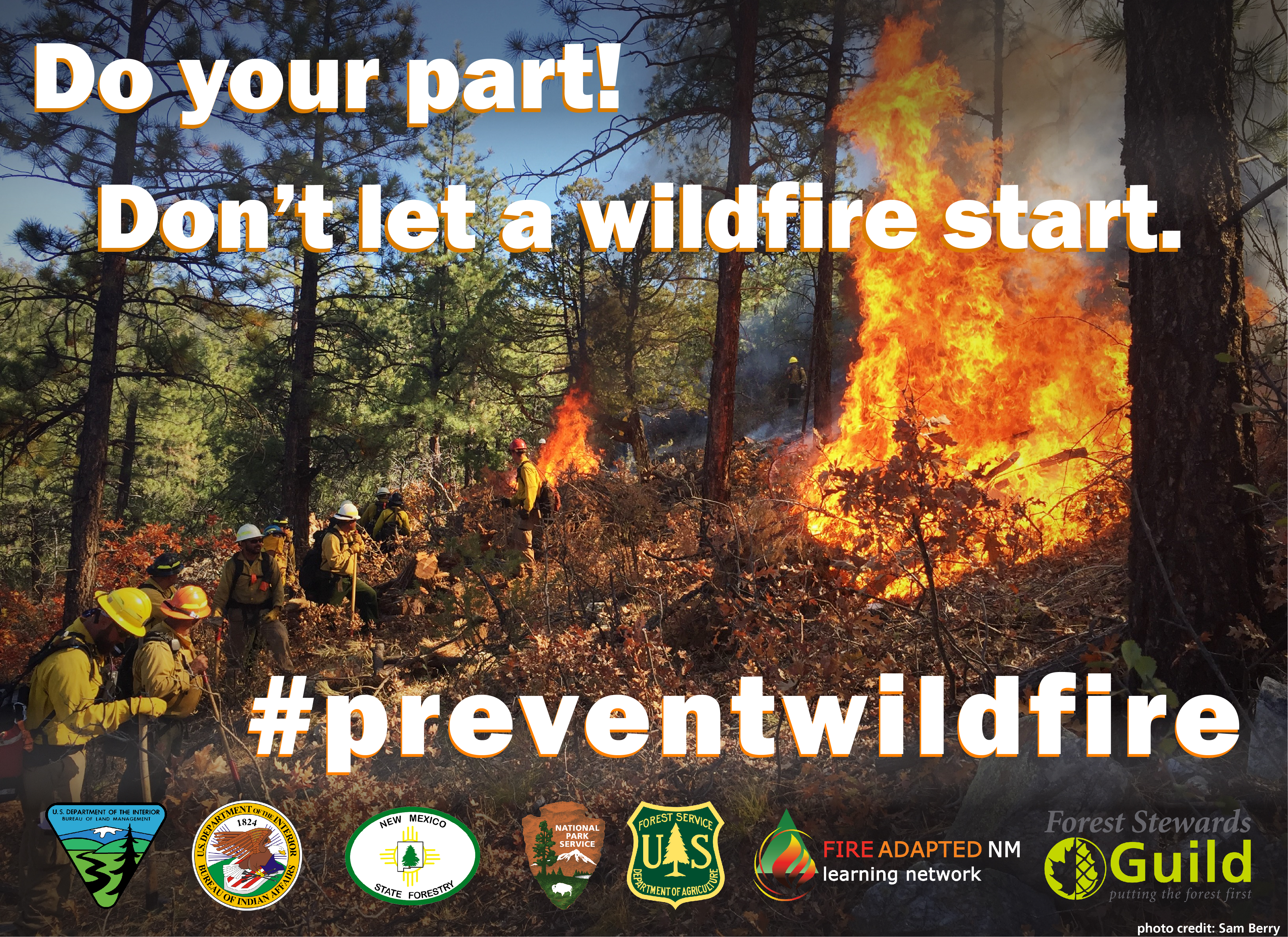
doyourpart.jfif

Do your part

Do your part for fire prevention to protect firefighters and forest communities.

Wildfire Wednesdays #54: All Hands All Lands Pile Burn Squad - Managing Wildfire for Resource Benefits

Hi Fireshed members,

Wildfire season is underway. To find up-to-date information about wildfire incidents, be sure to follow https://nmfireinfo.com/ for new incidents and https://inciweb.nwcg.gov/ for longer, sustained incident information.

This Wildfire Wednesdays features:

  • A story map about the All Hands All Lands pile burn squad within the Rio Grande Waterfund area

  • Information about the Cuervito wildfire and how it is being managed for resource benefit in New Mexico.

Best,

Gabe

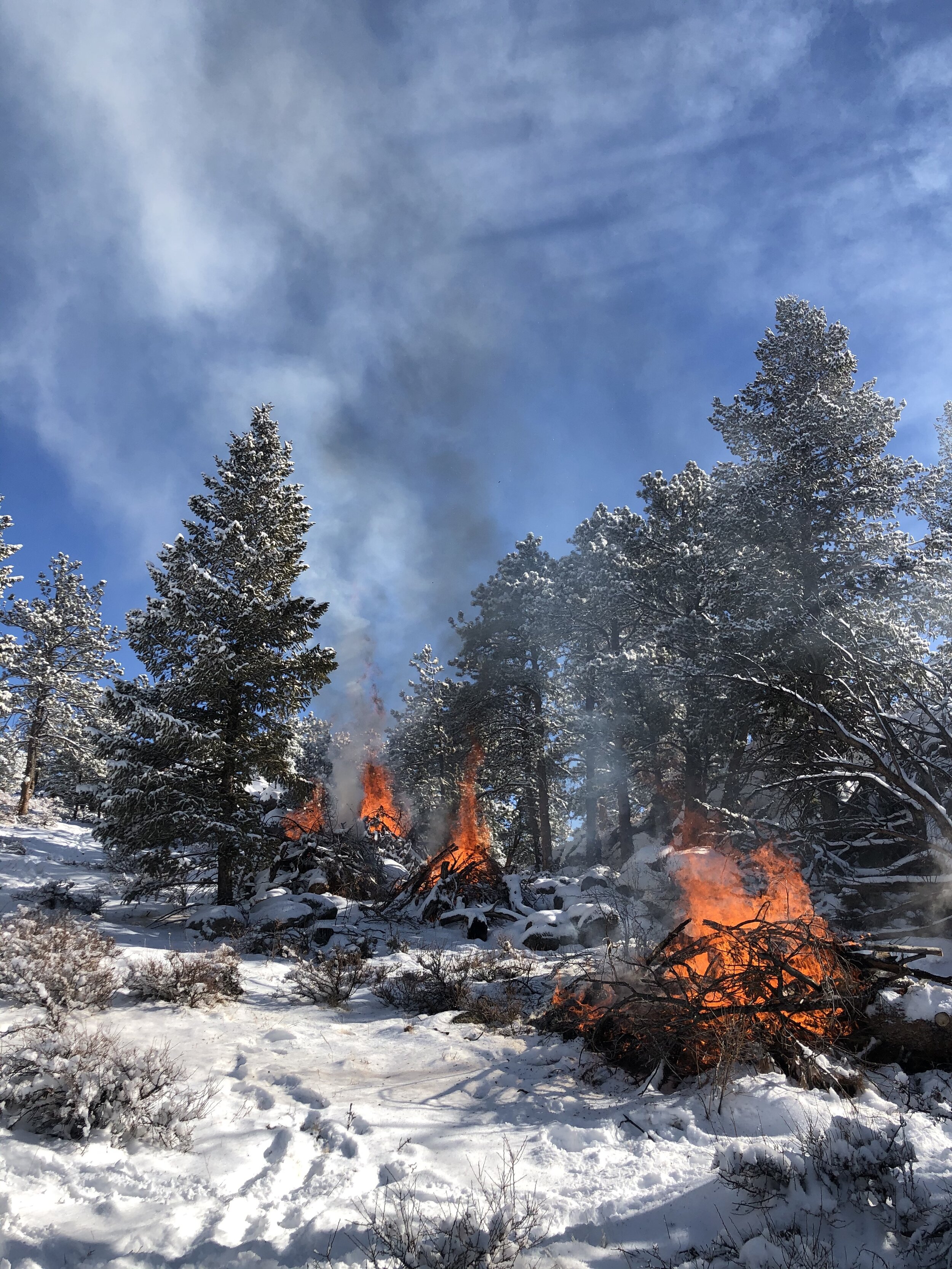
IMG_4495.jpg

All Hands All Lands Pile Burn Squad

In the Rio Grande Water Fund landscape, the All Hands All Lands Pile Burn Squad has been a successful pandemic adaptation of the All Hands All Lands burn team.

A new storymap describes how the squad was set up, and how it worked to keep good fire work on track in the landscape. For more about AHAL, see the Forest Stewards Guild website, or contact Sam Berry (sam@forestguild.org).

Cuervito Wildfire Managed for Resource Benefit

Location of the Cuervito managed wildfire

Location of the Cuervito managed wildfire

Fire managers on the Santa Fe National Forest (SFNF) are taking advantage of a lightning strike that took place on Mother’s Day to achieve pre-determined resource objectives on about 1,500 acres on the Pecos/Las Vegas Ranger District. Managing the Cuervito Fire will achieve significant benefits on the ground, including safer communities and a healthier forest.

Click here to read the whole press release.

This is a great time to learn a bit more about managing wildfire for resource benefit, and how this is an important component of current and future fire management strategies.

A briefing paper, titled “Managing Wildfire fore Resource Benefit: What is it and Is it Beneficial?” by Carrie Berger, Extension associate; Stephen Fitzgerald, silviculture Extension specialist and professor; Daniel Leavell, Extension agent, Klamath Basin Research & Extension Center and assistant professor (practice); shares the following about managing wildfire for resource benefit:

“In 2009, the Federal Wildland Fire Policy was implemented across agencies to ensure a consistent approach to managing wildfire. The policy allows wildfire to be managed for resource benefit on public land in one area of the fire while actively suppressing it in another area where people, homes, infrastructure, or other values at risk (e.g., ecologically important habitats, historically significant cultural sites) are potentially threatened. Local and state jurisdictions, however, are often bound by law to provide full wildfire suppression to protect private land and values at risk.

Managed wildfire requires extensive, advance land management planning that takes into account the risk of damage or loss from wildfire and the increased probability of positive outcomes. Location, available resources, predicted weather, topography, air quality, and predicted fire behavior are all factors that contribute to fire management decisions within the land management planning process.

So, the question remains: Are managed wildfires for resource benefit beneficial? Under certain circumstances, yes. Managed wildfire has the potential to consume built-up fuels and increase the health and resilience of forests. Reducing fuels may also make the landscape less susceptible to a larger and potentially more severe wildfire later. Additionally, managing naturally ignited wildfires allows fire managers to maintain the important role of fire, where fire is a natural and frequent disturbance component of the ecosystem (see the sidebar case examples). The Science Analysis of The National Cohesive Wildland Fire Management Strategy concludes: “Managing wildfire for resource objectives and ecological purposes is a useful tool for managing fire-adapted ecosystems and achieving fire-resilient landscapes, but has limited potential for broad application throughout the nation because of its inherent risk and statutory constraints.”

To learn more about managing wildfire for resource benefit, click here to read the whole briefing paper.


Wildfire Wednesdays #53: Ready, Set, Go! NM - Collaboration to Prevent Wildfires

Hi Fireshed Members,

Wildfire season is off to an early start this year. Are you prepared for wildfire season? If not, take some time this week and to make a couple small actions toward wildfire preparedness. The Ready, Set, Go! guide in this week’s newsletter can help guide you in this process. Remember, we can make a bigger impact toward a wildfire adapted future by working together and following the slogan “each one, teach one.”

This week’s Wildfire Wednesdays features

  • The New Mexico Ready, Set, Go! guide

  • A brief and informative news article about the need for collaboration to prevent mega fires and the Rio Grande Water Fund

Best,

Gabe


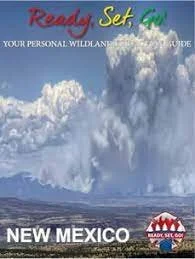
New Mexico Ready, Set, Go!

In New Mexico, fire season is now a year-round reality in many areas, requiring firefighters and residents to be on heightened alert for the threat of wildfires. The tips in this Ready, Set, Go! Guide are designed to help you plan and prepare for a wildfire emergency.

This is a great general resource to help you, your friends, family, and neighbors start to make progress toward wildfire preparedness. When doing work around your house or planning for wildfire, talk to those in your community about what you are doing and why.

To get started on the Ready, Set, Go! Guidebook, click here.

Experts Urge Community Collaboration to Prevent Catastrophic Fires

download (1).jpg

This article in the Santa Fe New Mexican shares the insight of an expert panel on the importance of collaborative efforts in community fire adaptation work across the state. In addition, the author, Victoria Traxler, shares an introduction to the Rio Grande Water Fund for those that may not be familiar with this innovative approach to forest and watershed health in New Mexico.

The panel was hosted by the Nature Conservancy last week and included representatives of the national Fire Adapted Communities learning network as well as many others.

Be sure to give this article a read and consider sharing this perspective with those in your communities that may not be familiar with these efforts.

To read the article, click here.

Wildfire Wednesdays #51: Fire Prevention through Social Media - Post-Fire Restoration Recommendations

Hi Fireshed Members,

With severe drought conditions across the state of New Mexico, it is especially important for us to focus on reducing human-caused wildfire ignitions this year. Always check fire restrictions before you recreate, use spark arrestors on gas-powered equipment, and make sure to recreate responsibly this spring and summer.

This Wildfire Wednesdays features:

  • Fire prevention messages to share on social media

  • Post-fire Recovery through indigenous and western science-based knowledge systems

Best,

Gabe

Please Help us Prevent Wildfire! Use these social media posts!

Please help prevent wildfire by sharing these messages on Facebook, Instagram, Twitter or over email. If this simple step prevents one wildfire, it could save lives and will help keep our first responders safe during the 2021 fire season. Just add the flyer as a photo and use our suggested caption, or create one of your own.

Responsible+Rec+Social+Card+-chains.jpg

Recreate Safely

Click Here to Download this Flyer!

Suggested Caption: Click Share and Help Prevent Wildfire: We all need your help to prevent wildfires this summer. The statewide average of human-caused wildfires in New Mexico is 48% of all wildfires and most of these fires can be prevented. Don’t drag chains, check spark arrestors on vehicles and equipment and for information about preventing wildfires over The Fourth of July weekend, visit https://nmfireinfo.com/  Suggested Hashtags: #recreateresponsibly #preventwildfire #nmfire #fireadaptednm

KBYG+Social+Card-01-01-01.jpg

Know Before You Go

Click Here to Download this Flyer!

Suggested Caption: Click Share and Help Prevent Wildfire: Know Before You Go! Before you make plans to have any smores over the campfire check for current fire restrictions.  Campfires and fireworks are not allowed on most public and private land throughout New Mexico. For more information, call the Fire Restrictions Hotline: 1-877-864-6985 or visit https://firerestrictions.us/nm/ 

Suggested Hashtags: #recreateresponsibly #preventwildfire #nmfire #fireadaptednm 

Firefighters+Social+Card+Final-01.jpg

Do Your Part, Don’t Let A Wildfire Start

Click Here to Download this Flyer!

Suggested Caption: Click Share and Help Prevent Wildfire: Firefighters and first responders are needed more than ever to keep America safe . Prevent wildfires by following fire restrictions, postponing debris burning, and using campfire alternatives.  

Suggested Hashtags: #recreateresponsibly #preventwildfire #nmfire #fireadaptednm 

Post-fire Management Recommendations: The Western Klamath Restoration Partnership

download (1).png

Has your community or landscape collaborative discussed post-fire restoration? If not, learn from the Western Klamath Restoration Partnership’s (WKRP) recent work on post fire restoration. While some of these recommendations may be locally-specific, there is a lot to learn on this document.

To access the WKRP’s post-fire recommendations, click here.

The April 2021 post-fire restoration recommendations from the Western Klamath Restoration Partnership are a great model of how to develop a plan through collaboration. WKRP is a diverse group of partners including tribal, federal, non-governmental organizations and community members. The WKRP’s planning area is cross-jurisdictional, and includes the Six Rivers and Klamath National Forests, State Responsibility Areas, and spans the Karuk Tribe’s Aboriginal Territory, totaling approximately 1.2 million acres. These best management practices for post-fire restoration are informed by both western science and indigenous knowledge, practice, and belief systems.

The document provides recommendations on the collaborative process in general, post-fire tree felling, fuels and fire restoration, erosion and sediment control, forest heterogeneity, and monitoring. If you are interested in broaching these subjects in your community or landscape collaborative, feel free to reach out the Fire Adapted New Mexico learning network for support by contacting gabe@forestguild.org.