Happy Friday Greater Santa Fe community,
The largest fire currently burning in New Mexico is the Frijoles Fire, located roughly 15 miles northeast of Santa Fe. Lightning ignited the fire on August 4 and since then, the fire has grown to about 15,500 acres despite persistent efforts to suppress it.
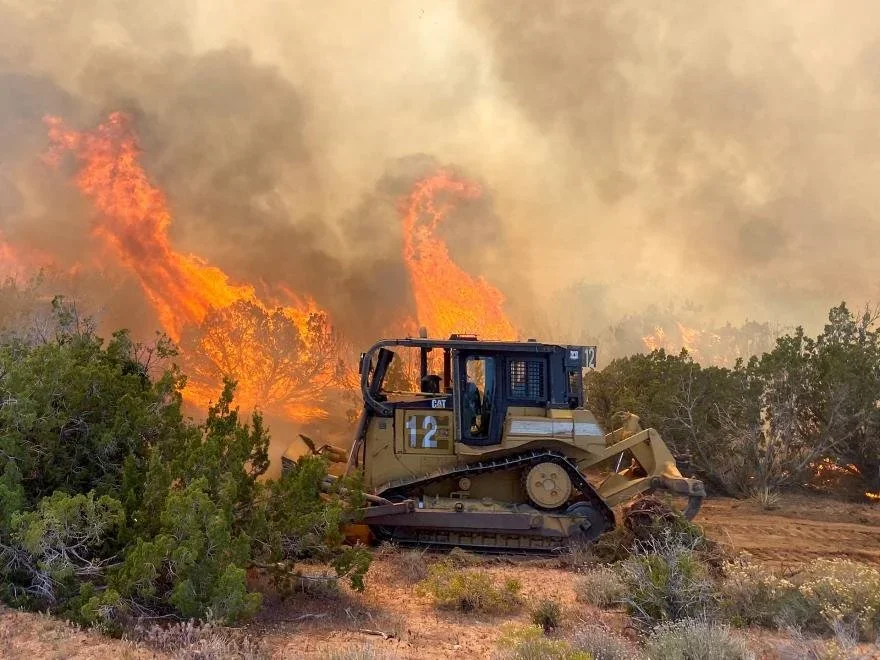
A bulldozer constructs fireline on a wildfire. Credit: USDA Forest Service.
Over the past month, nearly one thousand personnel on the Frijoles Fire have contributed to assessing and prepping infrastructure at risk, constructing firelines, securing and patrolling containment lines, extinguishing hot spots, and more, using hand tools, heavy equipment, and aerial resources. As of today, 519 personnel, 8 crews, 11 engines, and 3 helicopters remain assigned to the Frijoles Fire, with an estimated cost to date of $41.4 million for fire suppression efforts, according to a daily report by the National Interagency Fire Center.
In surrounding communities, the fire has sparked conversation and learning among residents about what exactly firefighters do to suppress fires. (“Why can’t they just put it out?” one person asked me recently.)
In today’s Fire Friday, we provide a basic overview of suppression tactics for wildland fires. This post focuses on wildland fires and does not explain the opportunities and limitations of suppression in the wildland-urban interface or for urban conflagrations.
This Fire Friday features:
Be well,
Maya
Steps of a Wildfire Response
Step 1: Detecting smoke
The first step of wildfire response is detecting smoke from an ignition. Often, that comes from a member of the public reporting smoke. In remote areas, agency personnel on patrol or manning lookout towers or AI-enabled fire-detection cameras might detect smoke first.
Step 2: Initial attack
Once an ignition is detected, responding agencies initiate an initial attack, where firefighters generally try to contain the fire as quickly as possible through any methods available, such as spraying water directly on the fire or removing fuel around the boundary of the fire to contain it.
The vast majority of fires – more than 97%, according to a 2005 review – are contained while they are still very small, making initial attack of critical importance for ignitions during extreme weather conditions or in sensitive areas.
As State Forester Laura McCarthy wrote last month, 73% of wildfires in New Mexico thus far in 2026 were controlled before they reached 10 acres in size.
Step 3: Extended attack
If the initial attack does not immediately suppress a fire, fire managers gather resources and set up an incident management team for an extended attack. Tactics available for an extended attack are described in more detail below.
Step 4: Mop up and restoration
Even after a fire is contained, firefighters must “mop up,” or extinguish hot spots near the fire perimeter and on the interior of the fire, to reduce the risk of smoldering material flaring up and re-igniting or starting another fire later on.
Because firelines (where all vegetation has been removed) can cause long-term ecosystem damage, firefighters must also work to restore firelines by, for example, digging water bars that direct runoff and reduce erosion.
Wildfire Suppression Tools and Tactics
Fire managers use many tools and tactics simultaneously to reduce fire intensity and limit fire spread.
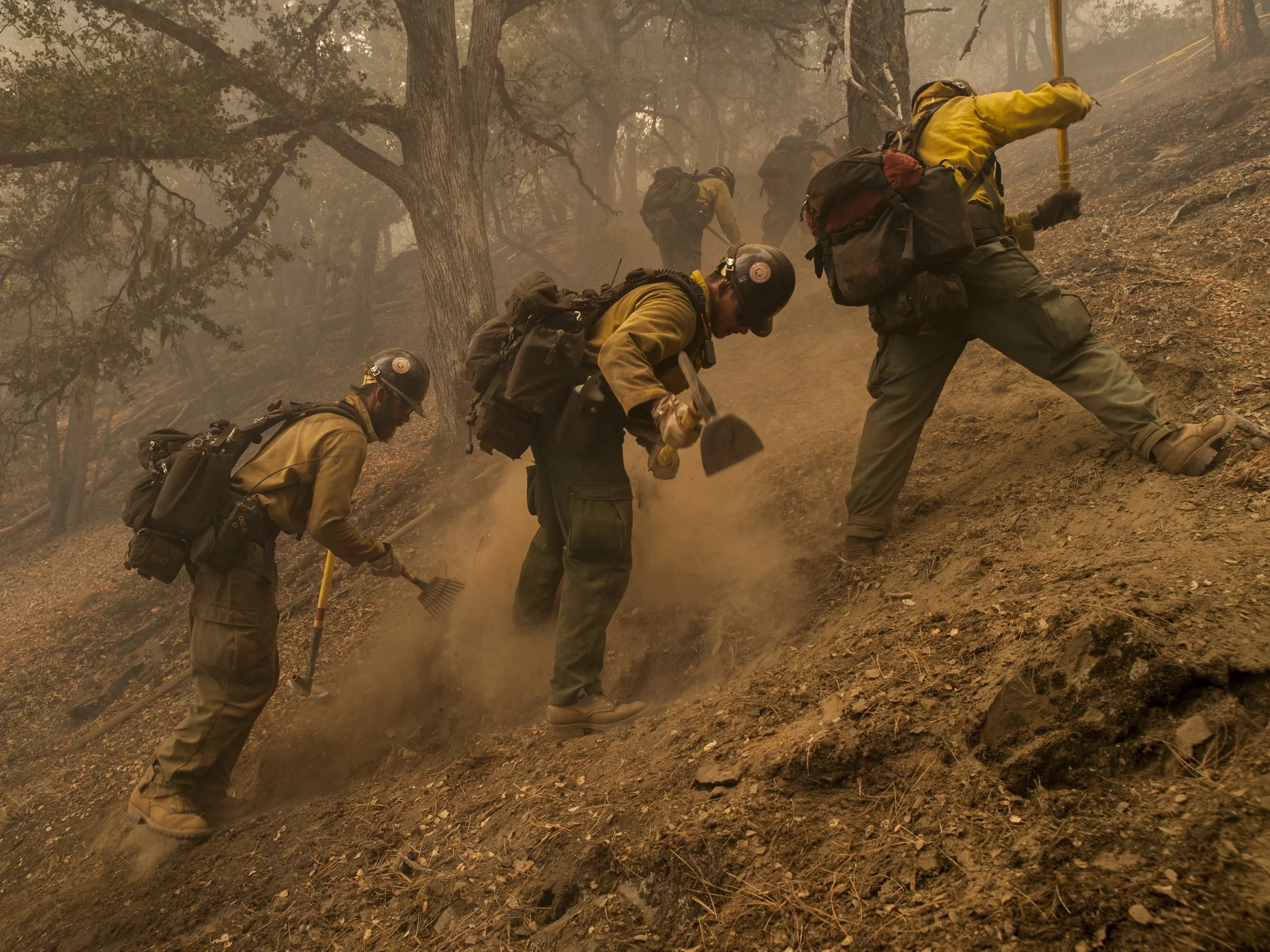
Firefighters use hand tools to clear ground fuel. USDA Forest Service.
They generally use a combination of indirect and direct attack. Indirect attack refers to actions taken at a distance removed from the fire. For example, fire managers might build containment lines on a ridgeline a mile or more away from the fire, where they expect they may be able to stop the fire’s progress. Direct attack refers to actions taken on the active edge of the fire. Direct attack may not be possible or safe for firefighters depending on the fuel type and fireline intensity, the speed at which a fire is moving, or whether the location of the fire is accessible to ground or aerial resources.
Despite all the technology now employed to fight fires – including drones and even robotic machinery – firefighters cannot fully extinguish most large wildfires. Many fires are not ‘put out’ until a season-ending precipitation event occurs. Instead, the strategy to suppress wildfires generally involves using various actions to confine and contain a fire’s spread. For instance, aerial resources may drop fire retardant to reduce fireline intensity, while hand crews and/or heavy equipment operators construct firelines – areas devoid of vegetation – to contain the fire.
Meanwhile, some firefighters will monitor fire behavior to ensure the fire does not cross containment lines, and some may apply water, firefighting foam, or use other actions to protect structures or other specific values threatened by the fire, a job called point/zone protection.
What is Fire Retardant?
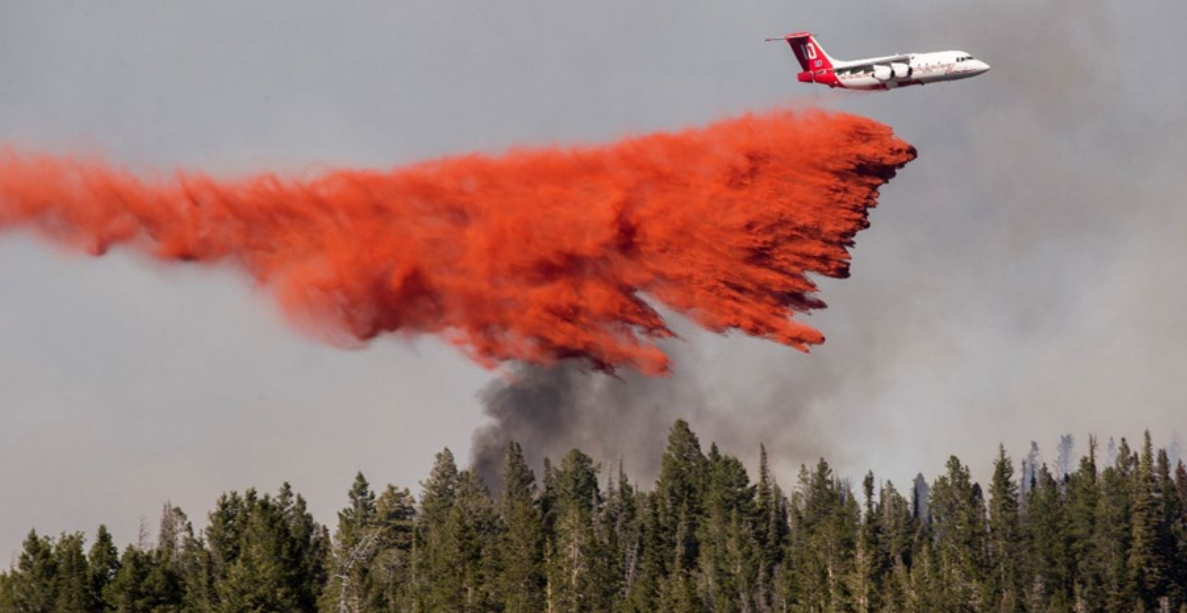
A plane drops fire retardant over a fire.
Fire retardant is a commonly used tool to aid wildfire suppression by reducing the speed and intensity of a fire. Firefighting planes may dump water on fires, but on a hot fire, water may evaporate before it can effectively cool the fire. Fire retardants, on the other hand, are effective in reducing fire intensity and spread for up to a week or more.
As described in a Southwest Fire Science Consortium factsheet, fire retardants are “ammonium-phosphate formulations – the primary ingredients in fertilizers – and contain other proprietary ingredients that may include heavy metals.”
While a valuable tool for slowing the spread of wildfires, fire retardants have known harmful impacts on aquatic organisms when dropped in freshwater systems – causing fish kills and eutrophication – so retardant drops are prohibited within 300 feet of mapped waterways. However, those protections may not cover smaller and seasonal wetlands and waterways.
In addition, studies suggest retardant accumulation from runoff over a long period of time can also harm aquatic organisms and damage water quality, with more research needed on the topic.
Watch a video demonstrating how the fuels burn differently with and without fire retardant.
What are firelines, and how effective are they?
A fireline is an area devoid of vegetation constructed around a fire to stop a fire from spreading further. Firefighters may use hand tools or heavy equipment, such as dozers, to create the fireline, which might range from about 6 inches to more than 40 feet wide depending on weather, topography, and the type of fuels in the area. Firelines can also be enlarged or fortified by backburns, where firefighters intentionally light fire to burn fuels between a containment line and the advancing fire.
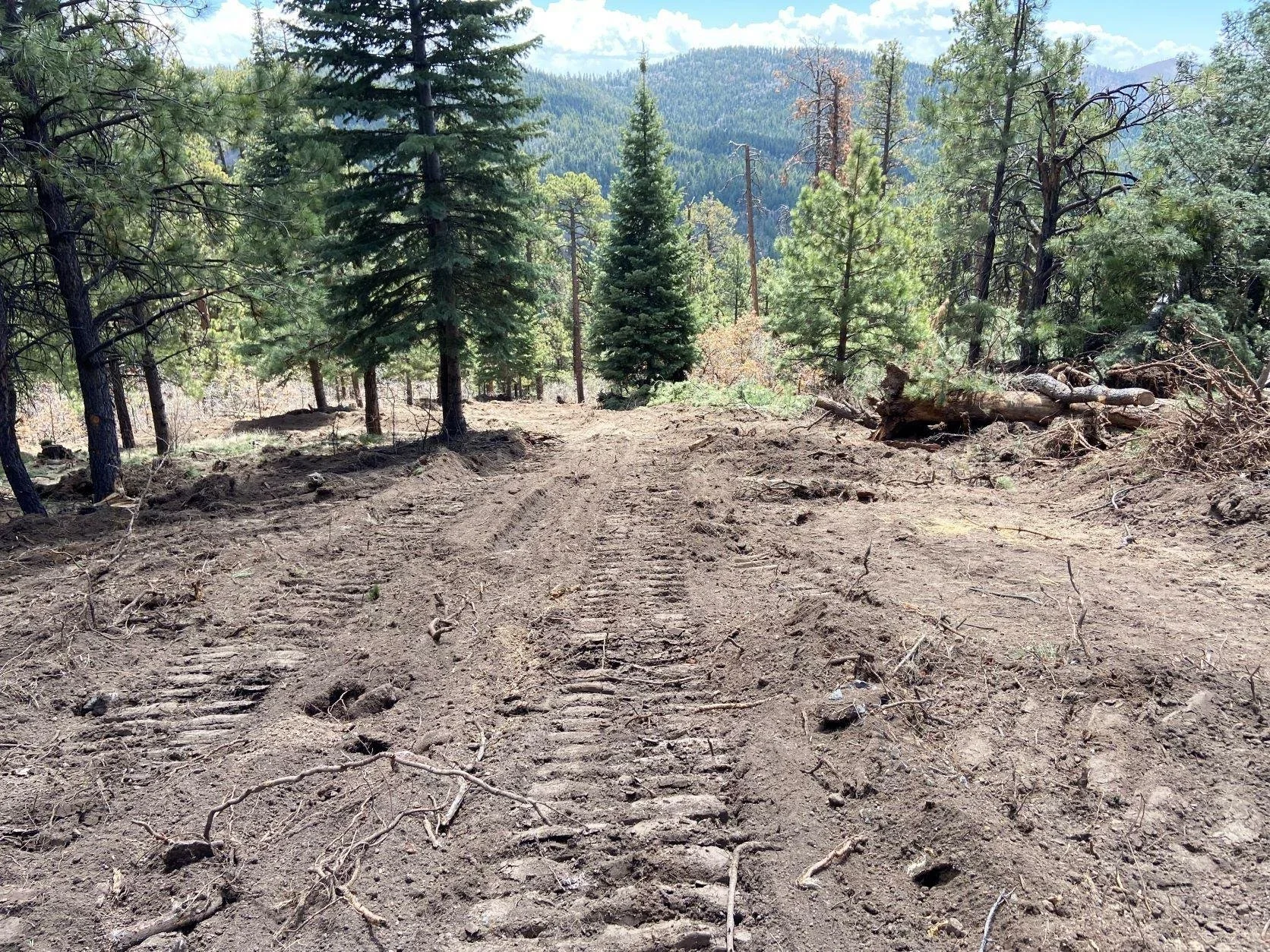
Dozer line on the 2022 Cerro Pelado Fire in New Mexico.
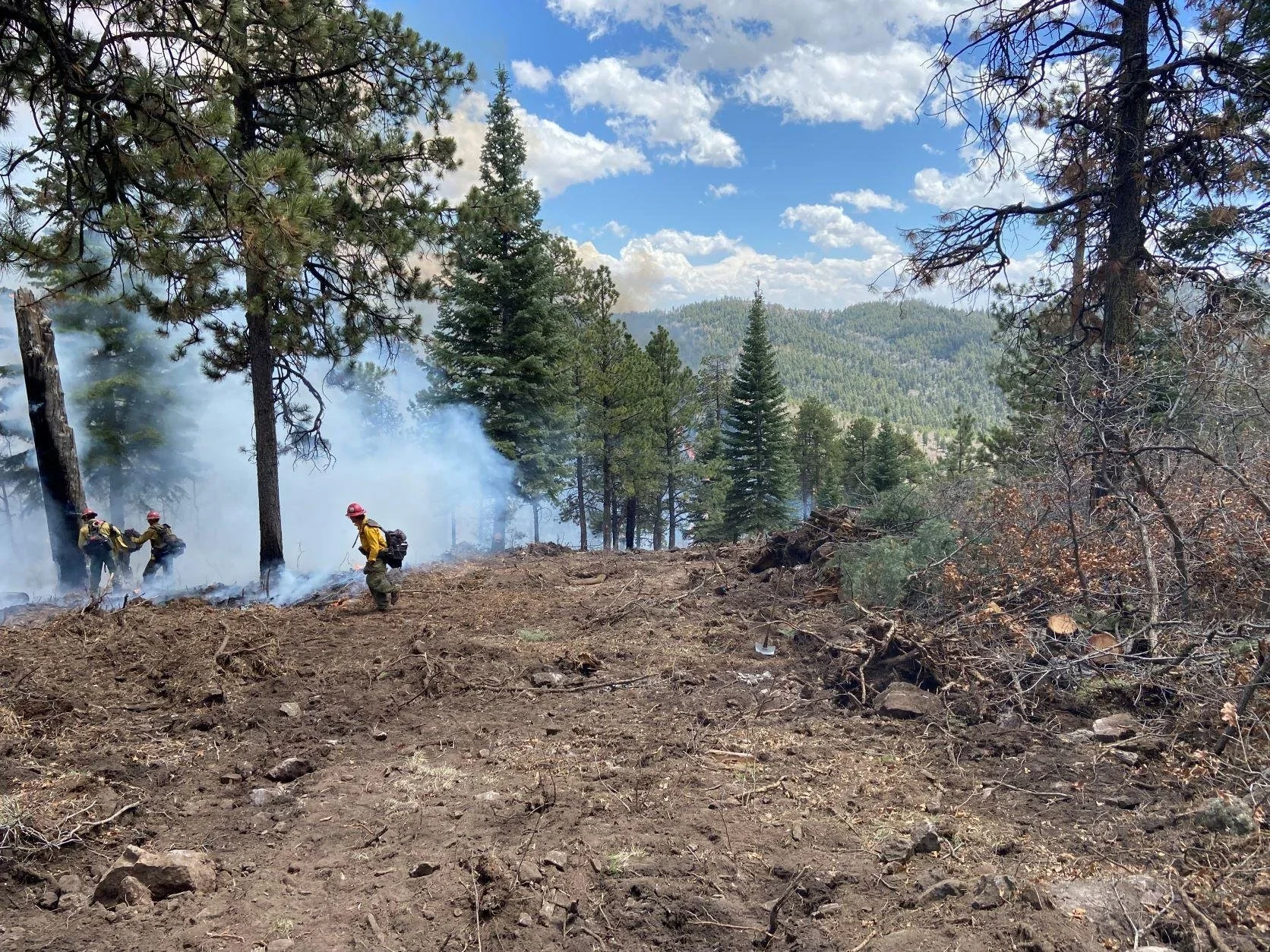
Firefighters back burn off a fireline on the 2022 Cerro Pelado Fire.
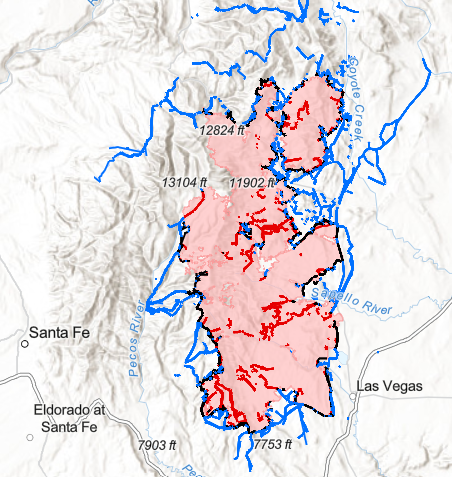
Explore the types and effectiveness of firelines constructed around >1,000-acre fires in the U.S. between 2017 and 2025 on the Rocky Mountain Research Station’s Fireline Effectiveness Dashboard. Above shows fireline burned over (red), held (black), or not engaged (blue) on the Hermit’s Peak/Calf Canyon Fire in 2022.
A 2023 study evaluated fireline effectiveness across 13 wildfires in Washington for a mix of hand lines, bulldozer line, and existing roads. Three takeaways from the study were that:
Wildfire only reached 44% of the firelines; most (56%) were contingency lines – remote control lines available to fall back on if a fire were to burn over primary containment lines – that were never engaged by fire.
Over 50% of the firelines that were engaged by wildfire successfully held, as opposed to being burned over. However, while firelines successfully contained most fires burning at low- and moderate-severity, firelines consistently had low effectiveness for containing high severity fires, such as fires burning through dense mixed conifer forests.
Fireline effectiveness is important to consider because fireline construction can cause long-term ecological impacts such as soil erosion and spread of invasive species.q
Suppression Costs versus Effectiveness
The costs of wildland firefighting in the U.S. have ballooned over the last 30 years, and a recent 2026 study projects that inflation-adjusted federal suppression spending will continue to rise through the end of the century.
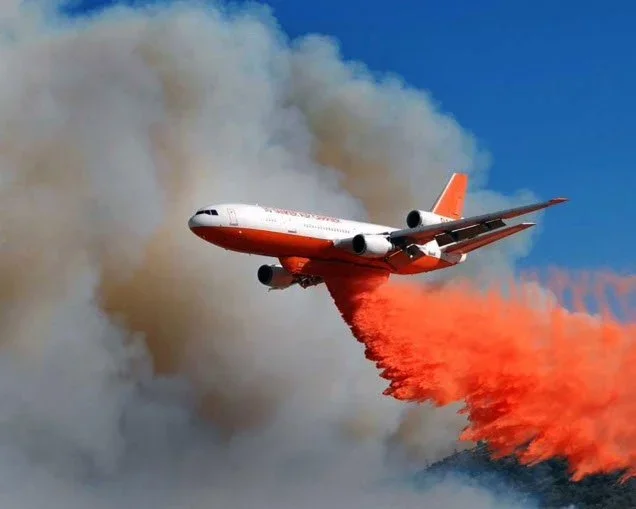
Surprisingly little is known about the economic efficiency of modern wildfire suppression tactics. Above: A Very Large Air Tanker (VLAT) can drop over 8,000 gallons of fire retardant.
That’s because wildfires are simultaneously becoming more destructive and difficult to suppress due to a combination of a changing climate (e.g. hotter, drier conditions and prolonged fire seasons), increased development in the wildland-urban interface, and a legacy of fire suppression. Immediately suppressing all fires in fire-adapted ecosystems across the west results in fuel buildup that only causes more severe fires down the line.
U.S. policymakers and land management agencies have grappled with rising wildfire suppression costs for decades. In the early 2000s, a phenomenon called “fire borrowing” became a growing concern: When annual suppression appropriations proved insufficient, the Forest Service transferred funds from other agency programs to cover firefighting costs, disrupting investments in forest management, restoration, recreation, and wildfire risk reduction.
In 2018, Congress responded by creating what became known as the Fire Funding Fix, which established a separate disaster-style funding mechanism for suppression costs above a set baseline. Beginning in FY2020, the Fix allowed the Forest Service and Department of the Interior to access additional suppression funding without drawing those escalating costs from the agencies’ regular program budgets.
Congress subsequently made investments in the other side of the wildfire equation: reducing wildfire risk before fires occur. In 2022, the Forest Service launched its Wildfire Crisis Strategy, supported by funding from the Bipartisan Infrastructure Law and later the Inflation Reduction Act, to substantially increase landscape-scale treatments such as thinning and prescribed fire in high-risk areas. Together, these policies reflect an evolving federal approach that seeks both to sustainably finance an increasingly expensive wildfire response system and to invest in proactive management that can reduce wildfire risk to communities and landscapes.
That policy framework is now at an inflection point. The Fire Funding Fix expires at the end of FY2027 unless Congress reauthorizes it, while much of the temporary funding that enabled the recent expansion of fuels and restoration work is also winding down. Without a durable approach to both suppression funding and proactive wildfire risk reduction, rising suppression costs could once again place increasing pressure on the Forest Service’s other programs.
Additional Resources and Upcoming Opportunities
Webinar: Using Fire Festivals to Engage Communities
October 7, 2026 | 11-12PM MT
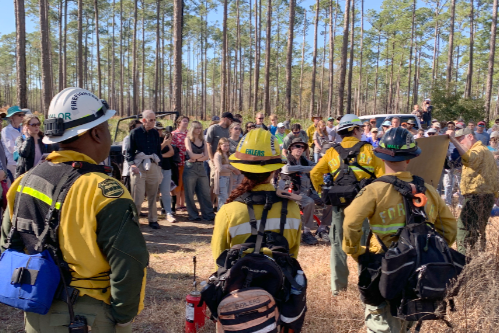
Fire festivals are emerging as an innovative way to connect communities with prescribed fire through hands-on learning, demonstrations, and family-friendly activities. This webinar will explore how fire festivals can increase public understanding of prescribed fire, build trust, strengthen partnerships, and foster community support. Presenters will share a national perspective on the growth of fire festivals, followed by a case study highlighting lessons learned from planning and hosting a successful event.
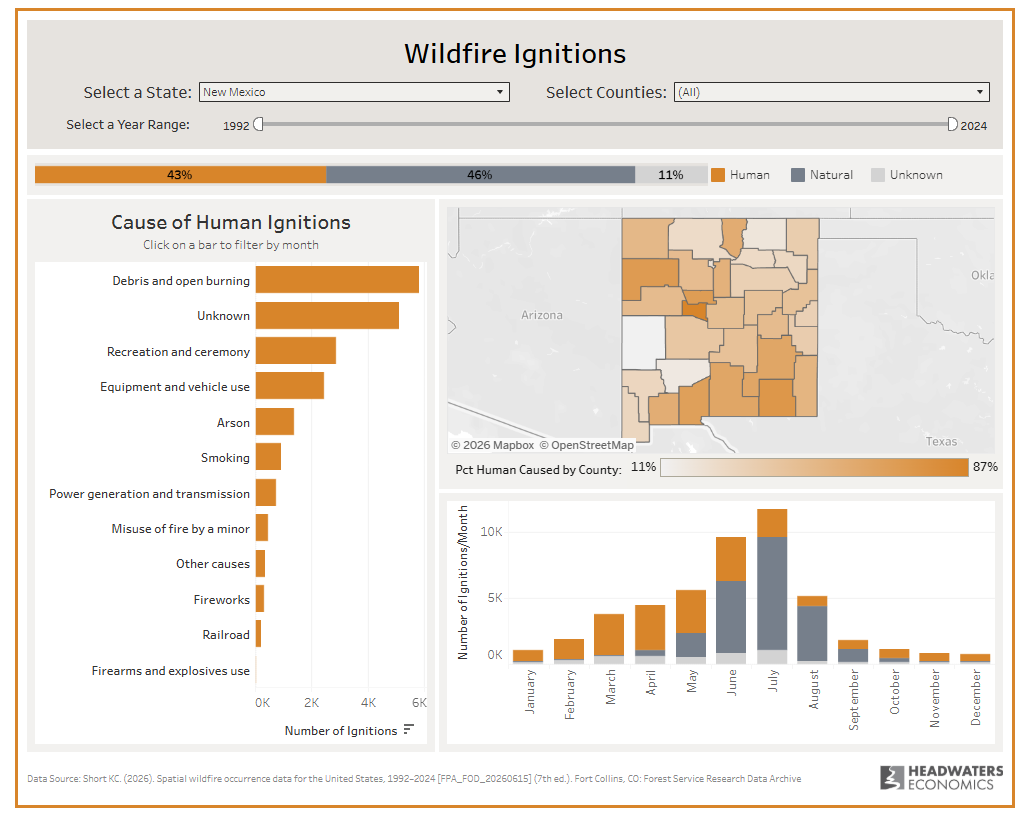
Headwaters Economics - Human-caused Wildfire Ignitions Trends Tool
To help wildfire managers communicate with communities, Headwaters Economics developed a free tool based on data collected by the U.S. Forest Service that displays human-caused wildfire ignitions trends in any U.S. community. “Lessons From 30 Years of Wildfire Ignition Data” frames this new dashboard which can be used to show the causes and seasonality of human-ignited wildfires between 1992 and 2024. You can use filters to view national, state, or county-level data and change the year range to view specific timeframes. This data serves as a reliable source to better understand when, where, and how wildfires start.
ESCAPE Course: WUI Fire Evacuation and Sheltering Considerations
ESCAPE (WUI Fire Evacuation and Sheltering Considerations — Assessment, Planning, and Execution) provides free modules with guidance for wildfire evacuation planning, enhancing life safety for civilians and first responders. The platform serves as a training and educational tool for community officials, emergency managers, and first responders, delivering a structured
understanding of wildfire evacuation dynamics, scenarios highlighting high risk situations and mitigation techniques, and tools for developing evacuation plans.

Community Wildfire Mitigation Best Practices Virtual Course
Professionals responsible for community wildfire mitigation programs are invited to apply for a 10-week virtual Community Wildfire Mitigation Best Practices training sponsored by Coalitions & Collaboratives, Inc. (COCO) and the US Forest Service. This training is designed to strengthen mitigation leadership skills and advance effective community wildfire preparedness efforts.
Start date: September 14, 2026 - rolling registration
Cost: Free, registration required