Wildfire Wednesday #134: May 4 is Community Wildfire Preparedness Day

Happy May, Fireshed friends!

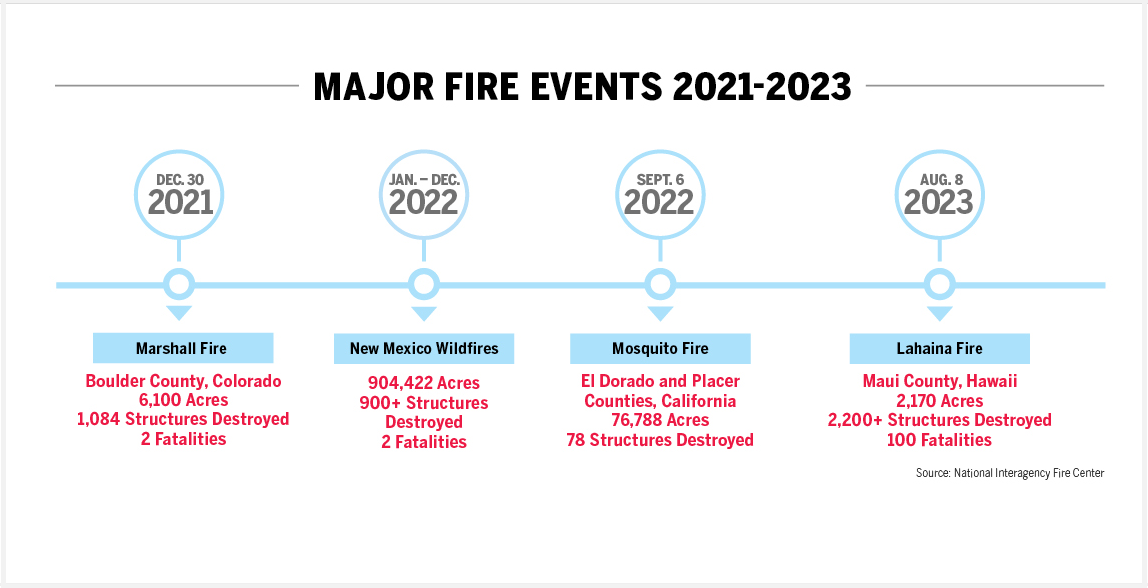
National Wildfire Preparedness Day, held annually on the first Saturday in May, is celebrating its ten-year anniversary this Saturday, May 4, 2024! We invite you to join thousands of individuals and communities across the United States in devoting anywhere from a few hours to the entire day performing a variety of tasks to reduce the risk of damage or destruction by wildfire to homes and property. Since 2014, this nationwide day of effort has been coordinated by the National Fire Protection Association (NFPA) in collaboration with Fire Adapted Communities and State Farm Insurance. While NFPA produced educational printed materials and other resources focused on wildfire prevention for many years, partnering with insurance companies and learning networks enabled them to expand their outreach efforts. The effort has grown over the past decade, giving participants a chance to network, connect with others in their communities partaking in the effort, and work with organizations they may not typically think of when smoke is in the air.

Today’s Wildfire Wednesday features:

Stay cool and connected,
Rachel


An Overview: Wildfire Preparedness Day

Each year, Wildfire Community Preparedness Day actively encourages groups and individuals living in wildfire-prone areas to complete projects that can help make their homes and communities safer from wildfire. As co-sponsors of Wildfire Community Preparedness Day, NFPA and State Farm are working to celebrate the campaign’s positive impact on countless homes and communities over the past decade.

With a vested interest in property loss reduction and personal safety, State Farm has played an active role in supporting the campaign since its inception. This year, to encourage participation during the campaign’s 10-year anniversary, NFPA and State Farm are offering a free banner to the first 100 people who develop a campaign project or event and post it online. This can be done by filling out the online form that tracks and maps community participation in the campaign nationwide.

As wildfires continue to present an ever-growing threat to households nationwide, more communities are recognizing the power of teaming up to proactively address them. I’m incredibly proud of the progress we’ve seen over time and fully expect that the level of participation and enthusiasm in Wildfire Community Preparedness Day will continue to grow this momentous year and beyond.

— Lorraine Carli, NFPA vice president of Outreach and Advocacy
Wildfire Community Preparedness Day provides science-based steps people can take to reduce or remove potential fire hazards from a home and its immediate surroundings – known as the “home ignition zone” – to help protect from embers and radiant heat from wildfires. Typical activities might include simple, low-cost home improvement projects such as clearing dead leaves, debris, and pine needles from roofs and gutters; keeping lawns and native grasses mowed to a height of four inches; or removing anything stored underneath decks or porches that could burn.

For more information about Wildfire Community Preparedness Day, project ideas, and free resources to download and share, including a campaign toolkit, visit wildfireprepday.org.


Resources for May 4
Where to start: an instructional video
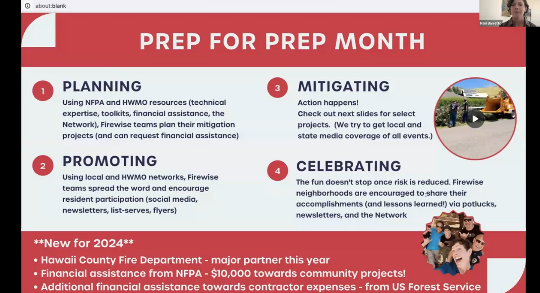
On April 4, NFPA hosted a Facebook Live event in support of Wildfire Community Preparedness Day on May 4. Watch the video here to get helpful tips and the resources you need to start planning for a Prep Day event in your area.
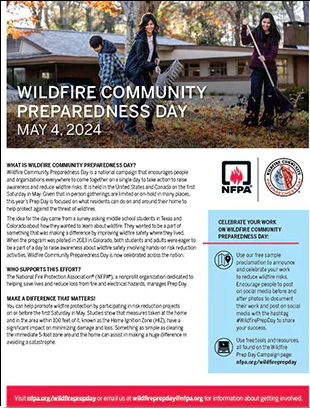
Easy guidelines: Wildfire Preparedness Factsheet
This easy-to-share factsheet can help others in your community learn more about Wildfire Preparedness Day and what they can do to make a difference. “Studies show that measures taken at the home and in the area within 100 feet of it, known as the Home Ignition Zone (HIZ), have a significant impact on minimizing damage and loss. Something as simple as clearing the immediate 5-foot zone around the home can assist in making a huge difference in avoiding a catastrophe.”
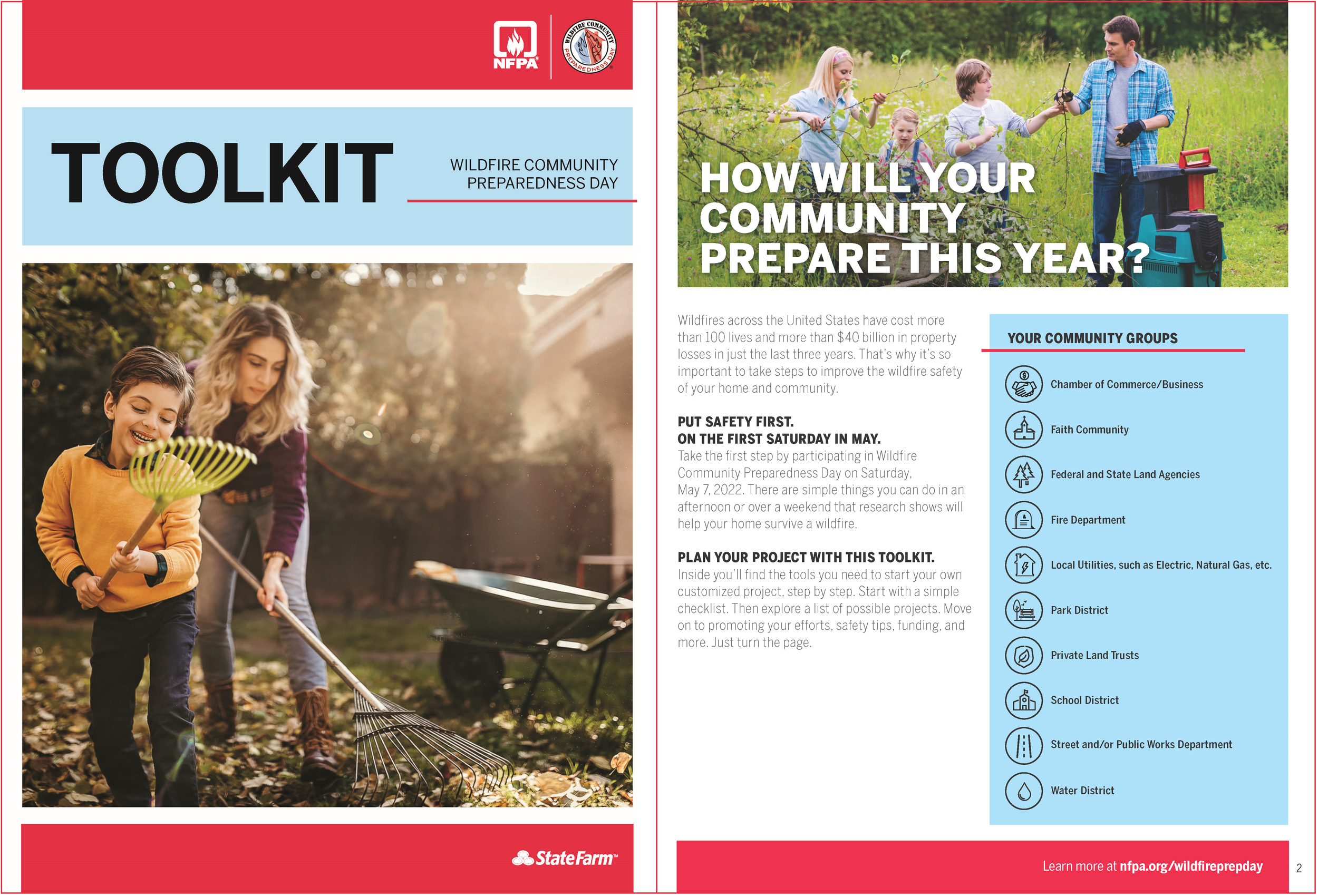
Wildfire Community Preparedness Day Toolkit
This year, Preparedness Day is focused on what residents can do on and around their home to help protect against the threat of wildfires. The Prep Day toolkit provides a list of project ideas, safety tips, and more, to help guide you towards event day.

GET THE TOOLKIT


Local Wildfire Preparedness Events

Many community leaders and members, including Fire Adapted New Mexico (FACNM) Leaders, have hosted or are gearing up to facilitate Wildfire Preparedness Events in their communities on or around Wildfire Prep Day! Ahead of the annual event, FACNM received funding from WPD parent organization, NFPA, and has distributed nearly $20,000 to support 12 local events for members and leaders. This is made possible through the semi-annual FACNM microgrants award program. Read on to learn about some of the events happening around the state and to find motivation to host the next wildfire preparedness day in your community!

Ready, Set, Go: A Wildfire Preparedness Workshop presented by Fire Adapted New Mexico Learning Network, Greater Santa Fe Fireshed Coalition, and Villages of Santa Fe.

A panel on How Does the Threat of Wildfire Affect Your Home Owner's Insurance answers audience questions. Photo courtesy of FACNM Leader Ann Church.

It was a typical Santa Fe spring day this past Saturday, April 27, at Christ Church, starting with snow and ending with sunshine. More than 50 attendees gathered for a variety of presentations and activities related to community wildfire preparedness. The SimTable captivated audiences with its ability to visually project fire traveling in and around Santa Fe, translating the idea from abstract concept to concrete representation. A presentation on Go Kits sparked great conversations about what it really means to be prepared and have a plan when fire arrives. Home Hazard Assessments, presented by Alyssa Mineau from the Forest Stewards Guild, provided participants with a actionable starting point for working on their homes and communities. By the end of the day, several HOA and community leaders had expressed interest in presenting the Ready, Set, Go! program to their neighborhoods – a great example of how community preparedness events motivate and expand community outreach. Mayor Alan Webber gave opening remarks and a reporter from the Santa Fe New Mexican covered the event.
A new presentation, How Does the Threat of Wildfire Affect Your Home Owner's Insurance, sparked some great questions from the audience. The panel, moderated by Madeline Carey, gave an overview of what residents of the Santa Fe area can expect, including how to respond to insurance companies and the threat of losing coverage. Panelists included Lou Macias and Melissa Robertson from the Office of Superintendent of Insurance, Chris Schaum from Chris's Tree Service, and George Ducker, Wildfire Prevention & Communications Coordinator from The New Mexico Energy, Minerals and Natural Resources Department (EMNRD) Forestry Division. The Realtor Association expressed interest in presenting the program to local realtors.

Other Community Wildfire Preparedness Day events organized by FACNM Leaders and Members around the state

La Barbaria Canyon and Tesuque will both be holding chipper events and community green slash disposal days on May 4.

Santa Fe Audubon Society will be preparing an educational defensible space forest thinning demonstration area within the next year. Keep an ear out for opening announcements!

Taos Pines will hold their annual fire preparedness meeting over the July 4 weekend, reminding existing residents and educating new residents on personal and community fire preparedness practices and resources.

Turley Mill HOA is hosting a workshop to teach residents about defensible space.

Brazos Firewise Community will hold a community chipper event and community green slash disposal day over the summer.

And more…
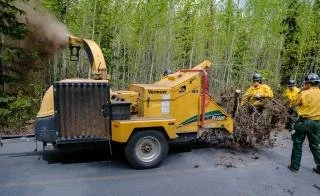
FACNM and the Greater Santa Fe Fireshed Coalition are proud to support members and leaders leading the charge for fire readiness in their communities. Keep an eye on this page to read all about events and efforts funded through the microgrant award program over the summer. To learn more and become eligible to receive a microgrant award, consider joining the learning network as a member or leader.


Upcoming Events, News, and Resources


May Wildlife Webinars

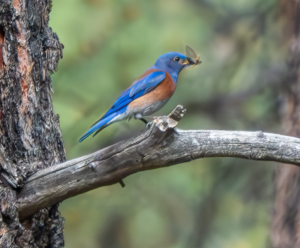
Over the past 5 years, community volunteers from the Weminuche Audubon Society have conducted a study of bird communities in Ponderosa Pine-dominated forested sites that received wildland fuels reduction treatments. This webinar from the Forest Stewards Guild dives into the effects of these treatments, specifically prescribed fire or shrub-layer thinning, on the composition of bird communities in the southern Rocky Mountains, showing that tree canopy and shrub-layer composition and structure have important influences on the number of bird species present and the predominate feeding and nesting behaviors of the avian community.

REGISTER NOW FOR MAY 7 WEBINAR

Tuesday, May 14, 2024, 12:00 – 1:00 p.m. MT: Bird Population Trends and Climate Effects in Southwestern National Parks
Climate change is considered a major driver of recent avian population declines, particularly in the drought-stricken southwestern United States. Predicting how bird populations will respond requires understanding the climatic drivers influencing population density across the region’s diverse habitats. In this webinar from the Forest Stewards Guild, Harrison Jones of The Institute for Bird Populations discusses his research modeling breeding-season densities of 50 bird species in relation to spring and summer drought and the timing of North American monsoon rainfall.

REGISTER NOW FOR MAY 14 WEBINAR

In the second webinar of a yearlong Wildlife and Fire series from the Southwest Fire Science Consortium and partners, a panel of experts will discuss monitoring and collaboration at multiple scales at the intersection of fire and wildlife. Topics include the study of how fire and thinning may impact several important soil organisms that support forested wildlife habitat, large-scale monitoring of border infrastructure impacts on wildlife, stories from habitat recovery within large wildfire footprints, collaborations to manage sage grouse and their habitat, and observations on intra-agency differences coordinating wildlife management and fire recovery. Register to learn more about monitoring at multiple scales on May 21!

REGISTER NOW FOR MAY 21 WEBINAR


Home Hazard Assessments

Wednesday, May 22, 2024, 1:00-2:00pm: Back to Basics: All About Home Hazard Assessments

In this webinar from Fire Adapted NM, knowledgeable fire and forestry professionals from New Mexico and Colorado will introduce an important fire risk and readiness tool: Home Hazard Assessments (HHAs). Topics covered will include guidance and digital and printed tools to complete HHAs, local partners who can guide the process or travel to complete HHAs on-site alongside property owners and residents, how different Assessment programs are structured, why HHAs are an important fire readiness tool, how county ordinances and insurance providers can influence the need for HHAs, and what opportunities may open up as a result of completing them. Join us on May 22 to learn about Home Hazard Assessment and find out how you can access this tool!

What: Webinar on Home Hazard Assessments (HHAs), hosted by FACNM
When
: May 22 from 1:00-2:00pm
Where: Zoom; registration is required and a recording will be available
Who: Open to the community with presenters Porfirio Chavarria of City of Santa Fe Fire, Dick Cooke of Village of Ruidoso, and Kyle McCatty of Wildfire Partners.

REGISTER NOW FOR THE MAY 22 HHA PRESENTATION

An in-person Home Hazard Assessment workshop will be held in autumn 2024 in conjunction with the New Mexico Wildland-Urban Fire Summit (WUFS). Registration for the workshop will be announced beginning in August.


Funding Opportunities
Community Catalyst Fund Request for Applications
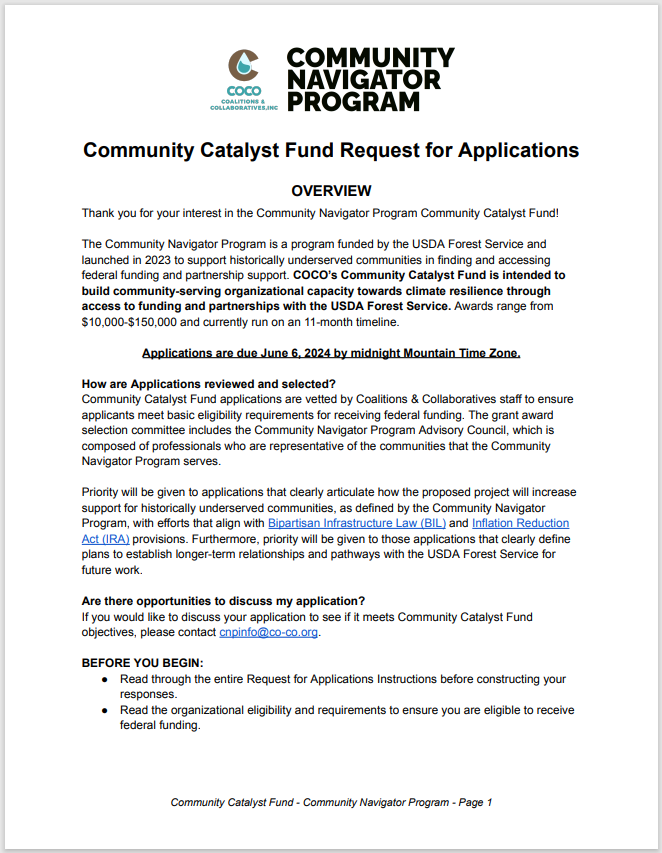
The Community Navigator Program is a program funded by the USDA Forest Service and launched in 2023 to support historically underserved communities in finding and accessing federal funding and partnership support. The Community Catalyst Fund, offered by Coalitions and Collaboratives, is intended to build community-serving organizational capacity towards climate resilience through access to funding and partnerships with the USDA Forest Service. This funding opportunity is designed to accommodate projects of various sizes and scopes, including: capacity building through training, development and staffing; navigation program delivery; knowledge sharing through stories and resource exchange. Learn more!
Awards range from $10,000-$150,000 and currently run on an 11-month timeline.
Applications are due June 6, 2024 by midnight Mountain Time Zone. COCO will hold a Community Catalyst Fund virtual Q&A session on April 30, 2024 at 2pm MT. Register here. Email cnpinfo@co-co.org with any questions.
Happening tomorrow: A Public Event to Become Fire Adapted!

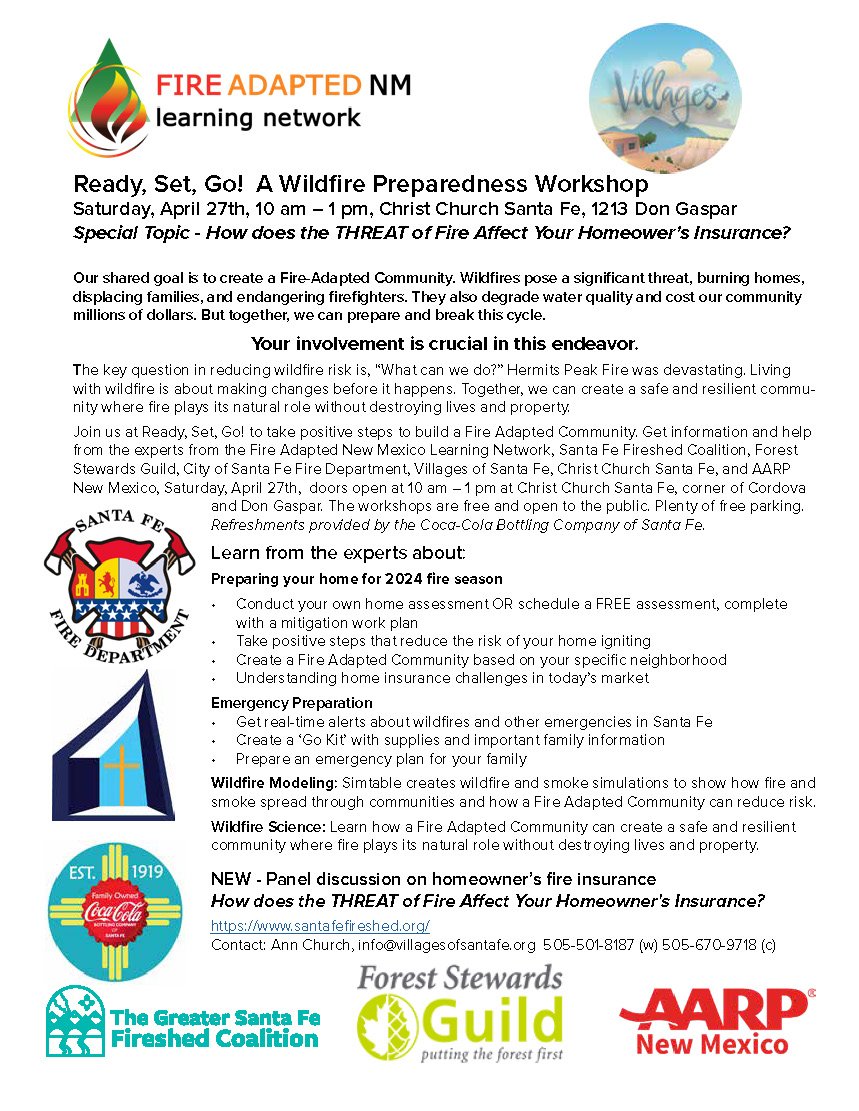
Ready, Set, Go! A Wildfire Preparedness Event

Saturday, April 27th, 10 am – 1 pm
Christ Church Santa Fe, 1213 Don Gaspar

Special Topic - How does the Threat of Fire Affect Your Homeowner’s Insurance?

Join us TOMORROW, April 27, at the family-friendly Ready, Set, Go! Wildfire Preparedness Workshop! Learn from experts, enjoy refreshments, and spend some time in community taking positive steps to build a Fire Adapted Community. Get information and help from the experts from the Fire Adapted New Mexico Learning Network, Santa Fe Fireshed Coalition, Forest Stewards Guild, City of Santa Fe Fire Department, Villages of Santa Fe, Christ Church Santa Fe, and AARP New Mexico. Doors open at 10:00 am and the event runs through 1:00 pm at Christ Church Santa Fe on the corner of Cordova and Don Gaspar. The workshops are free and open to the public and the site offers plenty of free parking.

Refreshments provided by the Coca-Cola Bottling Company of Santa Fe.

Learn from the experts about:

Preparing your home for 2024 fire season

  • Conduct your own home assessment OR schedule a FREE assessment, complete with a mitigation work plan

  • Take positive steps that reduce the risk of your home igniting

  • Create a Fire Adapted Community based on your specific neighborhood

  • Understanding home insurance challenges in today’s market

Emergency Preparation

  • Get real-time alerts about wildfires and other emergencies in Santa Fe

  • Create a ‘Go Kit’ with supplies and important family information

  • Prepare an emergency plan for your family

Wildfire Modeling

  • Simtable creates wildfire and smoke simulations to show how fire and smoke spread through communities and how a Fire Adapted Community can reduce risk.

Wildfire Science

  • Learn how a Fire Adapted Community can create a safe and resilient community where fire plays its natural role without destroying lives and property

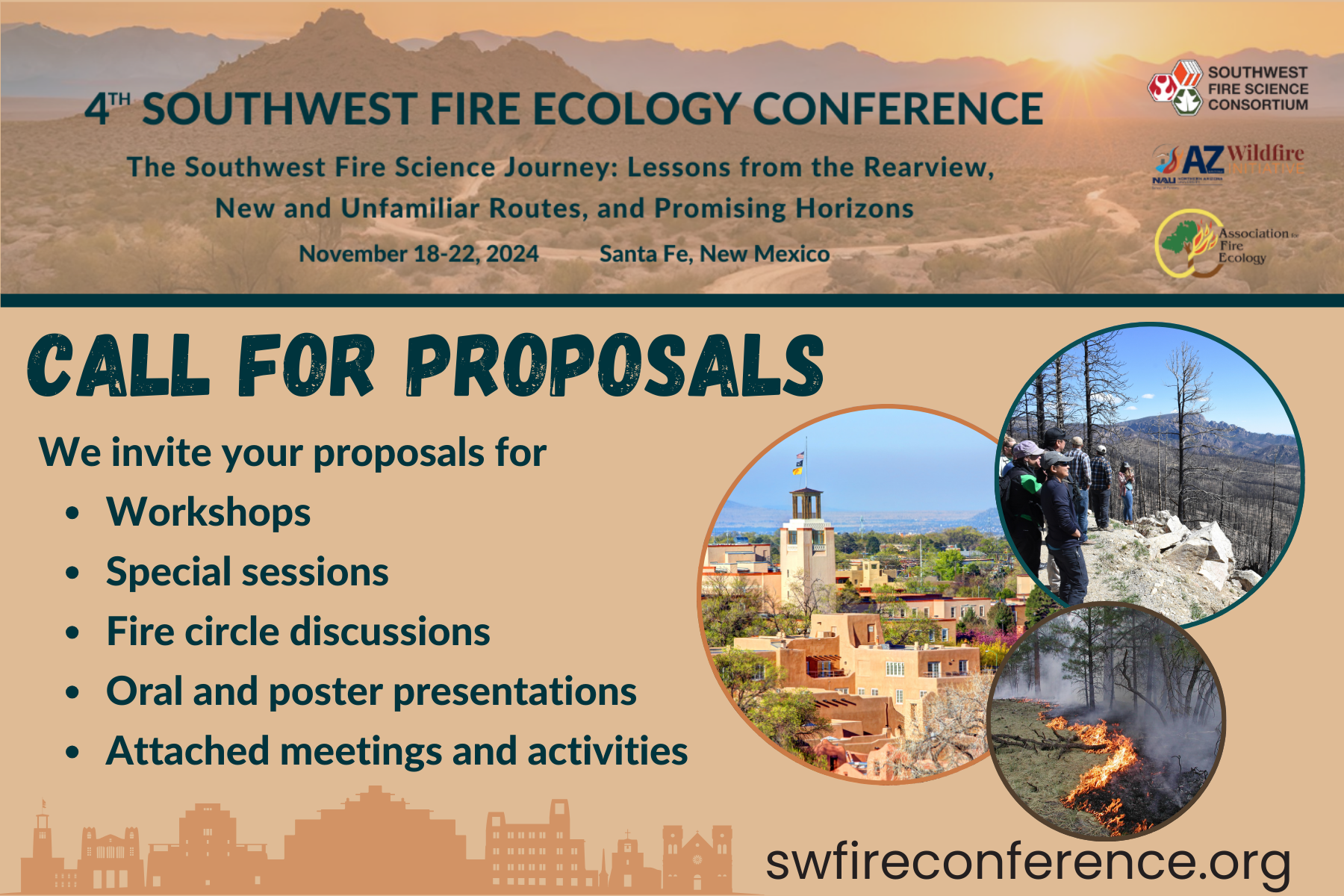
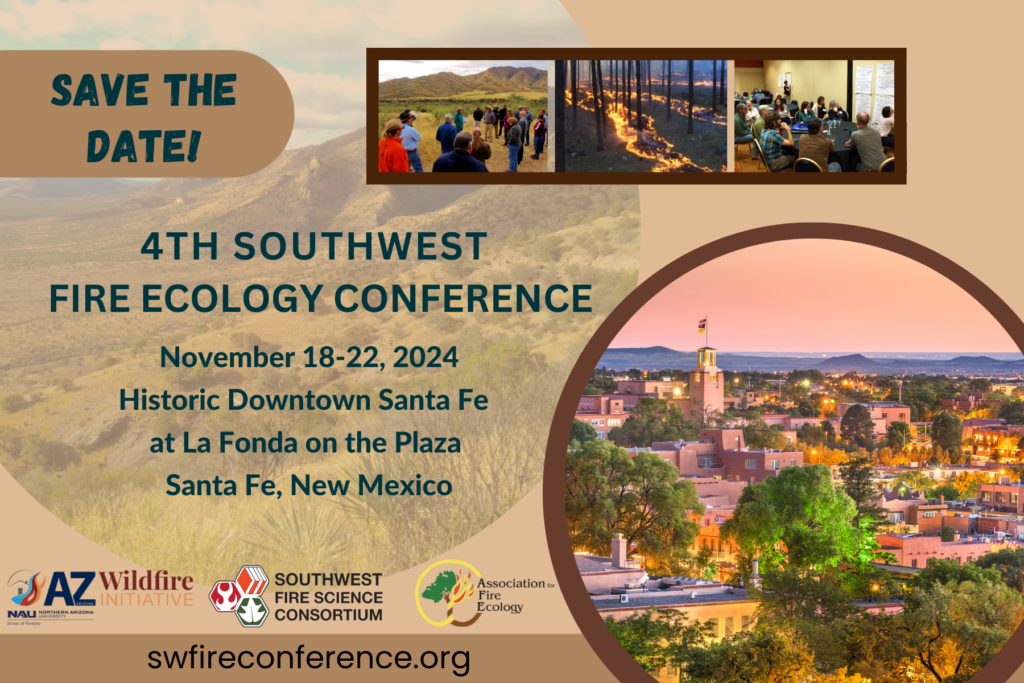
4th Southwest Fire Ecology Conference - Save the Date!

The Southwest Fire Science Journey: Lessons from the Rearview, New and Unfamiliar Routes, and Promising New Horizons

November 18-22, 2024 // Santa Fe, NM // La Fonda on the Plaza

To learn more about the conference, visit https://swfireconference.org/

The Southwest Fire Science Consortium, Arizona Wildfire Initiative, and the Association for Fire Ecology invite your participation in the 4th Southwest Fire Ecology Conference this November! This event is a gathering space for aspiring and established professionals to share knowledge, exchange ideas, and discuss the latest advancements in fire ecology research and management with a focus on the future of the southwestern United States. Save the date and plan to attend for a unique opportunity to connect with colleagues in the field and engage in stimulating discussions that will help shape the emerging profession and growing field of fire ecology in this region. The call for proposals is open now and registration opens on July 1; see other important dates.

LEARN ABOUT THE CONFERENCE

Call for Proposals is Now Open

The Call for Proposals is now open for workshops, special sessions, fire circle discussions, oral presentations, and poster presentations. With the conference theme, The Southwest Fire Science Journey: Lessons from the Rearview, New and Unfamiliar Routes, and Promising Horizons, the group seeks to gain a better understanding of the past, present, and future of fire ecology and management in this region. The group invites proposals on topics related to fire ecology, science, and management with a focus on results and lessons learned that are applicable to the Southwest.

Proposal Due Dates:

To view proposal requirements and learn more about focal topics, visit https://swfireconference.org/cfp/

  • May 15: Proposals Due for Special Sessions and Workshops

  • July 15: Proposals Due for Oral Presentations

  • August 15: Proposals Due for Poster Presentations and Meetings/Activities

PROPOSAL INFORMATION AND SUBMISSION REQUIREMENTS

The Theme: Past, Present, and Future

Lessons from the Rearview, New and Unfamiliar Routes, and Promising New Horizons

As wildland fire scientists, managers, educators, and students in the Southwest, we find ourselves in an era of rapid change and in need of new approaches, well-planned investments, and meaningful collaborations. Typical land and fire management strategies no longer suffice in the face of escalating challenges posed by more intense fires and the impacts of climate change on precipitation patterns and temperatures. While recent and substantial investments aim to tackle these issues, they often operate on timelines that are misaligned with natural processes. Simultaneously, a cultural shift is imperative—one that recognizes our integral connection to fire-prone lands, embraces the evolving reality of wildfire and ecosystem transition, and equally respects the knowledge held by Indigenous and land grant communities of the Southwest.

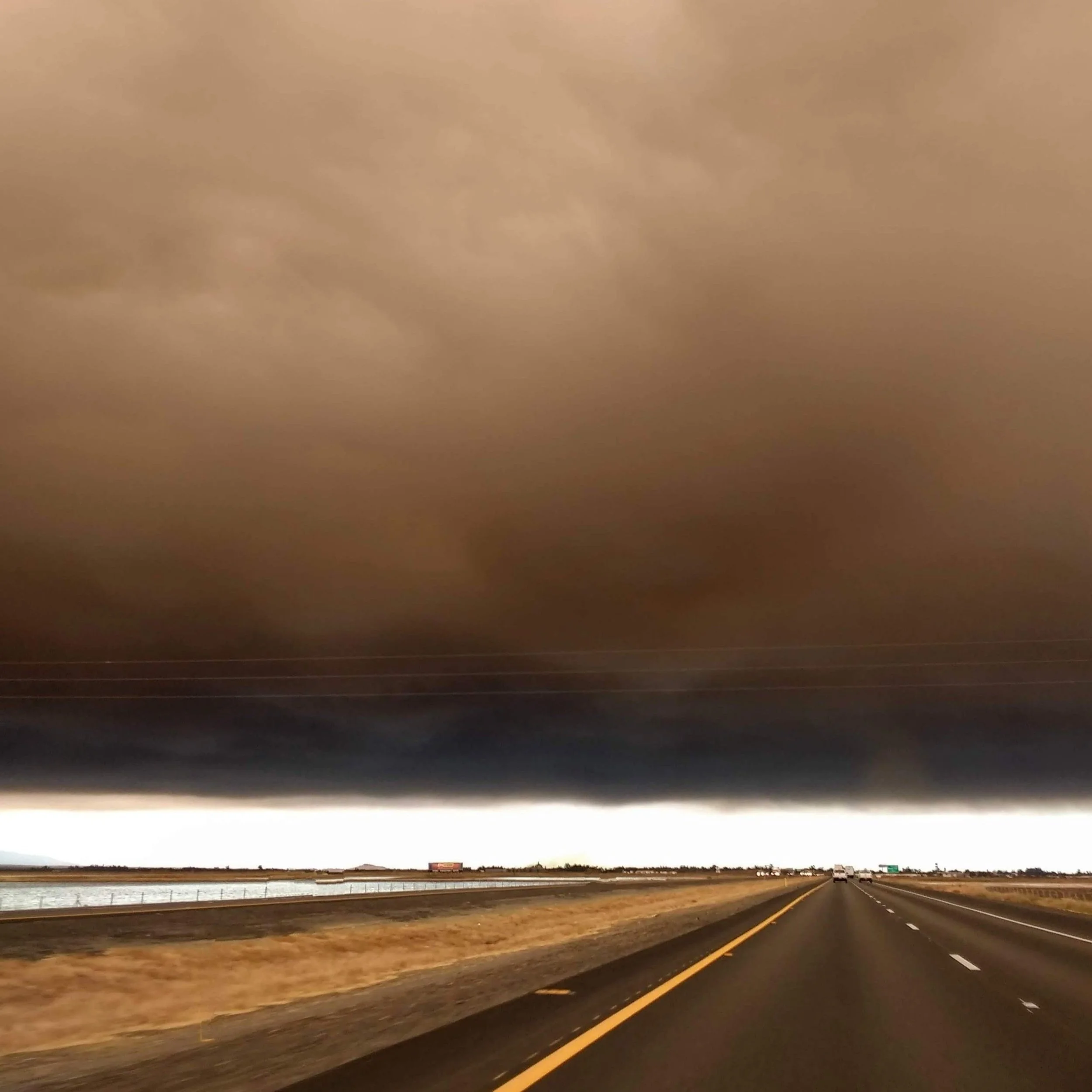
Smoke column over I-5 on November 8, day 1 of the 2018 Camp Fire.

At this pivotal juncture, AFE and its partners advocate for a reflective pause to better understand the past, present, and future of the fire science journey in the southwestern US. The integration of past insights with modern approaches is paramount as we invest in creating resilient landscapes and peoples of tomorrow.


The following topics will be of special interest and focus during this year’s conference:

  • Biodiversity and fire

  • Climate adaptation

  • Collaborative and cross-jurisdictional case studies

  • Cultural fire

  • Education and workforce development

  • Fire-adapted communities and Firewise

  • Invasive species and fire

  • Lessons learned in science and management

  • Planning for resilience in uncertain future

  • Post-fire recovery

Wildfire Wednesdays #133: Technical Assistance for Federal Funding

Hi all,

Spring is a time for action when it comes to wildfire mitigation around your home and wildfire resilience in the surrounding landscapes. If you have been interested in taking your wildfire mitigation or landscape resilience implementation to another level, now is a great time to consider applying for funding to achieve these goals. Within the Inflation Reduction Act (IRA) and Bipartisan Infrastructure Law (BIL) there are a variety of funding mechanisms that can support your work. We encourage you to get to know some of these opportunities, because they will only be available for a short period of time.

With that in mind, this Wildfire Wednesday’s is about the Community Navigators Initiative, which is intended to support folks like you with awareness and technical support for accessing federal funding programs.

This Wildfire Wednesdays includes:

  • A recording of the 03/29 webinar about the Community Navigator Initiative

  • Grant News and Updates

  • Sign-up for technical assistance through Community Navigator Initiative through the Fire Adapted New Mexico learning network

Best,

Gabe

The Community Navigator Initiative

Watch this webinar about the Community Navigator program from the Fire Adapted New Mexico learning network (FACNM)

The Fire Adapted New Mexico learning network (FACNM) is working with the Forest Stewards Guild and the Watershed Center, along with several other national and regional nonprofit organizations, is partnering with the US Forest Service on a community navigator initiative. 

The goal of this effort is to connect communities facing wildfire risk and climate change impacts, as well as historically underserved, rural, and low-income communities, to Forest Service funding and partnership opportunities supported by the Inflation Reduction Act and the Infrastructure Investment and Jobs Act (also known as the Bipartisan Infrastructure Law). For a snapshot of the programs and activities that received funding through these laws, see our overview of BIL & IRA-supported Climate and Wildfire Resilience Funding Opportunities.

Key aspects of FACNM’s community navigator work include:

  • Developing relationships with communities who may benefit from new funding opportunities and connecting them with sources of technical assistance and support within our networks.

  • Creating tools, trainings, and other resources to support organizational capacity-building.

  • Providing individual technical assistance to help communities identify and apply for funding opportunities and comply with post-award financial management and reporting requirements. 

Another important aspect of our work involves elevating community perspectives and feedback about the barriers that communities face in accessing US Forest Service support and partnership, with the goal of helping vision a more equitable system for all. 

The other organizations working on the Forest Service community navigator initiative include Coalitions and Collaboratives, Hispanic Access Foundation, Federation of Southern Cooperatives, First Nations Development Institute, and the American Indian Alaska Native Tourism Association.

Grant News and Updates

All federal grant applicants must be registered with SAM.gov. Register NOW as this process can take weeks and is needed to apply for funding opportunities via Grants.gov. If SAM.gov registration issues arise, contact Procurement Technical Assistance Center (PTAC) for free assistance.

IRA Forest Landowner Support

Deadline is August 21, 2024

Provides grant opportunities to entities and organizations delivering technical and financial assistance to private forest landowners - including Tribes, underserved landowners, and small-acreage landowners - to participate in emerging private markets for forest resilience and climate mitigation.

NOFO #1 USDA-FS-2023-IRA-FLS-01:

Supporting Underserved and Small-Acreage Landowner Participation in Emerging Private Markets

Last month, the Forest Service announced the award of the first round of this funding. A total of $116 million was awarded to 20 Forest Landowner Support projects (scroll down to the Spring 2024 dropdown under “Forest Landowner Support Awardees”) to provide equitable access to emerging climate markets. Many of the awardees represent or will support underserved landowners located in or providing benefits to disadvantaged communities.


Funding is still available for proposals under $2 million that support the participation of underserved landowners and landowners owning less than 2,500 acres in emerging private markets for climate mitigation or forest resilience. Proposals for NOFO 1 are reviewed in batches on a quarterly basis:

  • Upcoming batch: All proposals received March 1, 2024 - May 31, 2024.

  • Final batch: All proposals received June 1, 2024 - August 21, 2024
    IRA-FLS NOFO1 Frequently Asked Questions (available in Related Documents under the “full announcement materials” dropdown)

NOFO #2 USDA-FS-2024-IRA-FLS-02:

Tribal Access to Emerging Private Markets for Climate Mitigation or Forest Resilience

The Forest Service’s Forest Landowner Support program has a new funding opportunity focused on Tribal access to emerging private markets for forest resilience or climate mitigation (see announcement here). Eligible applicants include: Federally recognized Tribes, Alaska Native Corporations/Villages, and Tribal Organizations.

IRA-FLS NOFO2 Frequently Asked Questions (available in Related Documents under the “full announcement materials” dropdown)

Resources:

Community Wildfire Defense Grant

Funding communities to 1) develop and revise Community Wildfire Protection Plans (CWPPs), or 2) implement projects described in a CWPP that is less than 10 years old. Contact sm.fs.usfs_cwdg@usda.gov for more information.

Round 2 applications are currently being reviewed. The agency received 500 applications requesting $965 million, and has about $250 million in available funding. We are waiting on official announcements about Round 2 awards and Round 3 release.

Resources:

Applicants are highly encouraged to coordinate with their State Forestry Agency (or equivalent) during proposal development. See a list of State Forestry Agencies and State Forest Action Plans here.

Sign up for Community Navigator Assistance

Events Calendar

CALENDAR: Check out our calendar of events for upcoming application deadlines, trainings, informational webinars and other opportunities coordinated through the Watershed Center.

Request Assistance

 ASSISTANCE: Fill out a request form to connect with one of our navigators who can help brainstorm proposal and funding ideas, provide information and insight on funding and resources opportunities, review your application, or help with post-award grant management questions.

Provide feedback

FEEDBACK: Have you worked with a community navigator and want to share feedback? We’d love to hear from you! Your response will be used to improve our future services.

Upcoming events: Foresters for the Birds May webinars!

The Forest Stewards Guild and Southern Rockies Foresters for the Birds are offering a two-part webinar series this May on the intersection of climate, forest stewardship, and birds! Please register and save the date to learn more about avian research through citizen science, the impact of fuels reduction treatments on the composition of bird species, and the impact of a hotter and drier climate will impact bird populations, especially those with obligate molting grounds in monsoonal areas.


Over the past 5 years, community volunteers from the Weminuche Audubon Society have conducted a study of bird communities in Ponderosa Pine-dominated forested sites that received wildland fuels reduction treatments. This webinar from the Forest Stewards Guild dives into the effects of these treatments, specifically prescribed fire or shrub-layer thinning, on the composition of bird communities in the southern Rocky Mountains, showing that tree canopy and shrub-layer composition and structure have important influences on the number of bird species present and the predominate feeding and nesting behaviors of the avian community.

Register now: May 7 webinar

Tuesday, May 14, 2024, 12:00 – 1:00 p.m. MT: Bird Population Trends and Climate Effects in Southwestern National Parks

Climate change is considered a major driver of recent avian population declines, particularly in the drought-stricken southwestern United States. Predicting how bird populations will respond requires understanding the climatic drivers influencing population density across the region’s diverse habitats. In this webinar from the Forest Stewards Guild, Harrison Jones of The Institute for Bird Populations discusses his research modeling breeding-season densities of 50 bird species in relation to spring and summer drought and the timing of North American monsoon rainfall.

Register now: May 14 webinar